A world between bodies and meanings
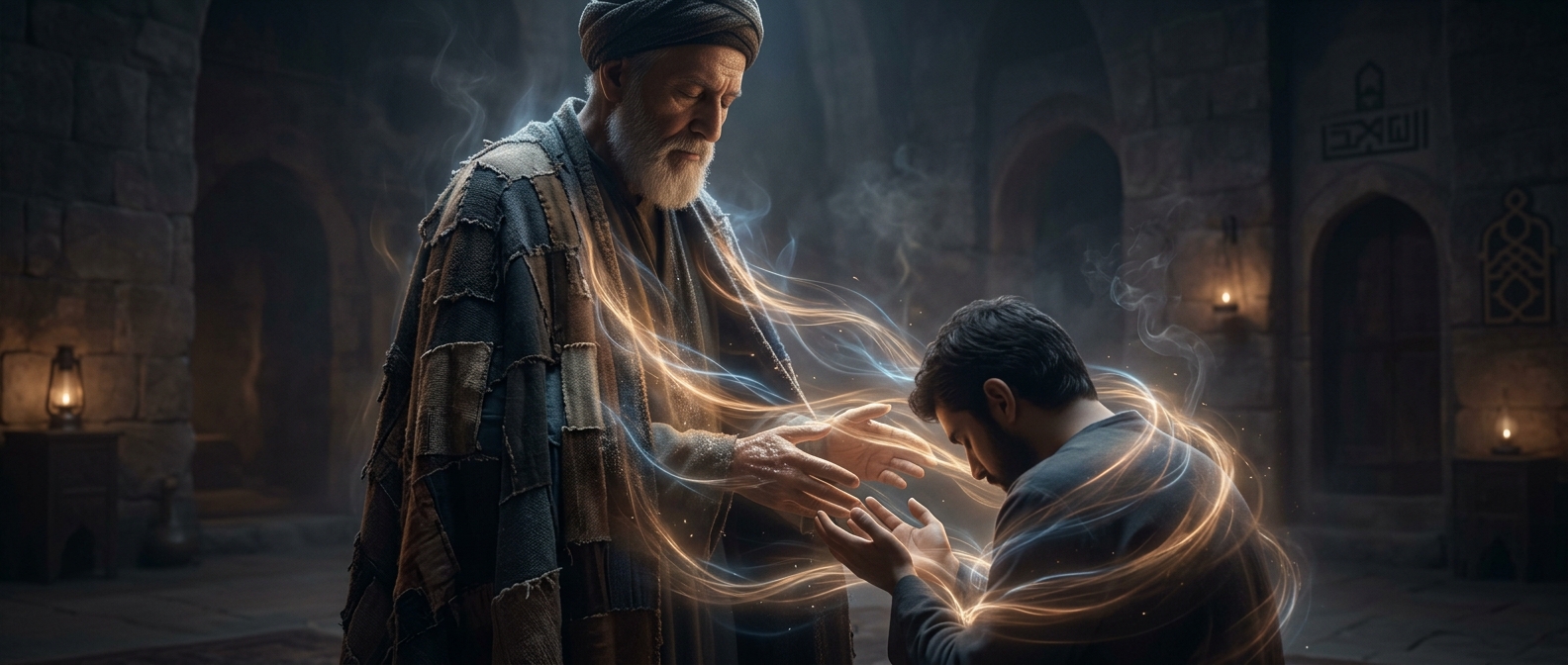
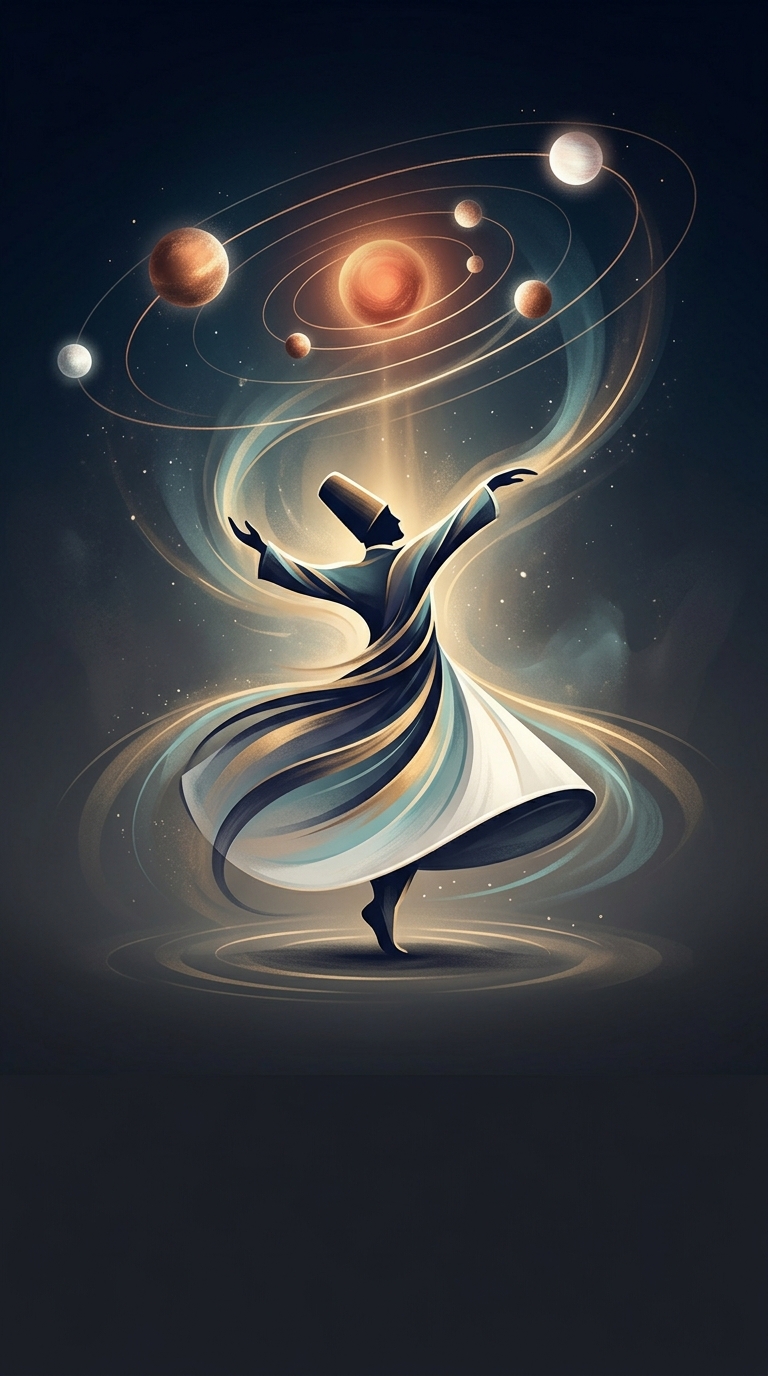
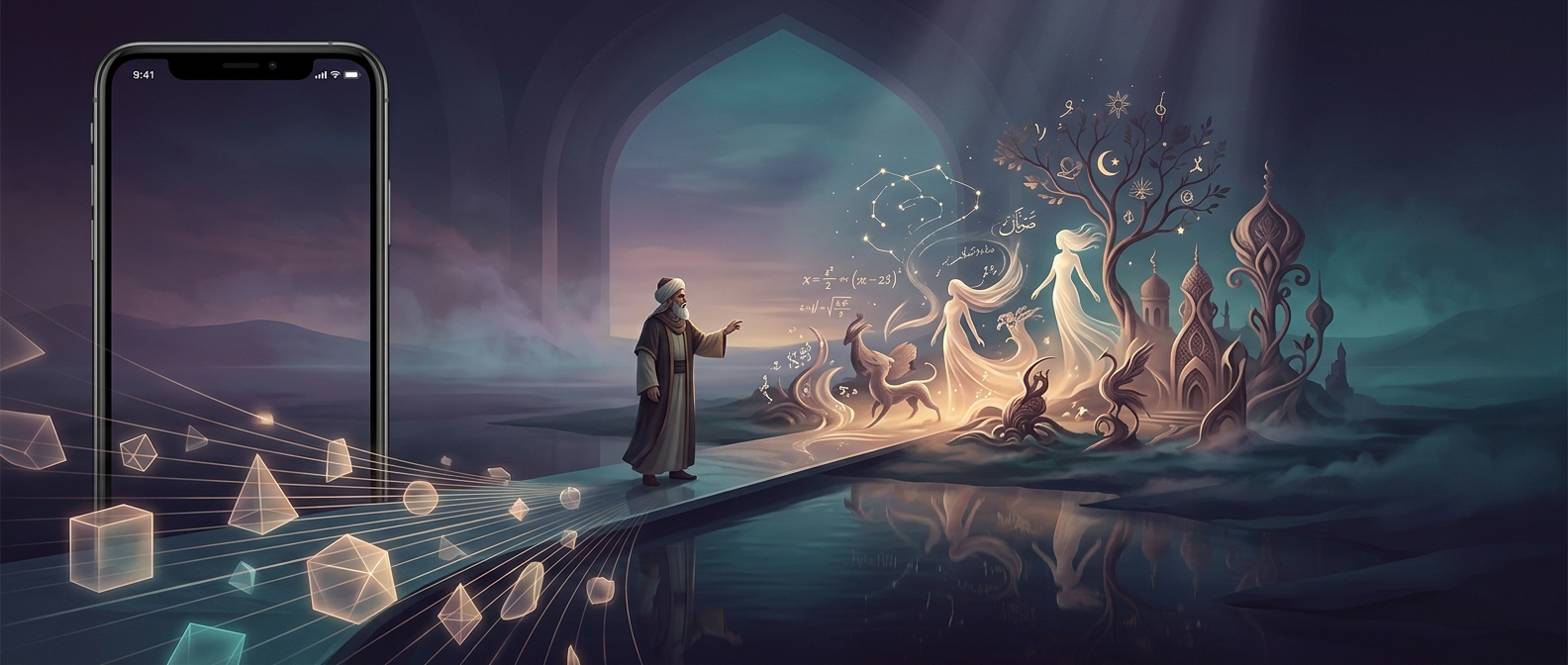
For Ibn Arabi, the Alam al-Mithal—often translated as the “World of Images” or “imaginal world”—was not simply a fantasy realm. It was a distinct level of reality between the material world, encountered through the senses, and the spiritual realm of realities without physical form.
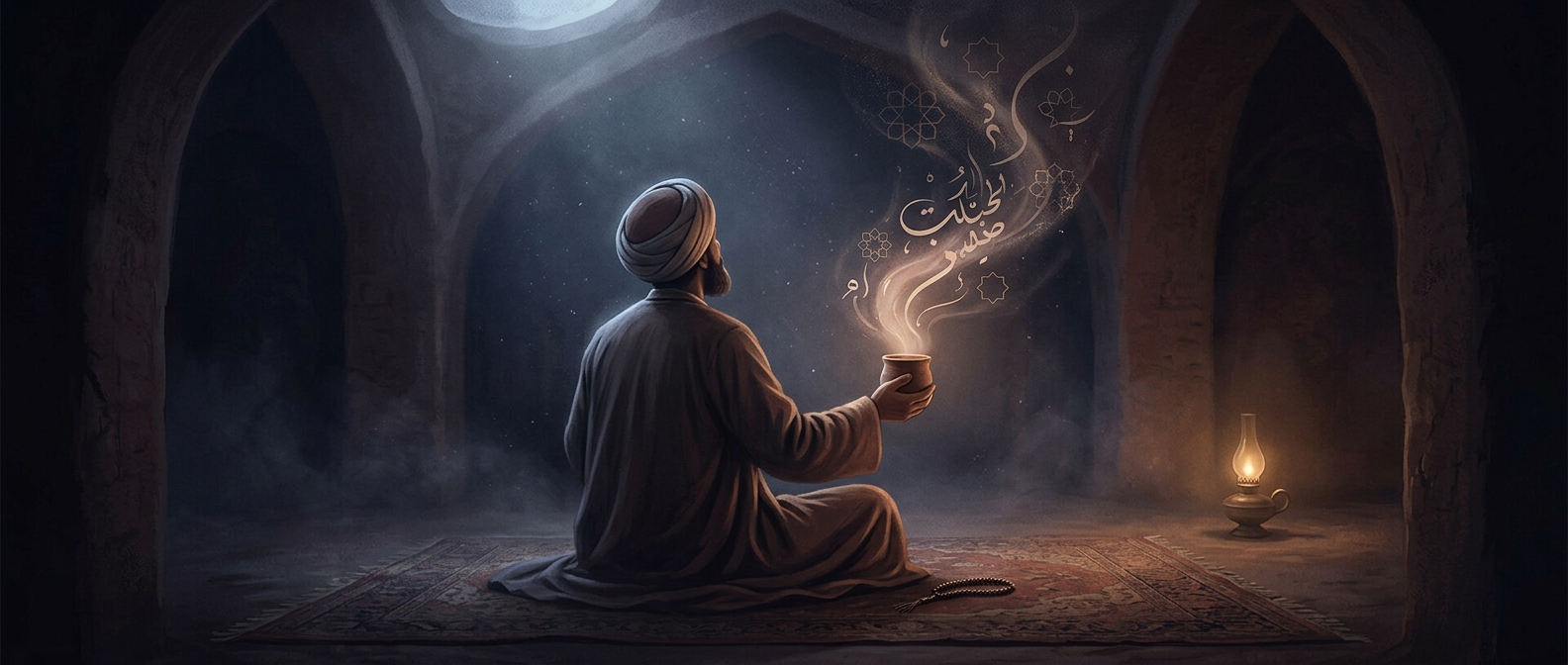
Its defining feature was translation: what is ordinarily invisible could appear there in a form that could be perceived. An abstract meaning might take on a body or image; conversely, a physical form could be understood as carrying a meaning beyond its material shape. “Imaginal” therefore means more than “imaginary”: the image is a way a reality becomes perceptible, not merely something a person makes up.
Why an intermediary realm mattered
The idea offered a way to explain how spiritual truths could be encountered without treating them as ordinary physical objects. It also made room for experiences such as visions and symbolic appearances: a meaning could be shown through an image rather than stated as an abstraction. The image was not necessarily a literal description of the spiritual reality; it was the form through which that reality became accessible.
Calling this realm a twilight zone captures its in-between character, but it should not be mistaken for a place in the sky or a measurable region of the universe. It describes a mode of existence in Ibn Arabi’s cosmology, where meanings and forms meet. The same image can thus be more than a picture: it can be the bridge by which an unseen meaning becomes something one can encounter.