What a “shath” was meant to express
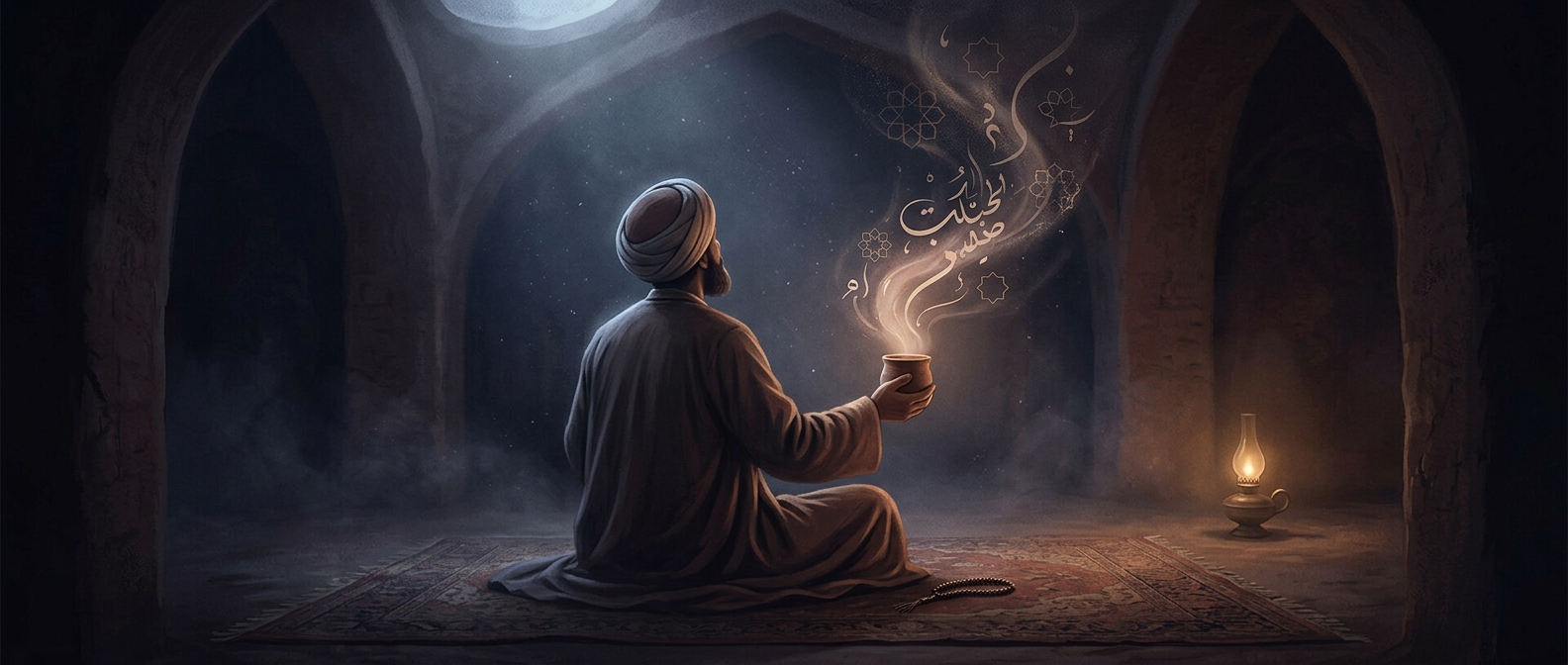
Bayazid Bastami’s claim that his banner stood higher than God’s belongs to a tradition of shathiyat: startling utterances associated with spiritual ecstasy. The Arabic term is often used for speech that seems to overstep ordinary religious boundaries. In the stories told about mystics, such words emerge when a person’s awareness of the self is thought to have been overwhelmed by closeness to God.
That context changes how the banner boast can be read. It need not be a claim of worldly rank or a considered argument that a human being outranks God. It dramatizes a paradox: the speaker appears to exalt himself, while the mystical interpretation treats the ordinary self as having receded, leaving only an intense expression of union with the divine.
Why the words could still shock
The paradox did not make the language harmless. Taken literally, claiming superiority to God would sound like arrogance or blasphemy. That tension is part of the force of a shath: it jolts listeners out of routine speech and forces them to confront how mystical experience can be described in words that seem to violate the beliefs they are meant to express.
Such utterances also reveal a divide between private experience and public interpretation. A mystic might be understood by admirers as speaking from ecstasy, while another listener could hear only an unacceptable boast. Bastami’s banner survives as a vivid example of that boundary—an ecstatic claim whose meaning depends on whether the speaker is imagined to be asserting his own power or surrendering his ordinary identity.