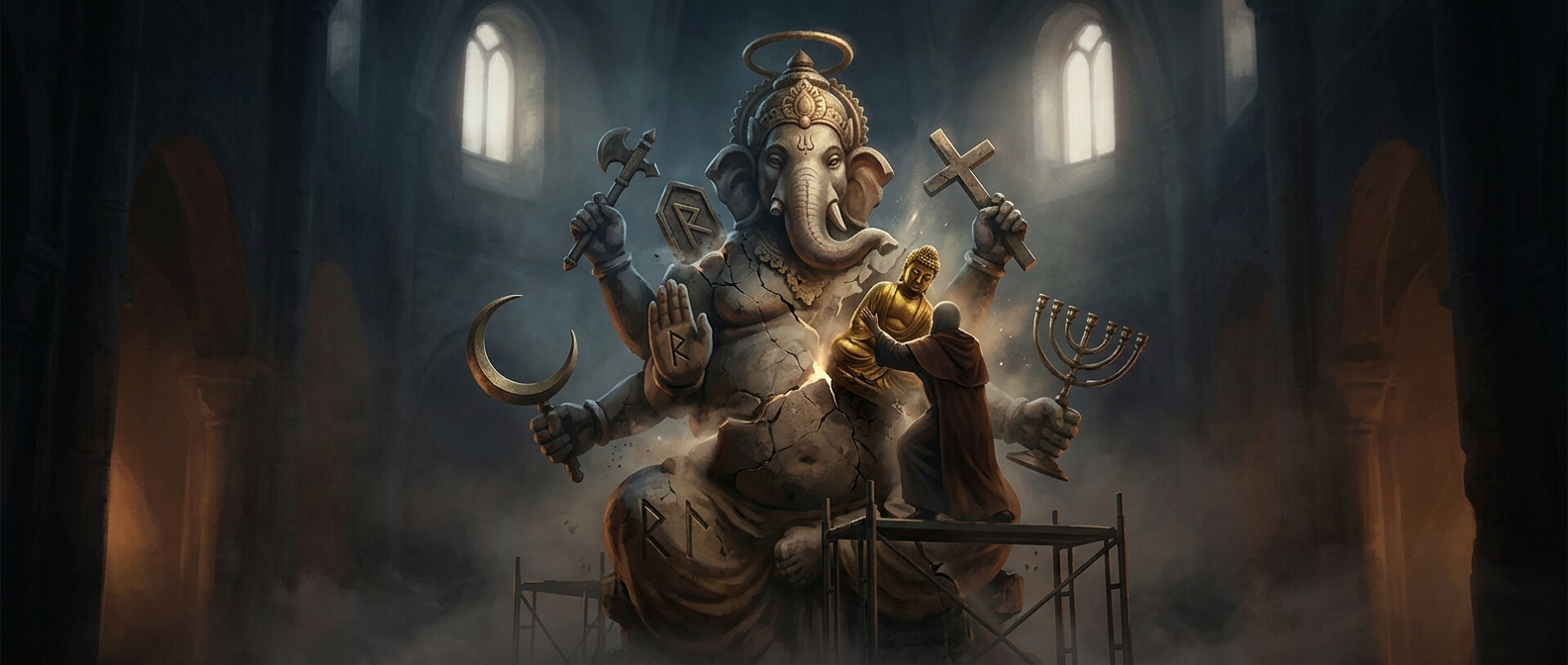
When Religious Traditions Meet
Syncretism is the combining of religious ideas or practices that originated in different traditions. It can happen when communities live alongside one another, when people convert, or when a new movement takes shape. The result may bring together rituals, sacred figures, stories, or ways of understanding the world.
Blending Is Not Always Careless
A combination that looks mismatched from the outside may make sense to the people who practice it. They might see two traditions as addressing different needs, recognize familiar meanings in a new form, or adapt a ritual while preserving what matters most to them. In other cases, elements are combined without much attention to their original context, and practitioners or observers may regard the result as superficial or disrespectful.
That is why “syncretism” can be a neutral description, a criticism, or a disputed label. People within a tradition may disagree about whether a practice is a legitimate adaptation, a departure from established teaching, or something distinct from both source traditions.
What the Label Can Hide
Calling a practice syncretic identifies a mixture, but does not explain how it formed or what it means to its participants. A useful account asks who brought the traditions into contact, which elements were adopted or changed, and how practitioners interpret the result. The same blend can look like compromise to one observer and a coherent spiritual practice to someone who lives it.