The Byzantine fight over the light of prayer
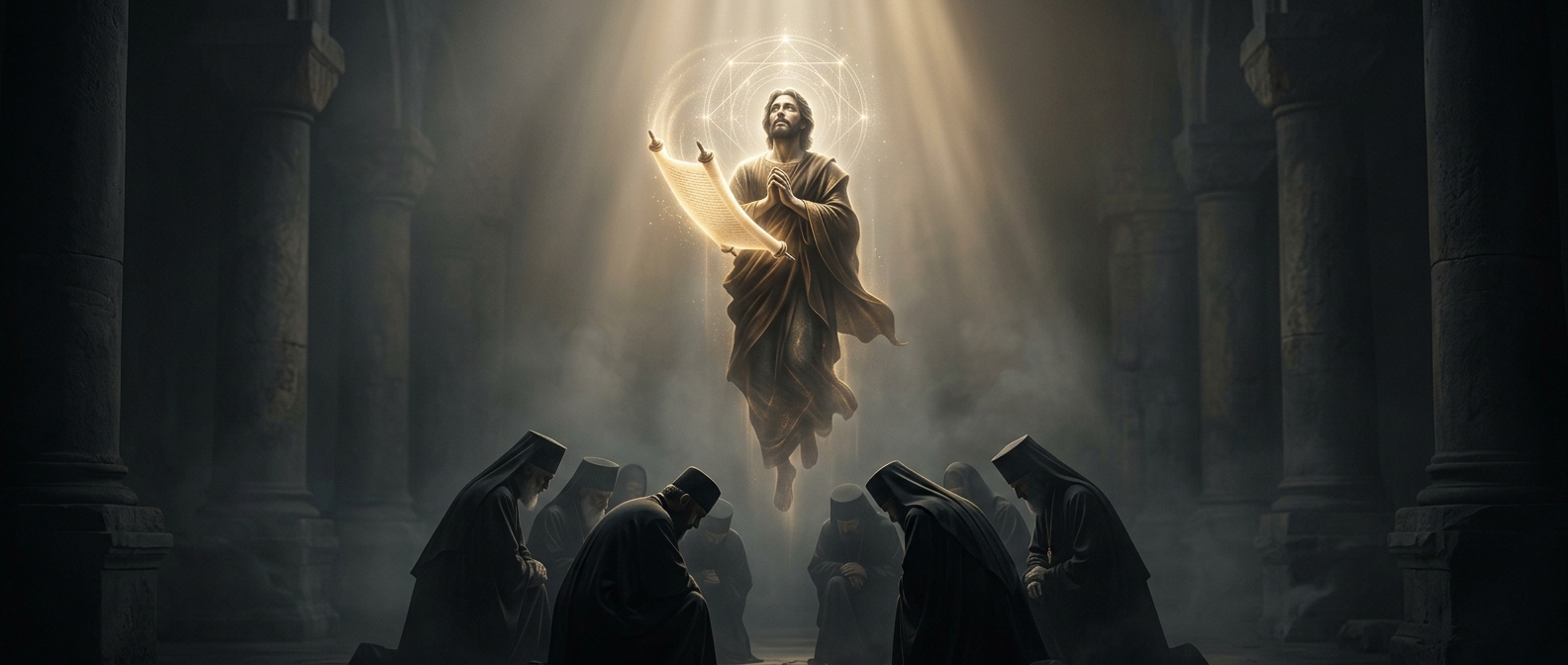
In the 14th-century Byzantine Empire, some monks who practiced hesychasm—a tradition of quiet, sustained prayer—said they could encounter divine light in contemplation. They associated it with the radiance described at the Transfiguration, when Christ appears luminous to his disciples. The question was not simply whether monks had seen something unusual. It was whether that experience could be genuinely divine without making God a visible object or reducing prayer to a private mental sensation.
Palamas’s distinction: God’s essence and energies
The monk and theologian Gregory Palamas defended the hesychasts by distinguishing God’s essence, what God is in himself and beyond human comprehension, from God’s energies, the ways God acts and makes himself present. In this account, the light was not God’s essence made visible, nor merely an image produced by the mind. It was an uncreated divine energy: God truly encountered, though not comprehended in full.
That distinction gave Palamas a way to take the monks’ experiences seriously while preserving the claim that God’s inner being remains beyond human knowledge. His opponents, including the scholar Barlaam of Calabria, challenged the monks’ claims and methods. The controversy therefore reached beyond the reliability of a particular vision to a larger question: what can it mean for a human being to experience God?
A theological dispute with institutional consequences
The argument became entangled with Byzantine church and political conflicts. Synods in Constantinople in 1341 and later years addressed the controversy; the position associated with Palamas was ultimately affirmed in the Orthodox Church. These were fierce ecclesiastical struggles, not wars fought on a battlefield, but they shaped which teachings and forms of prayer the church recognized.
The lasting consequence was a carefully drawn boundary: in Orthodox theology, people may participate in God’s presence without claiming to grasp God’s essence. That is why the dispute over a monk’s experience of light became a debate about the limits—and possibility—of knowing God.