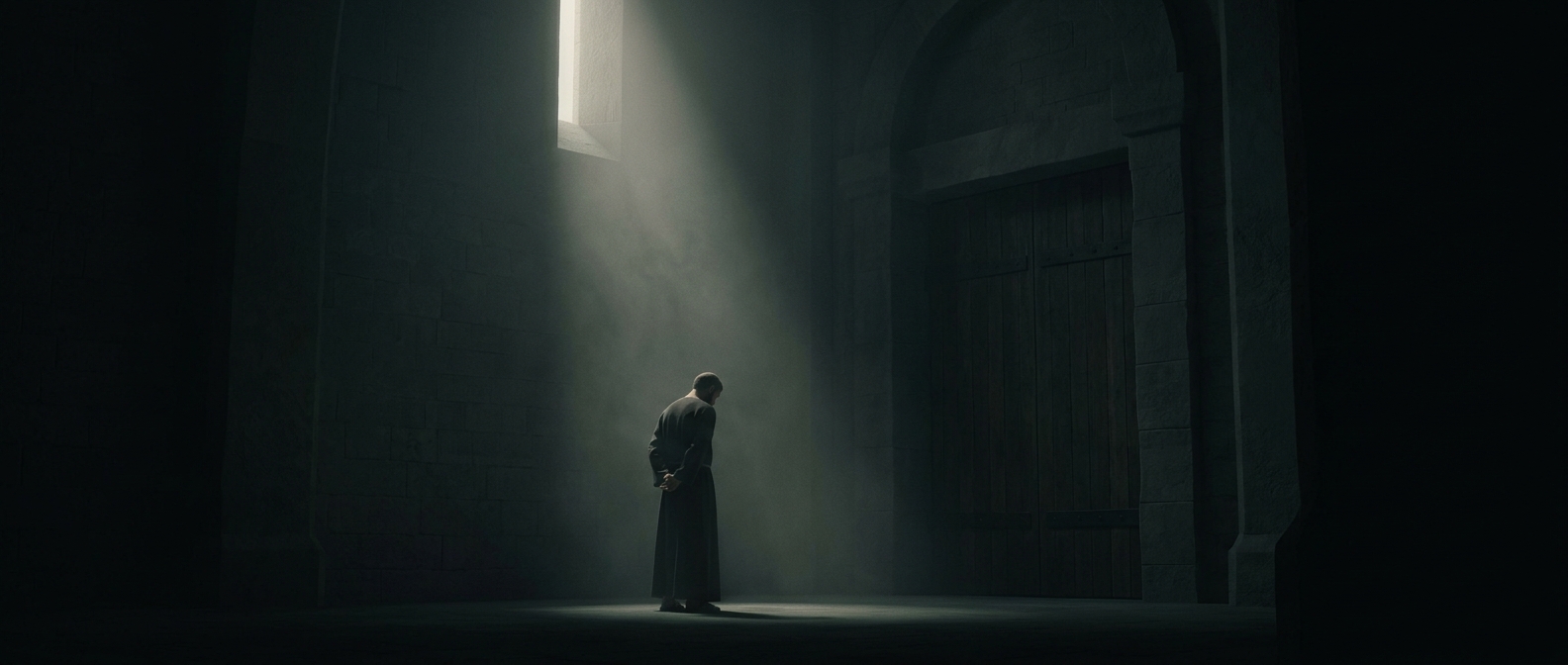
Why a bear appears in Seraphim of Sarov’s story
Seraphim of Sarov, an eighteenth- and nineteenth-century Russian Orthodox monk, is remembered for a life of prayer and withdrawal into the forest. Stories of him feeding bears by hand turn that solitude into a vivid spiritual scene: a human being lives among wild creatures without trying to master them, and they approach without fear.
The tale belongs to the tradition of saints’ lives, which often uses encounters with animals to express a saint’s closeness to God and to a world imagined as peaceful before human wrongdoing. In that frame, the bear is not merely a dramatic visitor. Its calmness suggests that Seraphim’s prayerful life had restored a kind of harmony between people and nature.
The meaning behind the forest encounter
The story’s force comes from its contrast. A bear is powerful and potentially dangerous; feeding one by hand makes trust visible in a way that an abstract description of holiness cannot. The episode also fits the image of the hermit: far from ordinary society, Seraphim is portrayed as living simply, with the forest itself becoming part of his spiritual world.
The account is best understood as a religious story about what holiness looks like, rather than as a general claim about bear behavior. Its memorable detail is the reversal of expectation: in the tale, the wild animal comes close not because it has been conquered, but because the saint is portrayed as living without fear or violence.