Why a “Tree of Life” formation is so delicate
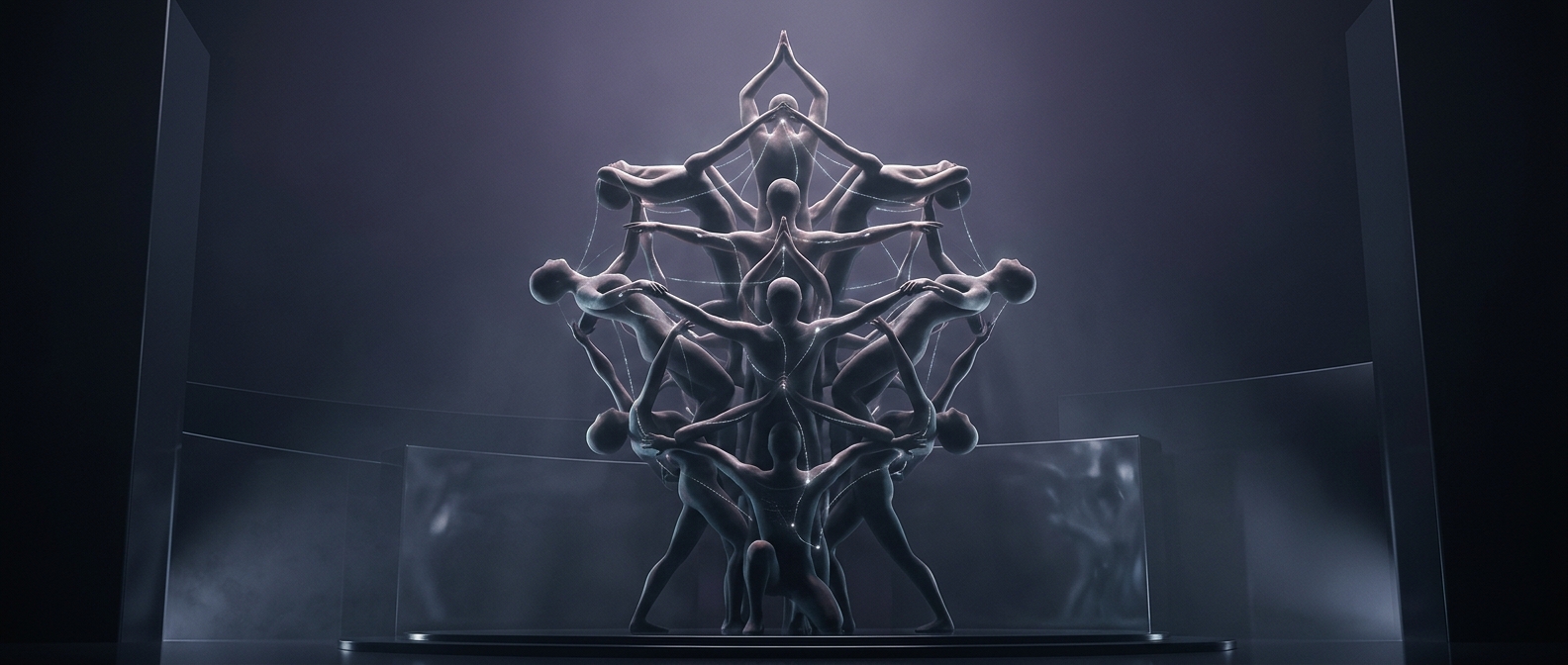
A human formation works only while the people in it collectively keep their weight over a stable base. In a stacked or interlocking pose, each performer’s body becomes part of a support structure: a small lean can shift the combined center of mass—the point where the group’s weight effectively balances—toward the edge of that base. Once it moves too far, gravity pulls the structure off balance.
That makes the pose less like a collection of individual gestures and more like a single moving sculpture. Each person has to arrive in the right position at the right moment, with their weight directed where the formation can support it.
Timing is part of the engineering
A performer moving early can change the load before another member is ready to take it. Moving late can leave a gap in the support pattern. Even a modest adjustment in posture may matter when bodies are close together and there is little room to compensate.
The choreography therefore has to coordinate more than appearance. Rehearsal builds a shared sequence: who moves, when they move, and how their weight shifts as the shape forms. The audience sees a fluid image; underneath it is a tightly ordered transfer of balance.
The visual effect depends on restraint
The formation’s fragility is also what makes it striking. A stable pose can look effortless precisely because the performers control movements that would be harmless in ordinary dancing but consequential in a close, weight-bearing arrangement. The “tree” is not held together by strength alone; it depends on everyone preserving the narrow balance that lets the whole shape stand.