How Sledgehammer Turned a Performance Into Stop-Motion
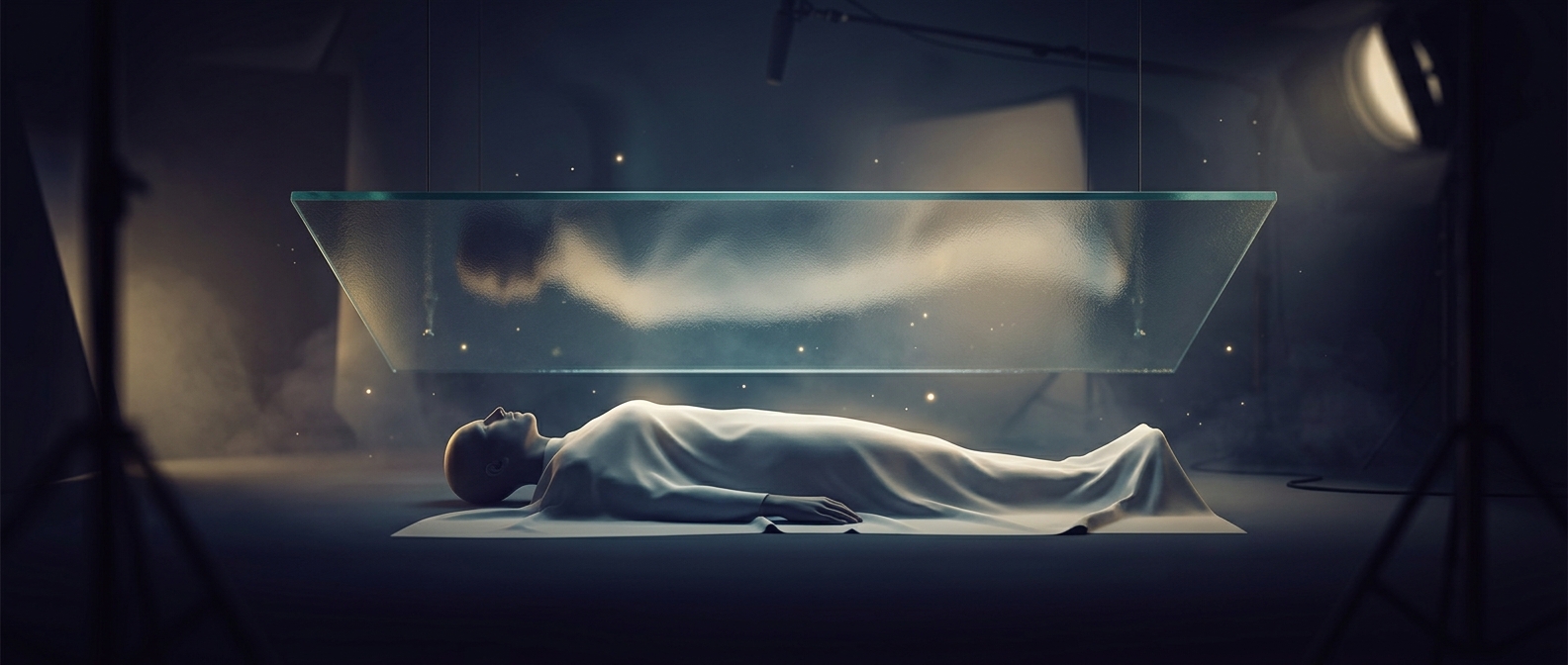
The video’s strange, handmade look came from a simple but demanding setup: Peter Gabriel lay beneath a sheet of glass while animators arranged objects on top of it. The camera looked down through the glass, making the fish, meat and clay seem to occupy the same space as his face. Instead of adding the imagery later, the crew built each surreal moment directly in front of the lens.
A Frame at a Time
Stop-motion animation works by photographing a scene, changing it slightly, then photographing it again. Played in sequence, those still images make the objects appear to move. For Sledgehammer, the animators repositioned the materials around Gabriel’s face between exposures. He had to remain still so his features stayed aligned while the surrounding shapes shifted.
That constraint made the performance part of the animation. Gabriel lip-synced in slow motion over the course of a week, giving the production time to capture the movements in small increments. His slowed gestures could then be synchronized with the song, while the objects seemed to crawl, assemble or transform around him.
Why the Image Feels So Unsettling
The glass creates an unusual visual boundary: Gabriel appears close and human, but the animated materials press against the same surface as his face. Dead fish and raw meat are recognizable, tactile things, while clay can be reshaped into almost anything. Their changes feel especially vivid beside a live person who cannot react or move freely.
The result depends on the contrast between control and transformation. Gabriel’s stillness provides a stable center; the painstakingly rearranged objects make everything around it seem alive. Recalling the video means remembering not only its surreal images, but the patient, physical labor required to make each one move.