How a Masonic grip worked as a sign of recognition
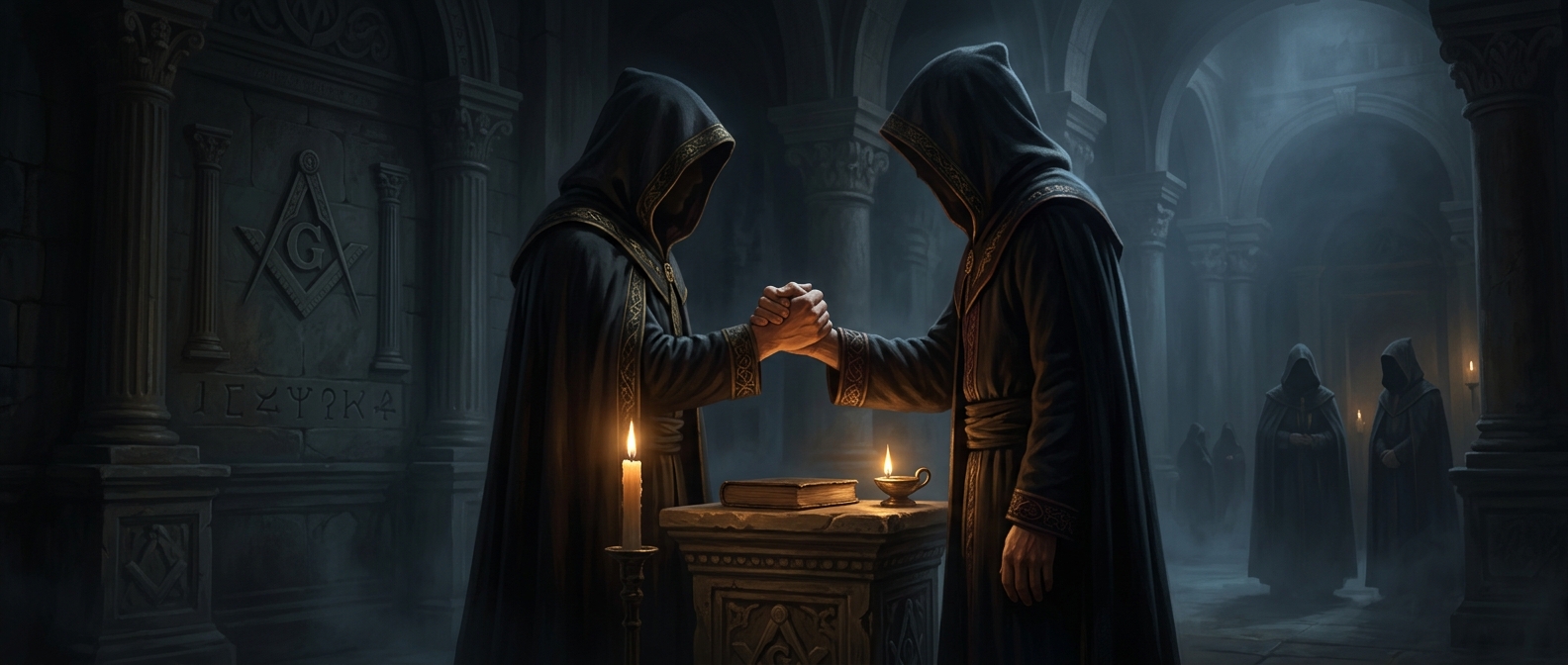
A Masonic “grip” is a particular handshake, sometimes paired with a word or other response. In Masonic tradition, these signs are associated with different degrees—the stages through which a member advances. Someone familiar with the expected exchange could recognize another person who had received the same degree.
The system worked less like a modern password protecting an account and more like a face-to-face credential. A sign had meaning because members learned it through participation and expected others to keep it within the group. It could offer a way to establish a connection when two Masons met without already knowing each other.
Tradition, not an unbreakable barrier
These exchanges were never a substitute for verifying someone’s identity in every situation. A handshake can be copied, and a word can be repeated by someone who has learned it. As details became available in books and online, the signs became less useful for keeping a determined outsider uninformed.
That does not make them meaningless to members. The forms still mark shared knowledge and membership, while their use depends on context and mutual recognition—not on the signs being impossible to discover. Their lasting role is as a ritual of belonging, not a foolproof security system.