From working lodge to symbolic brotherhood
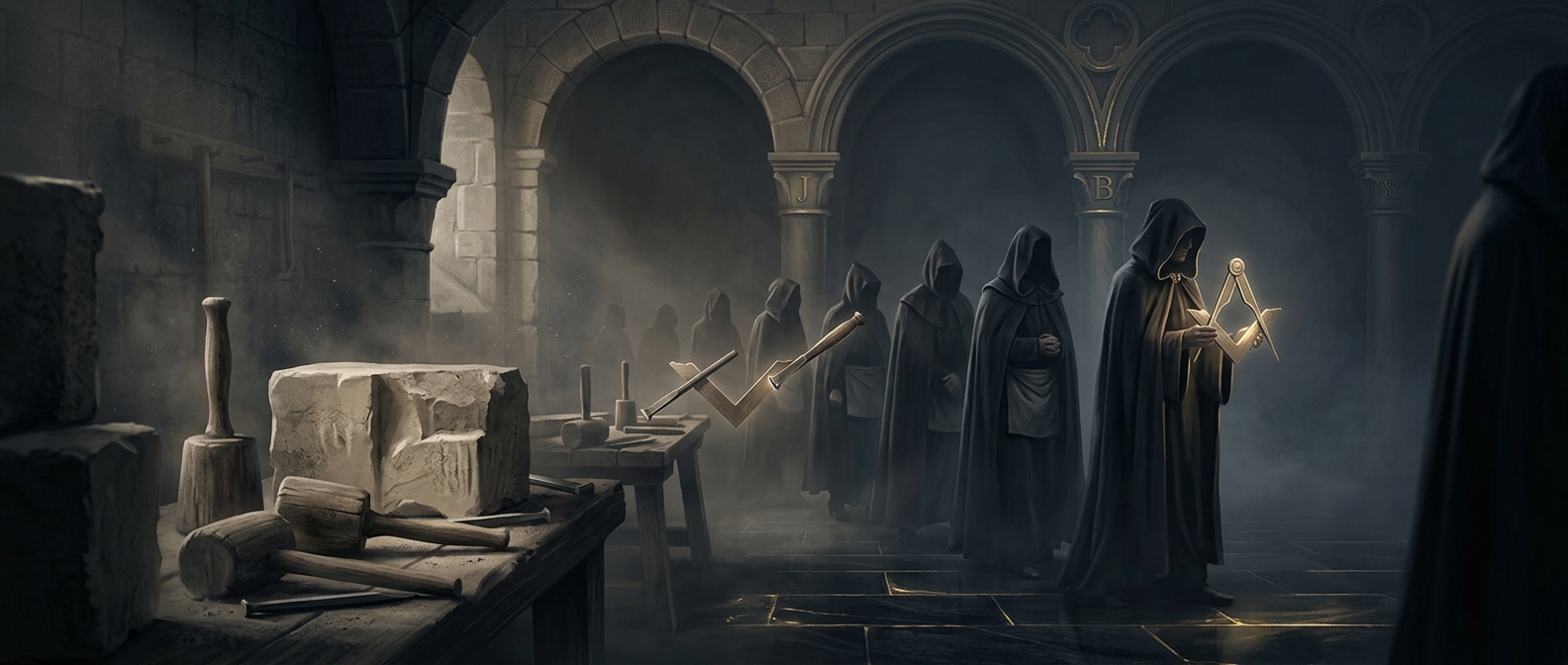
Medieval stonemasons organized around the practical demands of building: skilled workers traveled between projects, learned through apprenticeships, and gathered in lodges near construction sites. These groups helped regulate craft knowledge and conduct. Their work also supplied Freemasonry with a ready-made language of tools, training, and fellowship.
By the 17th and 18th centuries, some Masonic lodges included men who were not working stonemasons. As the organization became less about building stone structures, it kept the craft’s forms and turned them toward moral teaching. A lodge became a place for members to meet and perform ceremonies, while the old trade’s practices offered a framework for symbolic lessons.
Tools became moral metaphors
A square helps a mason check whether an angle is true; a compass draws circles and sets boundaries. In Masonic symbolism, those functions lend themselves to ideas about fair conduct and self-restraint. The tools were not invented as mystical objects: their meaning grew from the ordinary work they had once performed.
Rituals likewise borrowed the guild-like pattern of stages and instruction. Apprenticeship, advancement, and the passing on of specialized knowledge could be recast as a member’s progress through a moral education. The result preserved the atmosphere and vocabulary of a skilled trade even as many members no longer practiced it. That is why a pair of familiar measuring tools can still evoke both medieval building work and Freemasonry’s later symbolic world.