A Monk Who Joined the Children’s Game
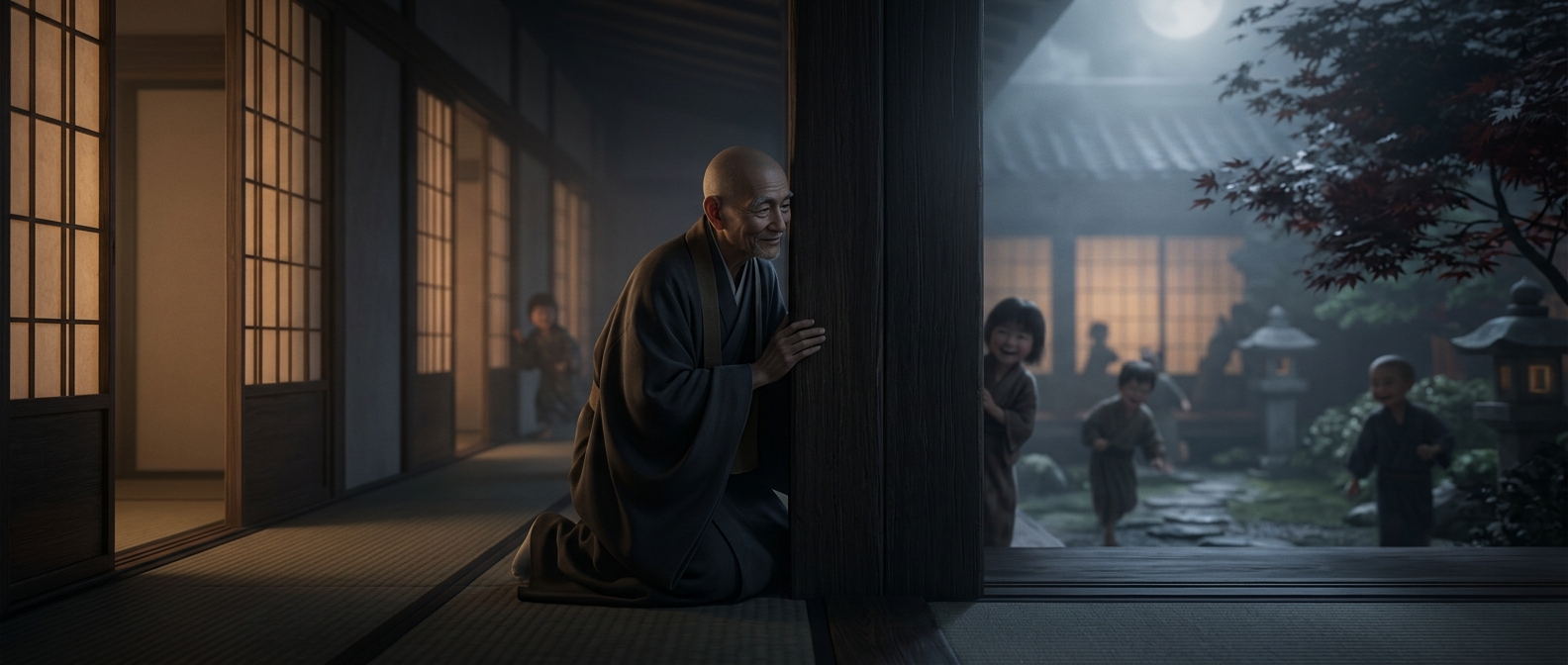
Ryōkan (1758–1831) was a Japanese Buddhist monk and poet remembered for his unadorned way of life and his closeness to ordinary people. Stories of him playing with village children offer a striking counterpoint to the image of a monk as distant, solemn, or absorbed only in formal religious practice.
Hide-and-seek required no sermon or special setting: it let the monk take part in the children’s world on their terms. In the barn story, the game’s joke turns on a small, ordinary mishap—he hides so well that the children leave, and he remains there until morning.
Spiritual Life in Everyday Company
The episode is best understood as a glimpse of Ryōkan’s remembered character, not as evidence of a supernatural event or a formal Zen lesson. Buddhist practice can include discipline and contemplation, but a monk’s daily life also unfolds among other people. Ryōkan’s playful companionship makes that life feel less removed from the village around him.
That is what gives the story its staying power: the revered monk is not presented as performing wisdom for an audience. He is simply committed enough to a children’s game to be forgotten in a barn overnight.