A theological dispute turned into a physical legend
The story gives a sharp, human shape to a difficult argument about the Trinity. Arius, a Christian teacher from Alexandria, held that the Son was created by God and therefore was not eternal in the same way as the Father. His opponents argued that the Son was fully divine and eternal. The disagreement mattered because it concerned who Christians believed Jesus to be—not simply a choice of words.
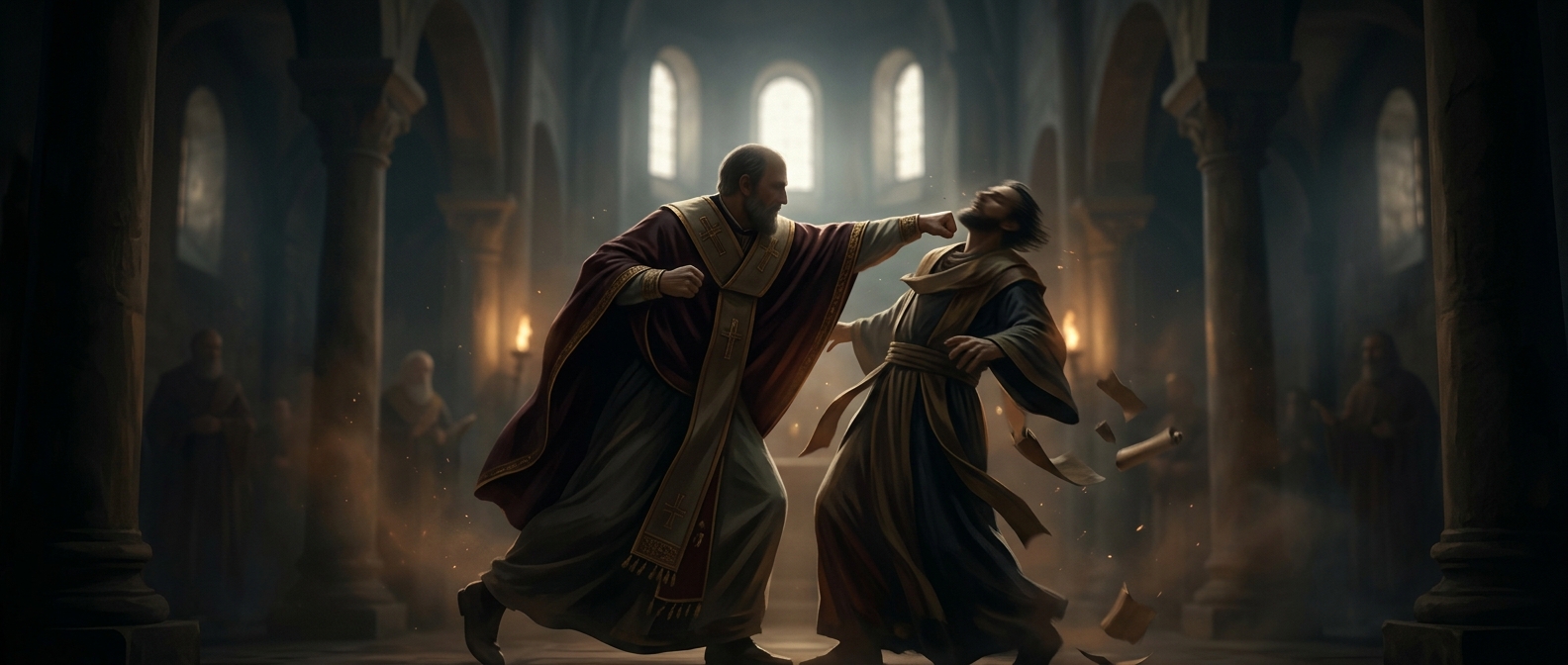
At the Council of Nicaea in 325, bishops debated the dispute and produced a statement of belief that rejected Arius’s teaching. The famous punch attributed to Nicholas dramatizes that conflict as a moment when conviction broke through formal debate. But it belongs to later tradition: contemporary records do not establish that Nicholas struck Arius, or even describe such an outburst.
Why the punch stayed in the story
A council’s decisions can seem remote; a punch is instantly legible. In the later tale, Nicholas is not merely a bishop who accepts a doctrinal formula. He becomes a defender so impassioned that he acts on his anger. That makes the story memorable, but it also turns a complex theological disagreement into a simple scene of righteous confrontation.
The distinction matters: the council and its creed are historical, while the physical altercation is not confirmed by surviving contemporary accounts. The story is best understood as a vivid piece of Nicholas’s later legend—one that makes an abstract debate about Christ’s nature feel like a clash that could erupt in a room.