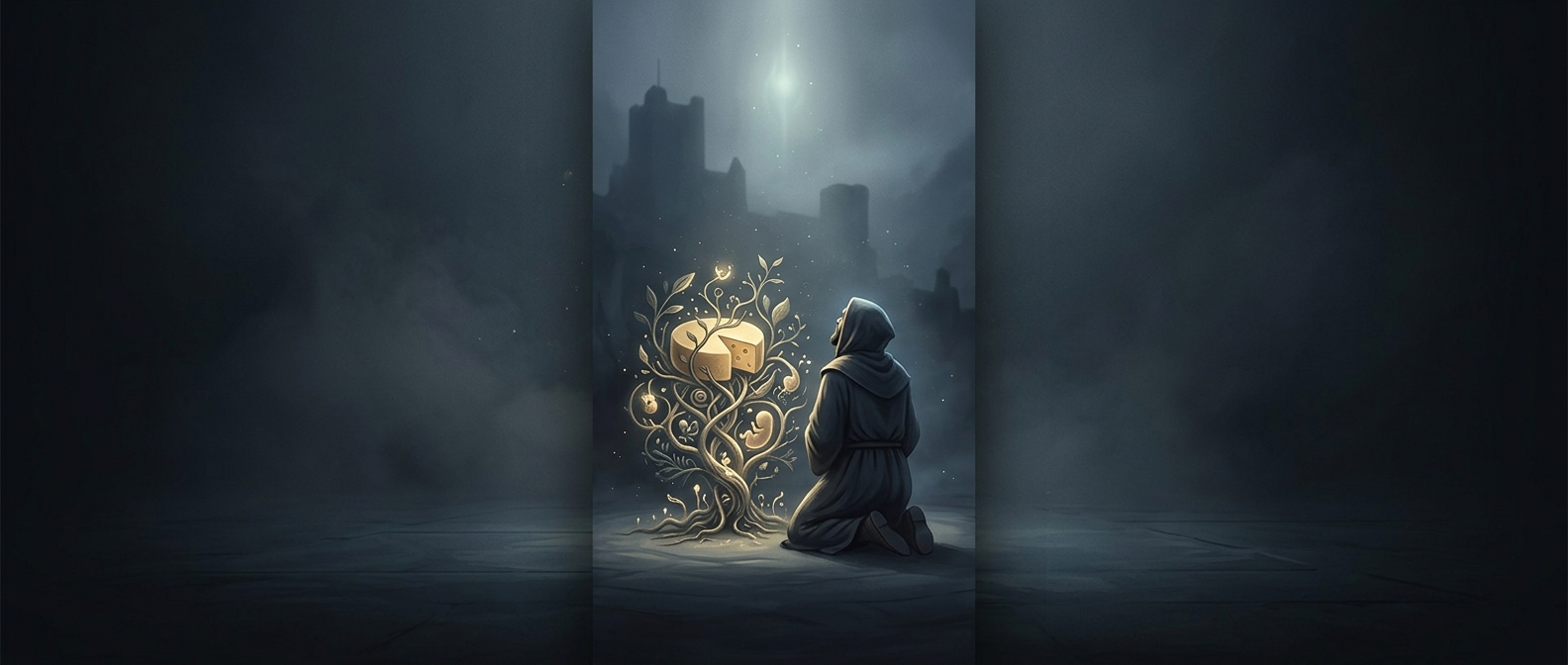
Why cheese could violate a Cathar discipline
For some Cathars, avoiding cheese was part of a broader rejection of foods tied to animal reproduction. Cathar beliefs varied, but many adherents held that the material world was the work of an evil or lesser power, while the spiritual realm was good. In that framework, sexual reproduction could be seen as drawing souls into bodily life and keeping them within the material world.
Cheese was not made by sexual intercourse; it was made from milk. But milk came from animals that had reproduced, so dairy could be understood as part of the same chain of generation. The concern was less about a particular ingredient than about taking part in a world sustained by bodily reproduction.
A demanding rule, not everyone’s daily diet
Strict abstinence was associated especially with the Cathars’ religious elite, often called the perfecti—men and women who had undergone a formal spiritual rite and were expected to live by rigorous rules. Their restrictions could include meat and other animal products. Ordinary followers, known as believers, did not necessarily follow the same diet; many lived conventional lives while supporting the movement.
That distinction matters: saying “the Cathars refused cheese” can make a demanding practice sound universal. For those who did abstain, however, a familiar food carried a larger implication: eating it meant accepting a product of the reproductive order they sought to escape.