A torch and water as a spiritual argument
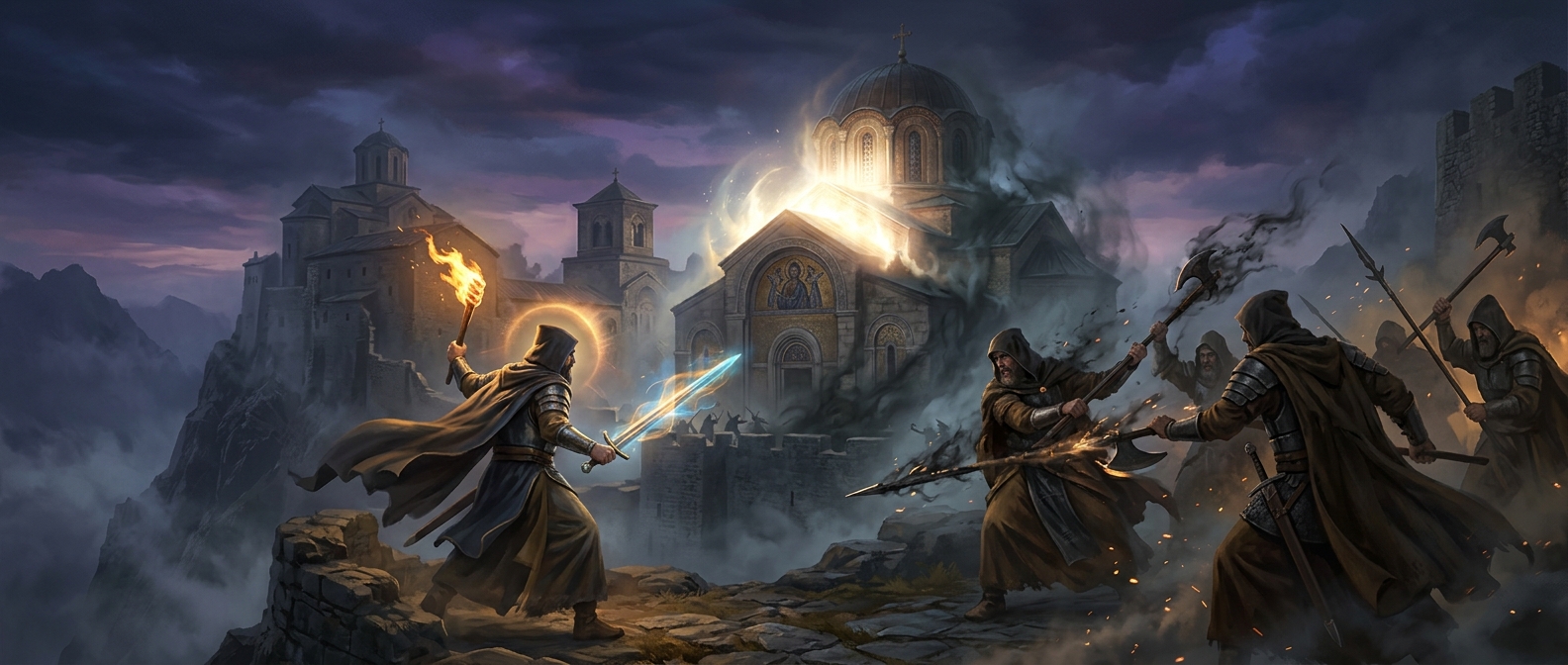
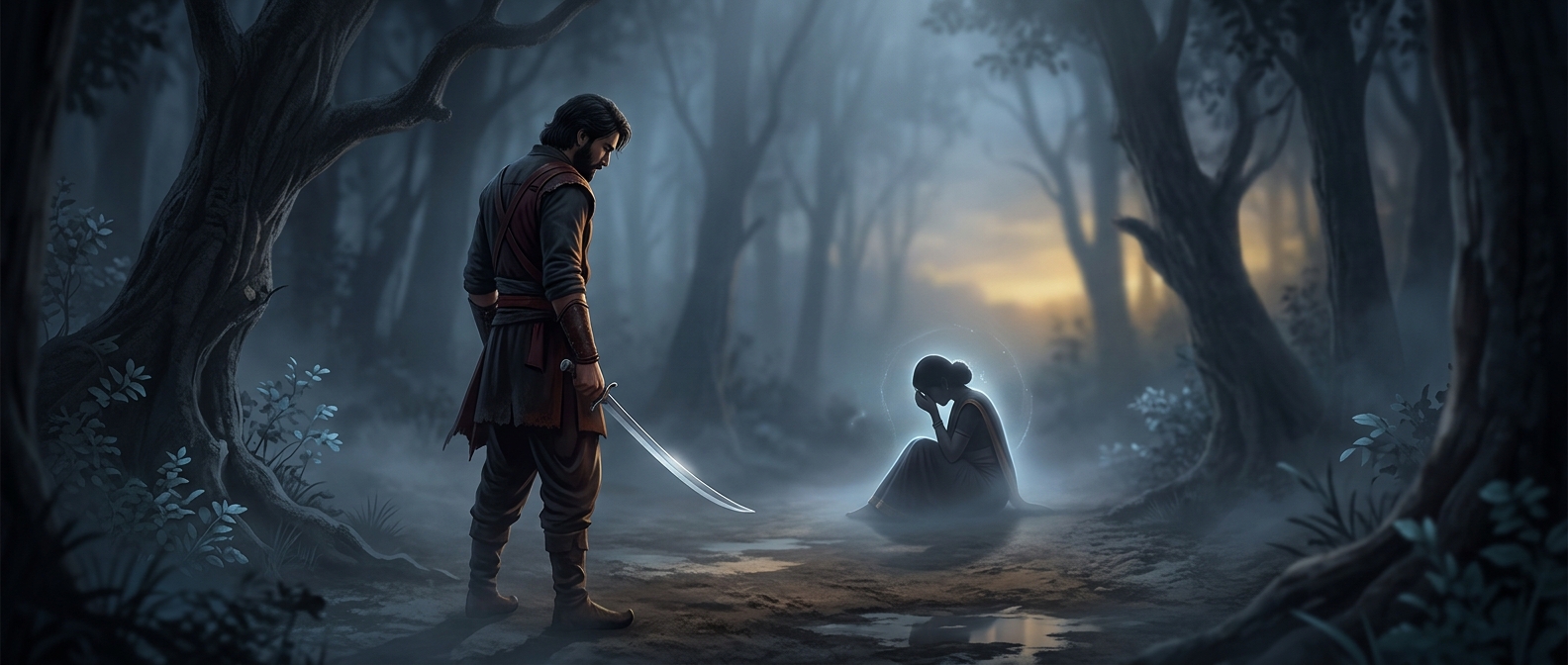
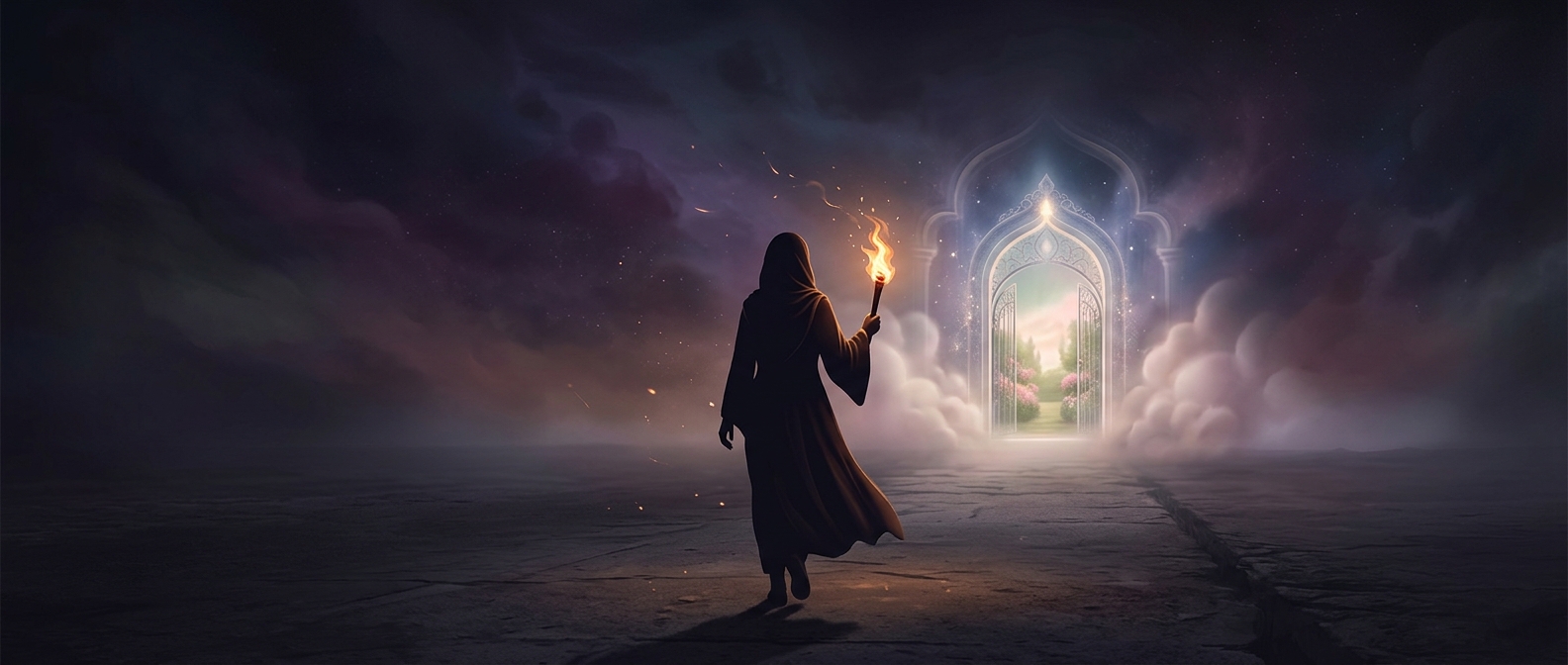
Rabia of Basra is remembered in a famous story carrying a torch to burn paradise and water to extinguish hell. The image is deliberately impossible: its purpose is not to describe an actual plan, but to make a point about what should motivate a person’s devotion.
Beyond reward and punishment
Paradise represents the hope of eternal reward; hell represents the fear of punishment. Both can shape behavior, but Rabia’s gesture asks what remains when neither is the reason for turning toward God. In the story, the answer is love: devotion valued for the divine, not as a bargain for pleasure or protection from pain.
That does not make the image a rejection of paradise or hell. It changes their role in the moral calculation. Instead of treating faith as a transaction—good conduct in exchange for a prize, or avoidance of wrongdoing to escape a penalty—the story presents love of God as an end in itself.
Why the story endures
The torch and water make an abstract distinction visible. Each object threatens to erase one side of the usual incentive, leaving the question of sincere devotion exposed. Rabia’s story is told as a striking expression of mystical love, not as a practical instruction to destroy anything. Its memorable challenge is simple: if there were no reward to gain and no punishment to fear, would love still be enough?