Why the legend puts its horror beneath a church
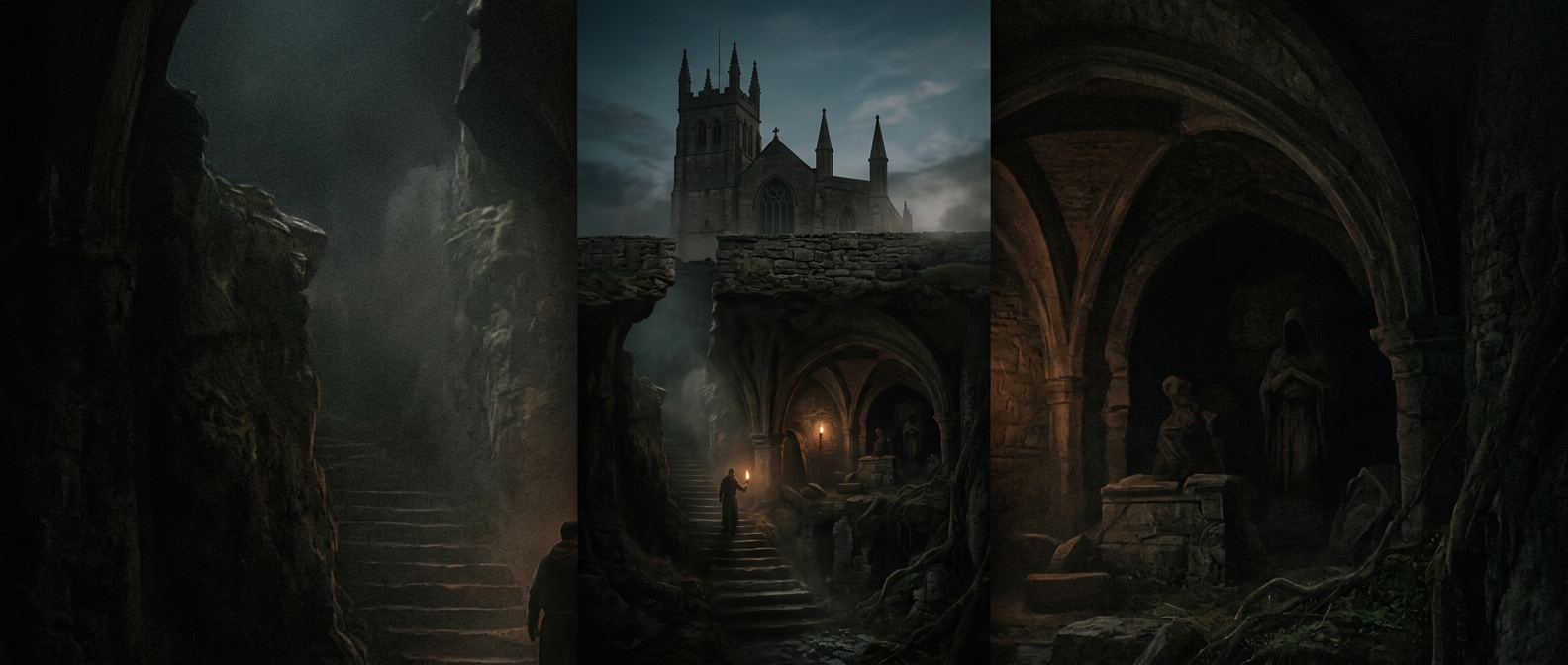
A church is meant to mark a boundary between ordinary life and the sacred. A sealed chamber under its floor unsettles that boundary: it is physically part of the holy place, yet hidden from worshippers and associated with death. The setting lets a legend turn a familiar sanctuary into a place with a concealed past.
Burial chambers, often called crypts, do exist beneath some churches. But the image of chained remains belonging to disgraced priests belongs to the legend described here; it should not be mistaken for a general account of what church crypts contain.
What the chains add to the story
The chains make the imagined punishment visible. A disgraced priest is someone who has violated the trust attached to religious office; binding his remains suggests that even death has not freed him from judgment. Sealing the chamber completes the image: the community has hidden the shame, but not erased it.
That is why the story’s force comes less from the mechanics of a particular room than from its contradiction. The church above promises reverence and order; the imagined space below holds disgrace under lock. A closed door becomes the legend’s most effective detail—evidence, to the imagination, that something was meant to stay buried.