A Bar Shift Becomes a Timing Puzzle
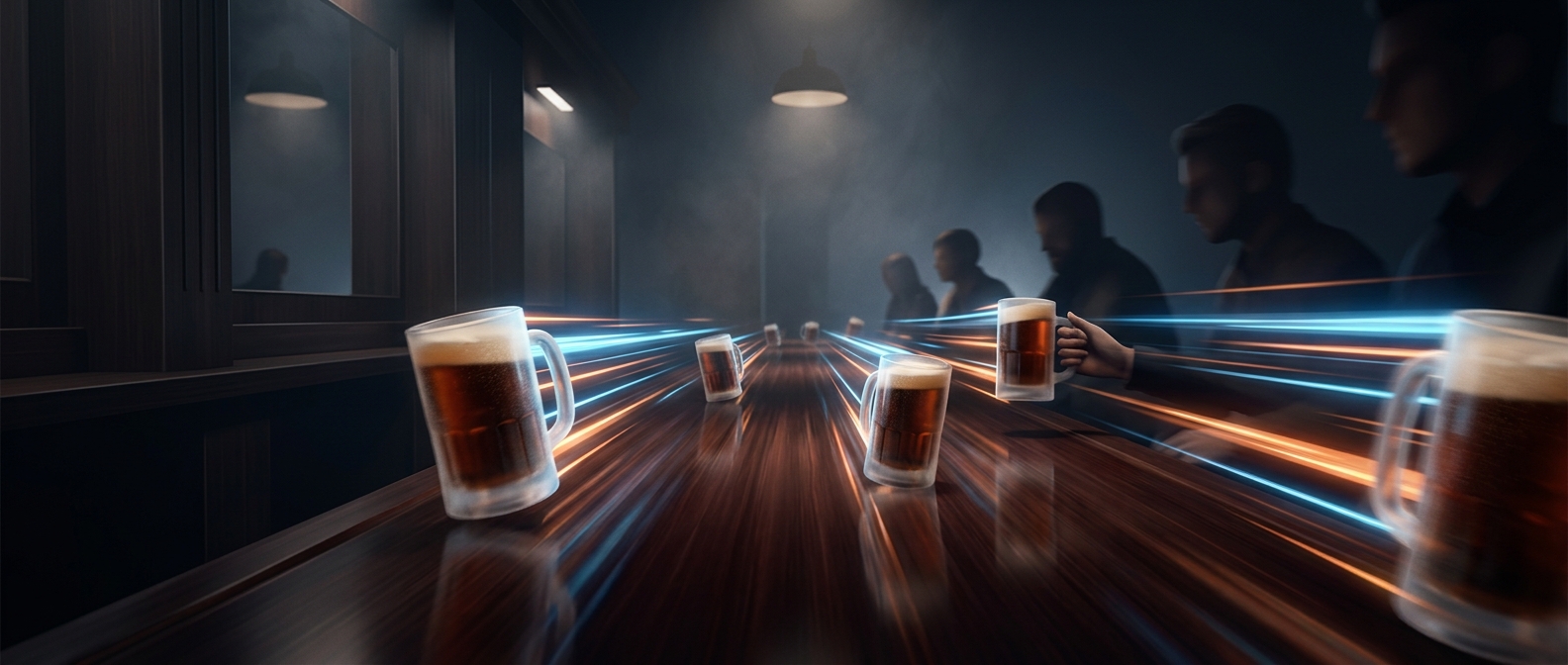
Tapper turns serving drinks into a problem of managing two-way traffic. A mug travels outward toward a customer; after it is emptied, it slides back toward the bartender. The player must send drinks before customers advance too far, then catch the returning mugs before they reach the end of the counter.
That back-and-forth is what makes each counter more than a lane for tossing drinks. Serving handles the immediate threat, but every mug sent out creates another object that will soon need attention. A player who focuses only on the approaching customers can lose track of the empties coming back.
Why the Pressure Builds
The customers function like moving deadlines: the closer one gets, the less time remains to serve them. Because the counters operate at once, the player is also choosing where to look and act. A quick response on one side may leave another side unattended, so success depends on scanning the whole bar rather than reacting to a single customer.
This gives the game its distinctive rhythm: serve, track, catch, and shift attention. The root-beer-bar setting makes the action instantly legible, while the returning mugs add a second task to a seemingly simple service job. The result is an arcade challenge in which the busiest moment is not just when customers arrive—it is when their empty glasses come back, too.