The sprite is not the target
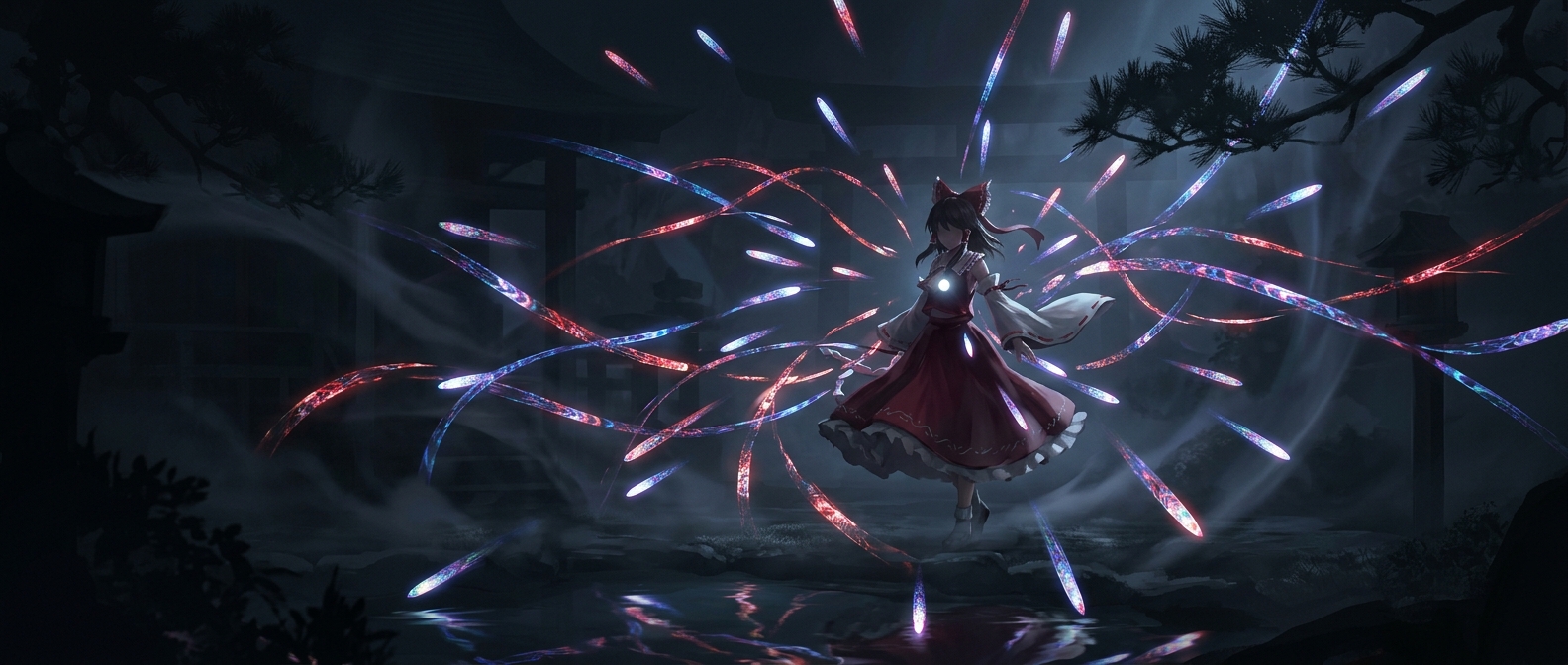
A Touhou character’s artwork may fill a sizable patch of the screen, but the game does not treat every painted pixel as vulnerable. Collision is checked against a much smaller hitbox—a simplified region used to decide whether a projectile has struck the player. In many Touhou games, that region is essentially a tiny point near the character’s center.
That difference is why a bullet can seem to pass through a sleeve, hair, or the edge of a dress without causing damage. The image communicates where the character is; the hitbox defines the precise spot that must stay clear.
Patterns become paths to read
With a compact target, survival is less about keeping the entire sprite out of danger and more about steering the hitbox through openings. Players watch how bullets travel, identify a gap, and make small adjustments to thread it. The sprite may look crowded by projectiles even while its vulnerable point has a safe route.
This changes how dense patterns feel. A screen can be visually overwhelming without requiring the player to dodge every bullet by the full width of the character. The challenge is to recognize the safe corridor and control movement accurately enough to use it.
A small target makes precision visible
The tiny hitbox creates room for patterns that look close and intricate while still allowing a narrow passage through them. It also rewards measured movement: a quick, unnecessary correction can carry the vulnerable point into a bullet that the player was already avoiding.
Once players learn to separate the sprite from its hitbox, apparent near-misses become useful information. The character can overlap a storm of color; what matters is whether that tiny point has a clear path.