A maze that doubles as a plan
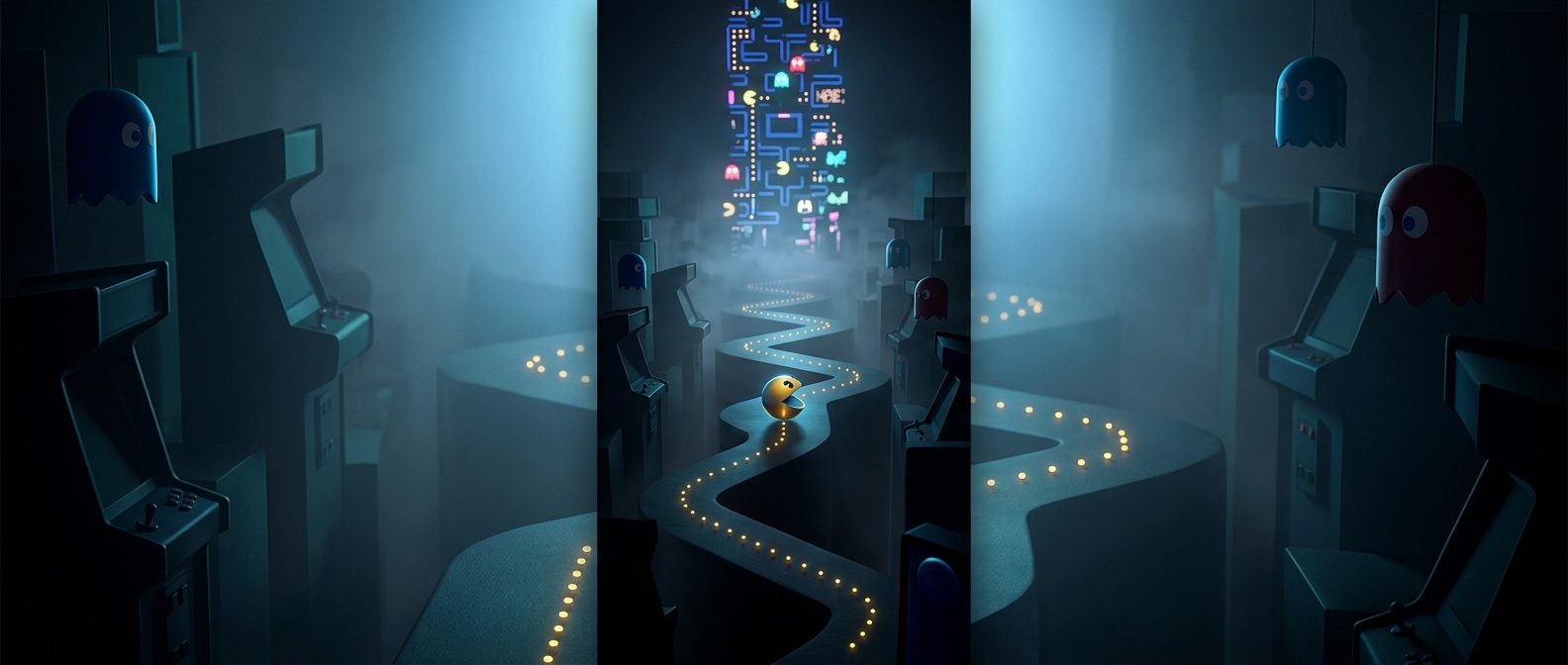
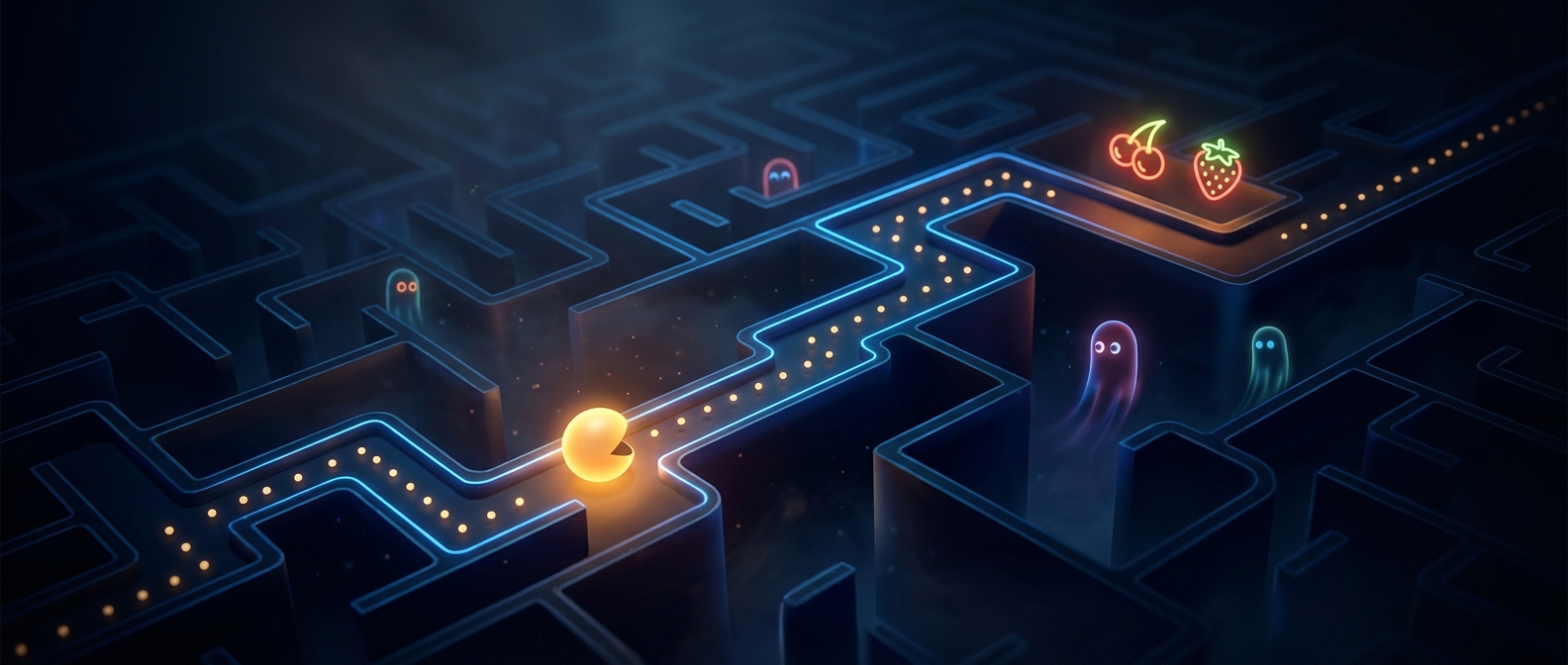
Pac-Man’s maze is more than scenery: its corridors turn every move into a choice about where to go next. The small dots spread through the passages give the player a clear objective, but collecting them also means tracing a route through places the pursuing ghosts can reach. A short detour may gather more dots; a badly timed turn can leave Pac-Man with fewer ways out.
Because movement follows the maze’s narrow paths, knowing when to turn matters as much as choosing a destination. Players learn the layout through repetition, gradually replacing frantic reactions with routes and escape plans.
Power changes the chase, briefly
Most dots reward progress without changing the danger. The larger power pellets, often called energizers, temporarily let Pac-Man turn the tables: ghosts become vulnerable, giving him a chance to chase them or slip past. That shift is temporary, so the same corridor can change from a threat into an opportunity—and then back again.
The design keeps the rules easy to grasp while making each intersection consequential. The dots pull Pac-Man forward; the ghosts make every route feel urgent; and the power pellets offer a short window to rethink who is chasing whom.