Why the Targets Became Aliens
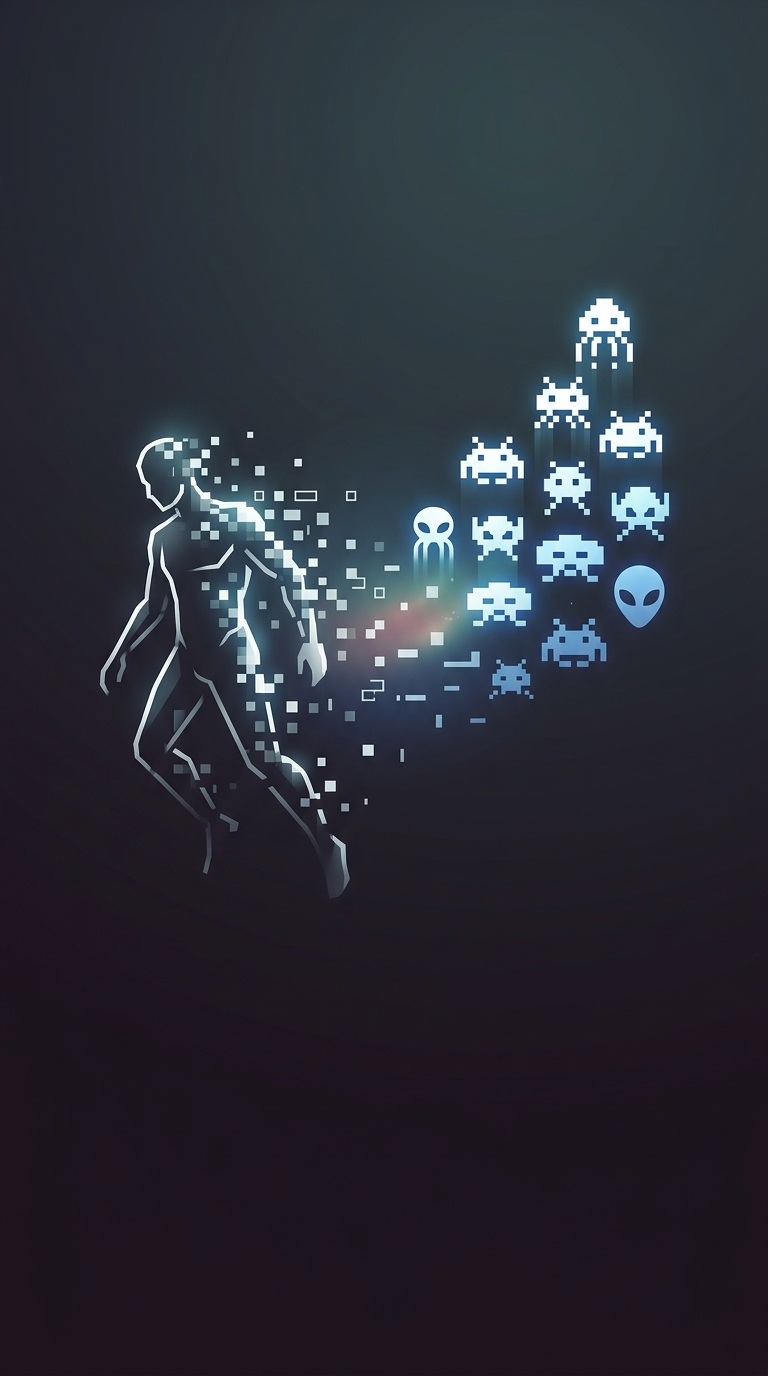
Changing the enemies from people to extraterrestrials did more than alter the game’s look. It changed what the player was being asked to imagine. A human target could make the arcade action feel like shooting people; an alien invasion instead gave the player a clear defensive role. The threat came from outside, and stopping it could be framed as protecting Earth.
That distinction mattered in a period when video games were still a new, conspicuous form of entertainment. Parents and other observers could judge a game not just by its abstract rules, but by the actions it appeared to invite. Making the opponents nonhuman offered distance from the image of a player repeatedly attacking human figures—without changing the basic action of aiming and firing.
A Change That Shaped the Game’s Identity
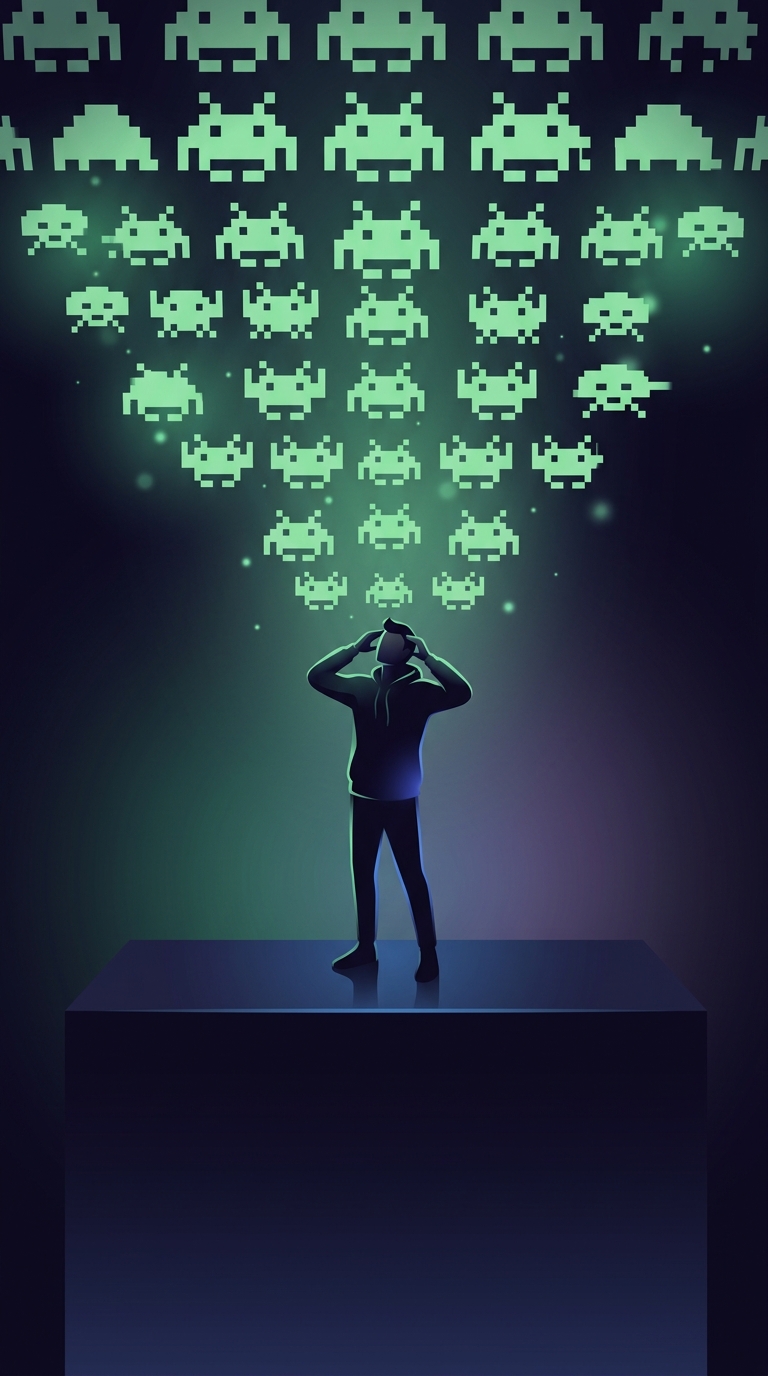
The alien choice also gave the enemies a visual language of their own. Their strange silhouettes made them recognizable as a group, even when rendered as small, blocky arcade graphics. As they advanced across the screen, the player faced a coordinated invasion rather than a collection of individual people.
The result was a useful design compromise: the game could keep its tense shooting mechanics while presenting them as a battle against an unmistakably fictional threat. In Space Invaders, the pixel shapes were not merely a technical look; they helped turn an uncomfortable human-versus-human premise into a story of defending the planet.