How Palm Readers Find an “M”
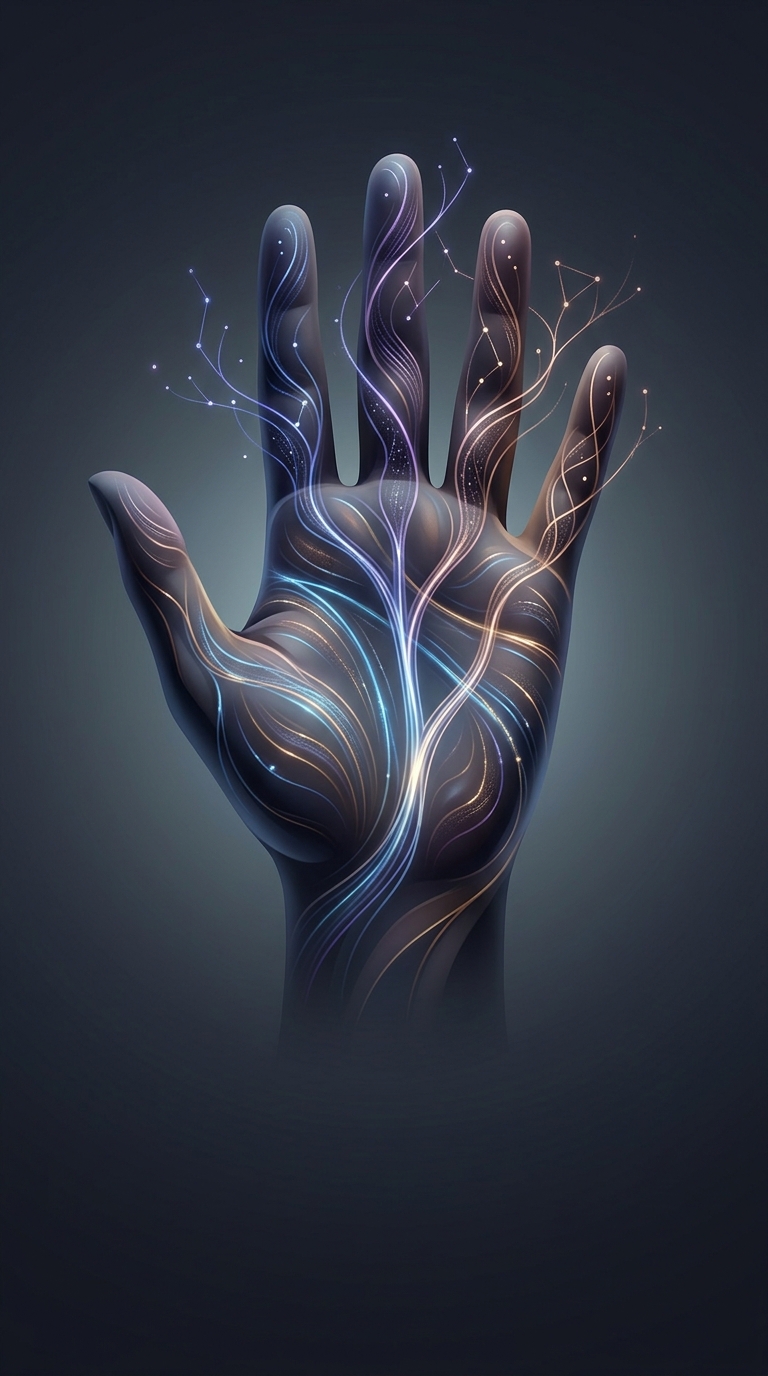
Palmistry treats the hand’s major creases as clues to personality or fate. In some readings, the heart line near the fingers, the head line across the palm, and the life line curving around the thumb are interpreted together. When their paths meet or overlap in a certain way, they can look like the strokes of a capital M.
The mark is not a separate line stamped onto the skin. It is a shape readers identify among ordinary creases, whose positions and intersections vary from person to person. Because the lines are irregular, the same palm may look more or less like an M depending on which creases someone counts and how they trace them.
What the Symbol Means in Palmistry
Some palmistry traditions associate the M with intuition, discernment, or an ability to recognize deception. Calling its owner a “psychic master” is a stronger version of that interpretation—not a conclusion that follows from the palm’s anatomy. Palmistry offers a symbolic reading of lines; it does not establish that someone can perceive information beyond ordinary senses.
The appeal of the M is partly visual: a familiar letter seems to stand out from a tangle of creases, making an abstract reading feel like a clear sign. But a recognizable pattern is not, by itself, evidence of a hidden ability. The mark can be an interesting feature to notice on a hand, while its meaning remains part of belief rather than a demonstrated test of intuition.