Why the Palm Has Its Main Creases
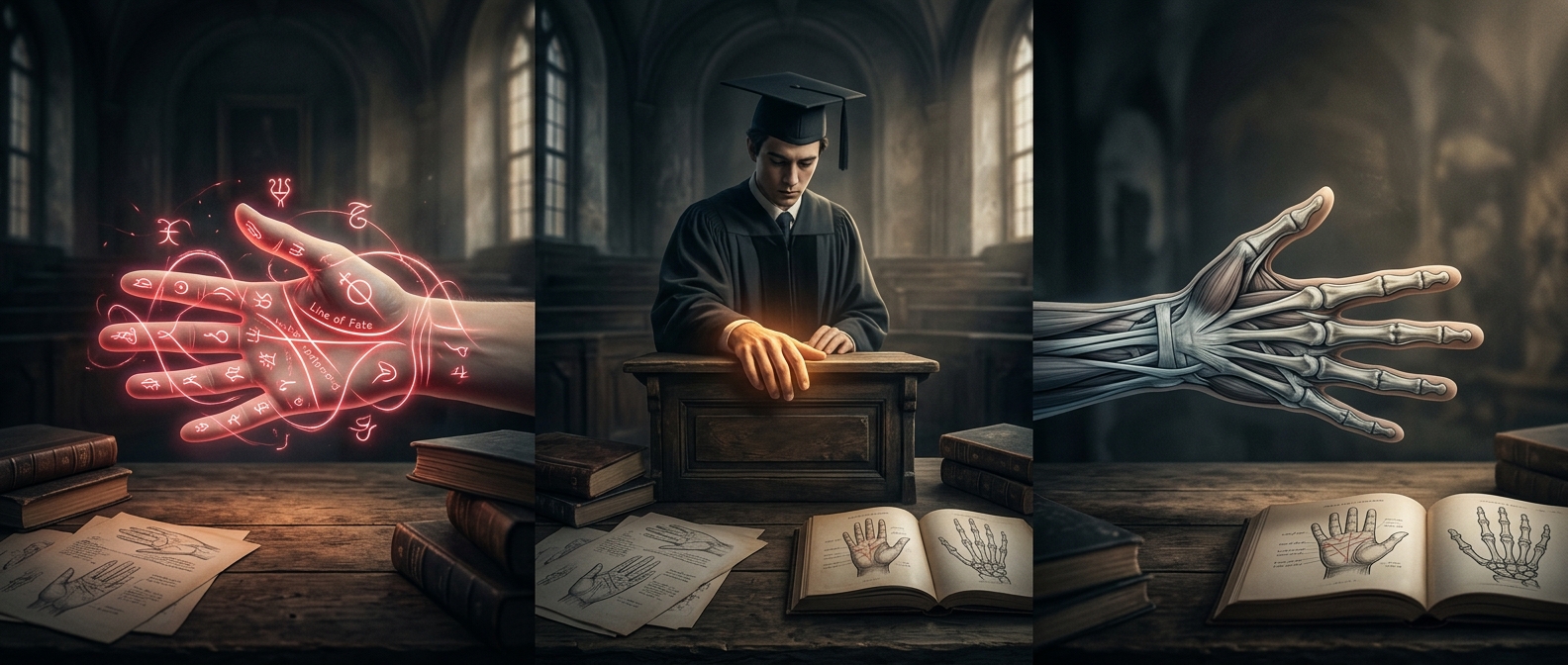
Before birth, the skin of the palm develops deep folds where the hand repeatedly bends. These palmar flexion creases let the skin fold and unfold as the fingers curl, rather than bunching awkwardly across the joints. Their placement reflects the hand’s developing structure and movement—not a map of future events.
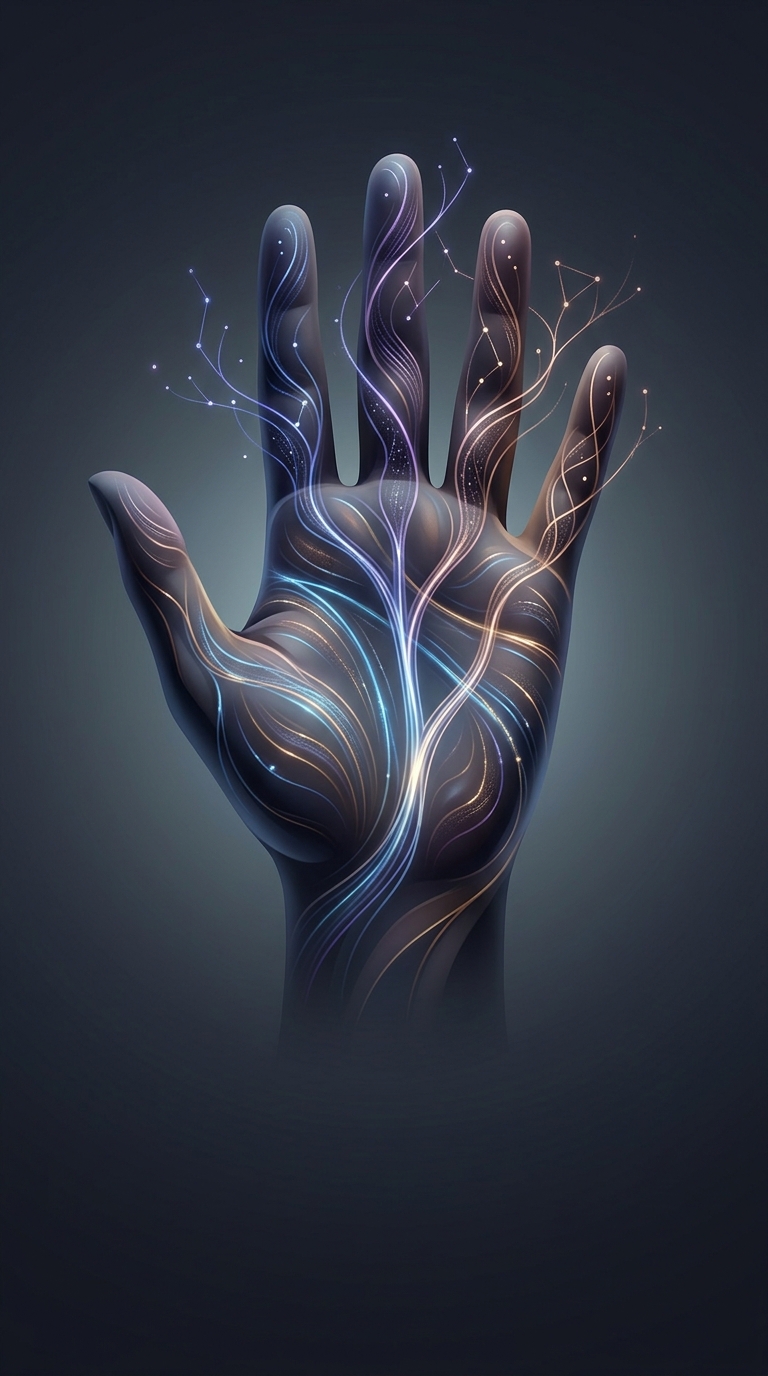
Most palms share a broadly familiar pattern, but the creases vary in shape and detail. That variation gives palm readers features to interpret: a line may be treated as a sign of temperament, relationships, or future circumstances. The meanings come from a system of symbolism, not from a known biological process that links a crease to a person’s character or fate.
How a Physical Feature Became a Reading
Palmistry turns ordinary folds into a kind of personal narrative. A reader selects visible lines, assigns them meanings, and connects those meanings into an account of someone’s life. Because the lines are physically present and differ from hand to hand, the reading can feel specifically tailored—even though the creases formed to accommodate movement.
That contrast is the key to understanding the practice: the lines are real anatomical features; the predictions attached to them are interpretations. A palm can reveal how its skin folds when the hand moves, but its creases do not provide a reliable record of what a person will become.