What an “elemental hand” is meant to describe
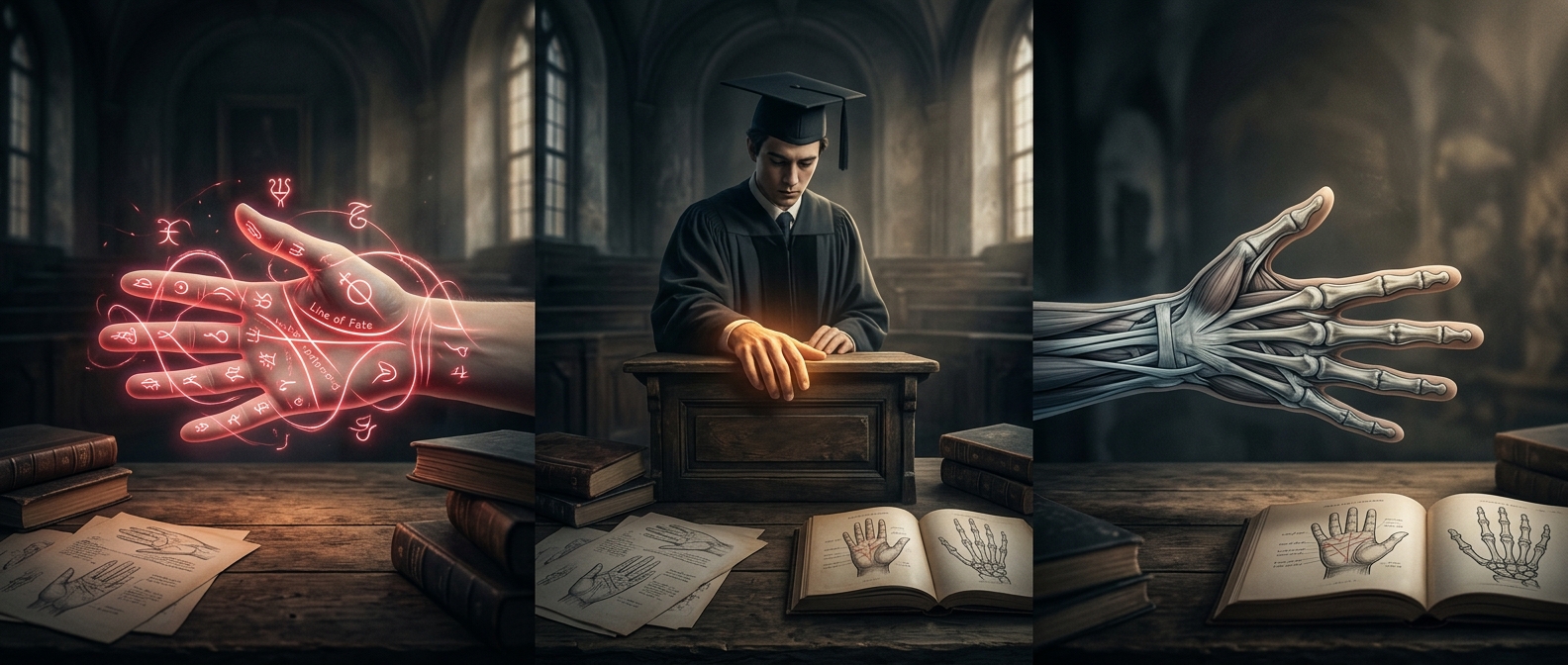
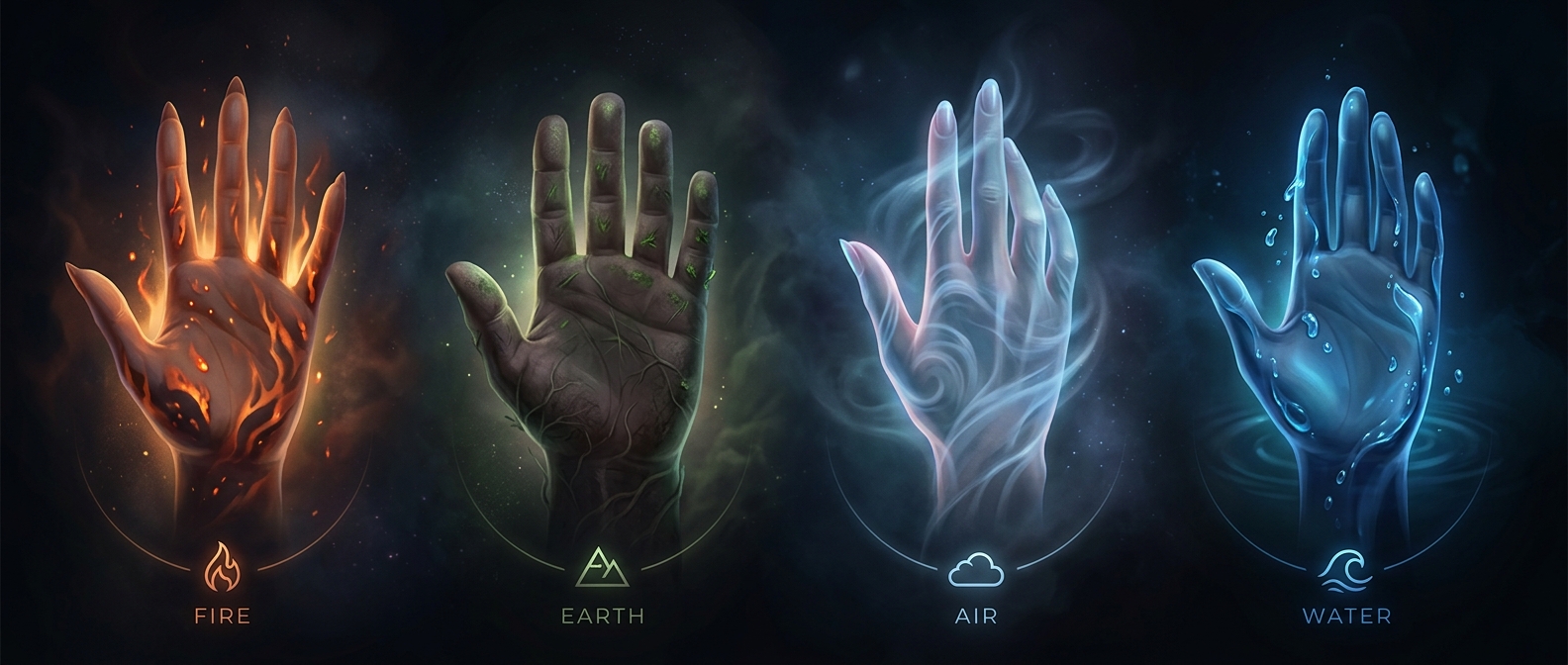
In elemental palmistry, the hand is treated as a broad portrait of temperament before its individual lines are interpreted. The system borrows the familiar language of earth, air, fire, and water, matching each element to a cluster of physical traits and symbolic qualities. An earth hand, for example, is commonly associated with a squarish palm and relatively short fingers; fire is often linked to a longer palm and shorter fingers. Other types use different combinations of palm shape and finger length.
These labels are part of a symbolic tradition, not medical or anatomical categories. Palmists do not use one universally fixed classification, so the same hand may be described differently under different systems.
Why shape comes before the lines
The classification gives the reader a starting frame. A palm’s major lines can look complicated, and their meanings are also interpreted symbolically. Assigning an elemental type first lets a palmist connect those details to a broader picture of how someone is said to approach practical matters, ideas, action, or emotion. In that sense, the hand’s shape supplies the theme; the lines supply the finer-grained reading.
The distinction also explains why two readings of the same lines may differ: practitioners may begin with different hand types or use different interpretive conventions. The elemental scheme is most useful to understand as a vocabulary for organizing a reading—not as a measurement of personality. Its first move is not to predict from a crease, but to turn the hand’s overall proportions into a symbolic lens.