How Palm Lines Become a Reading
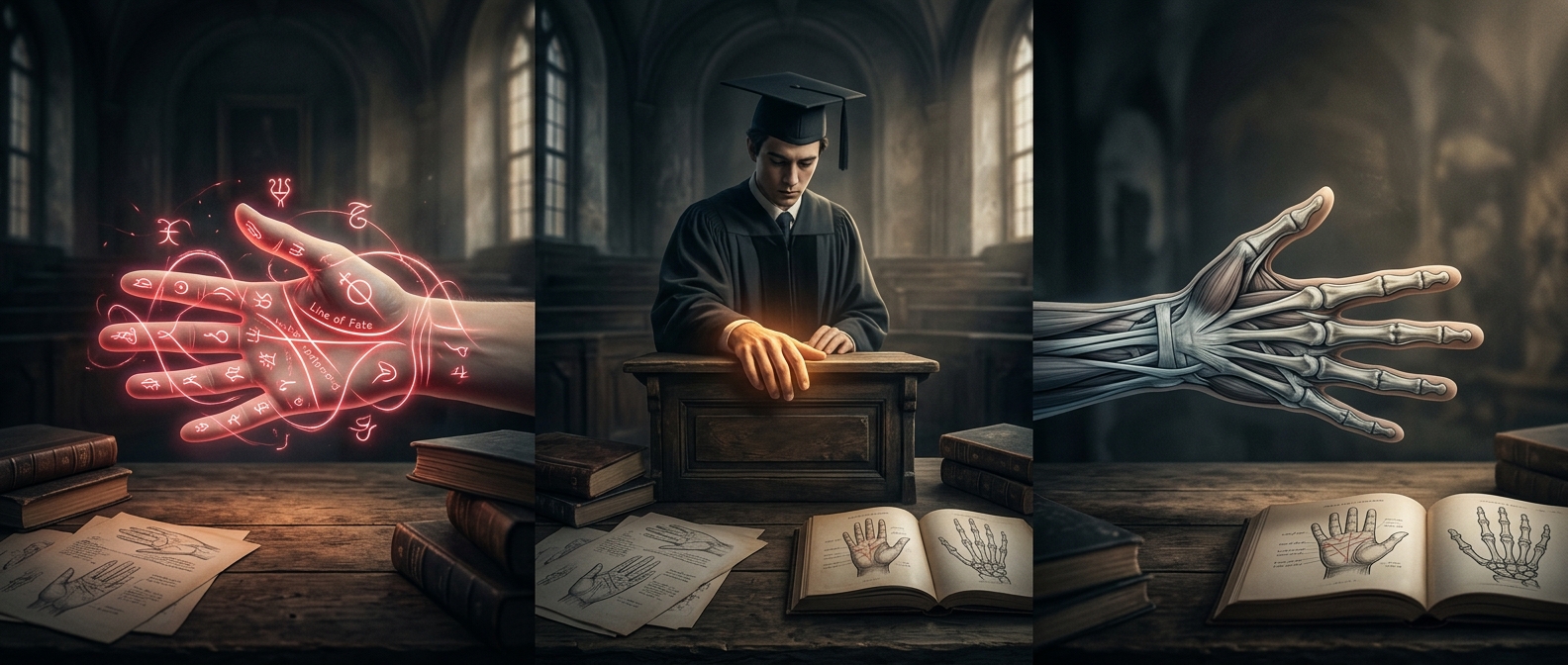
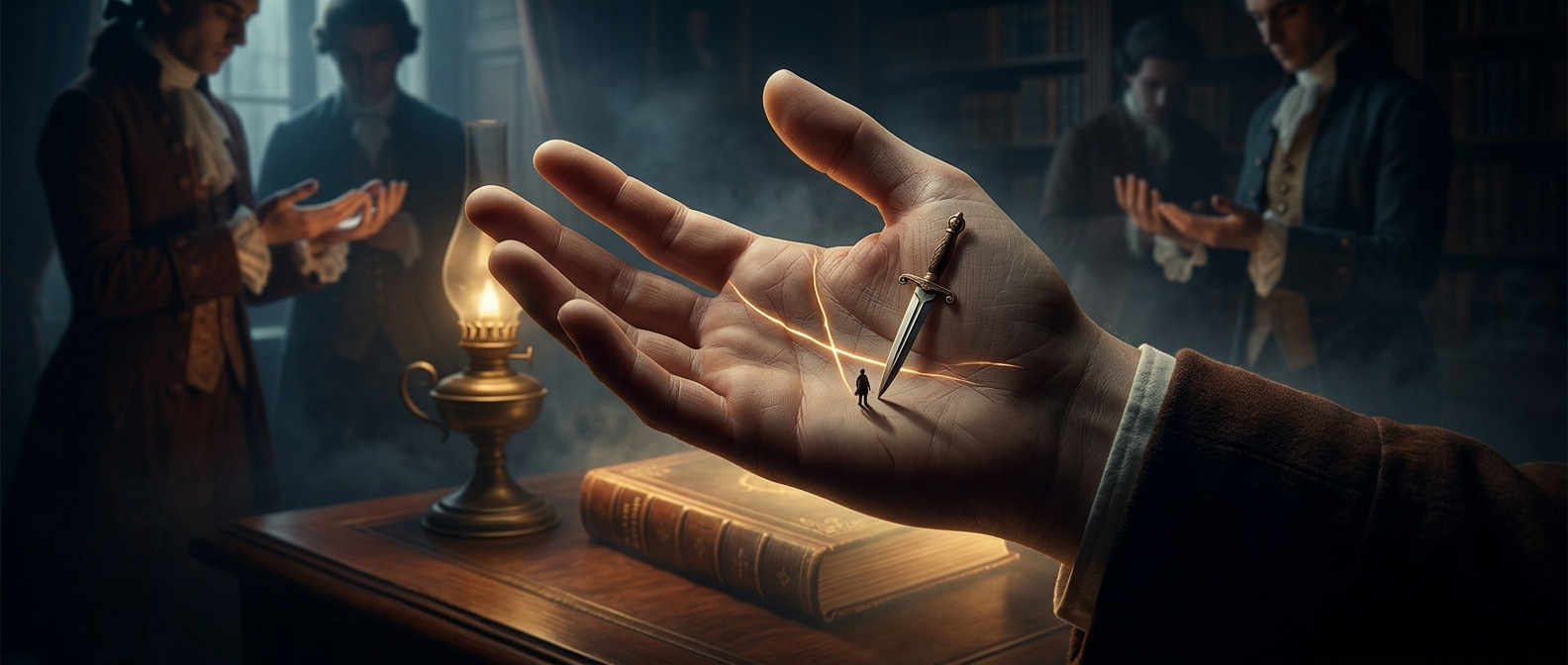
Palmistry turns ordinary hand creases into a symbolic map. In many familiar versions, readers focus on prominent folds—often called the heart, head, and life lines—and associate them with themes such as relationships, thought, and vitality. The names and interpretations can vary, and a reading is not a medical or scientific assessment of the hand.
The reader’s task is interpretive: a crease does not announce a specific event on its own. It becomes part of a story about the person’s character or possible future. Predictions such as travel ahead are broad enough to invite the listener to connect them with plans, hopes, or past experiences.
Why the Exchange Can Feel Personal
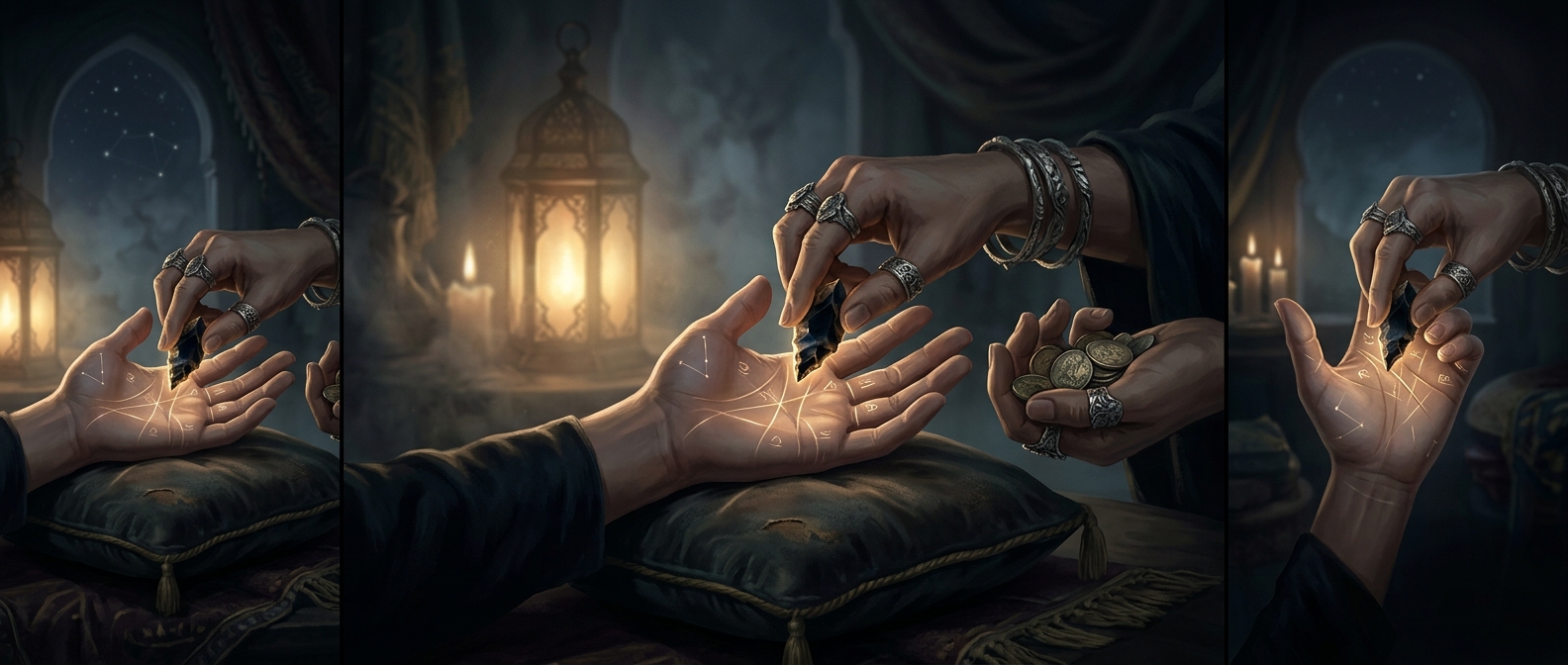
A palm reading is also a conversation. The reader offers an interpretation; the visitor decides which parts seem relevant and may share details that shape what comes next. This back-and-forth can make a general prediction feel tailored, even when the lines themselves cannot establish what will happen.
That is part of the appeal: a brief encounter turns a feature of the body everyone carries into a prompt for talking about what might come next. The creases stay the same; the story attached to them can change with the person reading them.