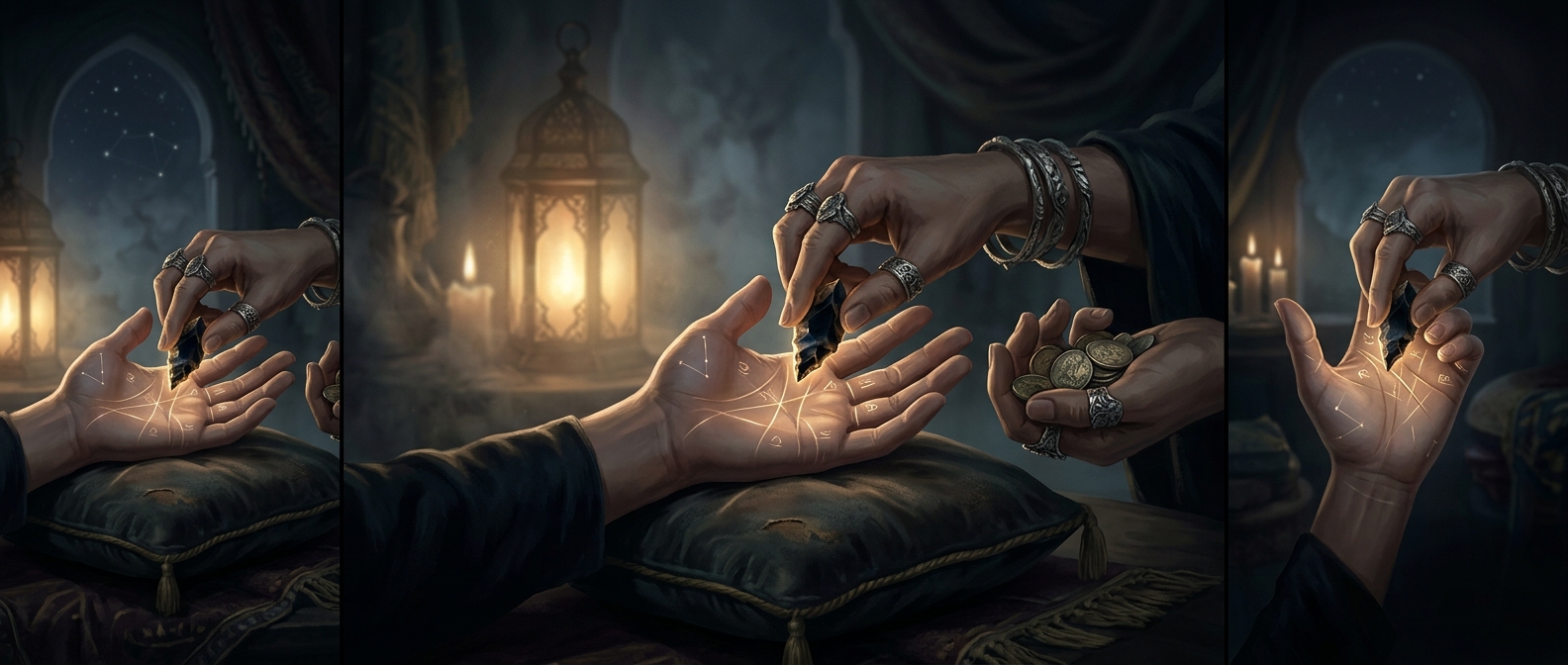
Why palm lines once looked like evidence
In early modern Europe, the boundary between learned inquiry and occult practice was not as settled as it is today. Palmistry—the attempt to infer a person’s character or future from the lines and shapes of the hand—could be debated in university settings alongside other claims about how the natural world revealed hidden truths. In 17th-century Leipzig, scholars discussed the subject, and some regarded the so-called life line as a possible clue to how long someone might live.
That idea followed a broader habit of reading visible signs as messages. A mark on the body might be treated not simply as a feature, but as an effect that pointed toward something unseen. If the hand was thought to reflect a person’s fate, its creases could seem like a map waiting to be interpreted.
What anatomy changed
Closer anatomical study offered a more ordinary explanation. The lines across the palm are skin folds, formed where the hand bends and grips. Their placement helps the skin crease as fingers and palm move; they do not function as a clock measuring the years a person has left.
This shift mattered because it replaced symbolic interpretation with a physical account of how the hand works. Once palm lines could be understood as part of the mechanics of movement, a long or short crease no longer needed to stand for a long or short life.
A change in what counted as knowledge
Palmistry’s university history is less a story of a sudden discovery that hands exist than of changing standards for evidence. A claim that once seemed worth scholarly debate lost ground when anatomy supplied a testable explanation for the visible lines. The same creases remained on people’s palms; what changed was the meaning scholars assigned to them.