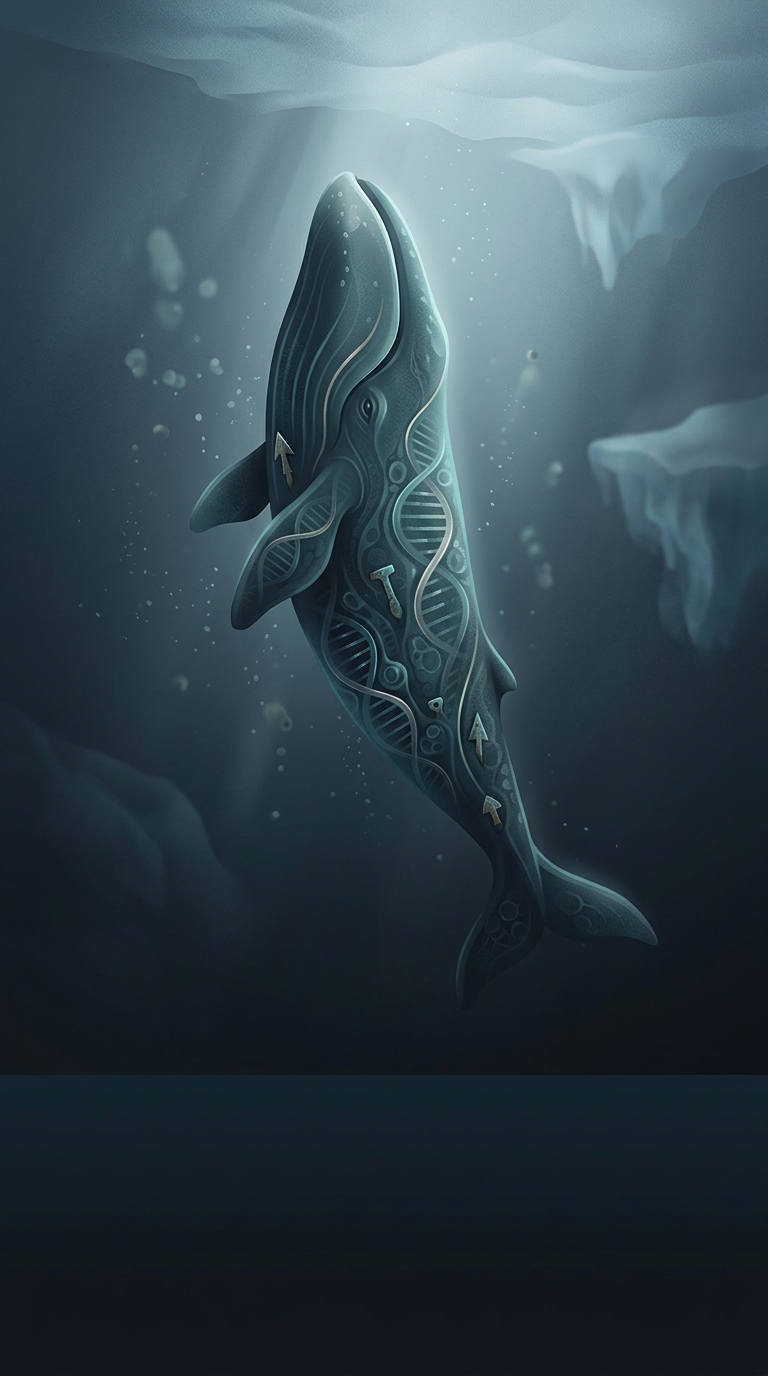
Why a giant whale faces a cancer puzzle
Cancer begins when cells acquire DNA damage and then multiply when they should not. A whale’s enormous body contains far more cells than a human’s, and a life lasting centuries gives cells more time to accumulate damage. Yet body size and lifespan do not translate neatly into cancer risk across species—a puzzle known as Peto’s paradox.
The defense may begin with damaged DNA
Bowhead whales carry genetic changes that may help their cells cope with DNA damage. DNA is the instruction set cells copy when they divide; errors in that copying can contribute to cancer. Some bowhead-cell research points to effective DNA repair and tighter control over damaged cells. Repair can correct some errors, while cell-control systems can prevent a badly damaged cell from continuing to divide.
These are overlapping safeguards, not a single “cancer-proof” switch. A mutation is a change in genetic material, and its effect depends on how it alters a cell’s work. A protective change may lower risk without preventing every cancer, and findings from cells do not by themselves explain the full biology of a living whale.
Long life is still an open question
The Arctic environment is part of the bowhead’s way of life, but cold water alone does not explain its longevity. Researchers are still working out how inherited defenses, whale biology, and other factors fit together. The old harpoon point found embedded in one whale offers a tangible sign that at least one animal survived for an extraordinary time—but it cannot reveal which defenses made that possible.
The more useful lesson is that evolution can equip long-lived animals with several layers of cellular protection. Studying those layers may help scientists understand how cancer risk is managed, even though bowheads remain vulnerable rather than immune.