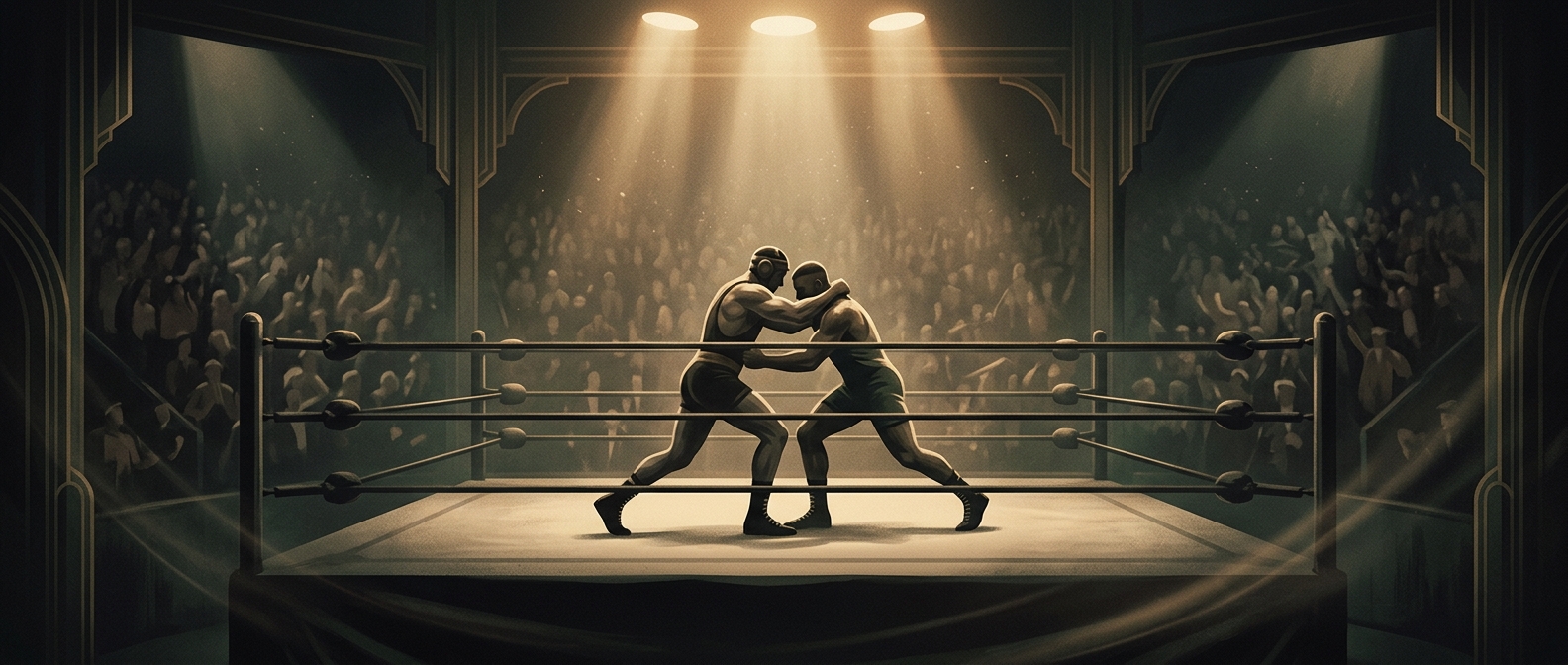
Why promoters needed a finish
A genuine wrestling contest could become a test of patience as much as strength: two evenly matched athletes might grapple for hours without a decisive result. That was a problem for promoters selling seats. A bout that ran too long could disrupt the evening’s program, while a draw or an inconclusive ending gave the crowd less of the payoff it had come to see.
In the early 1900s, promoters and wrestlers increasingly shaped matches in advance, including who would win. Planning the outcome made the event more predictable—not just for the people putting on the show, but for audiences expecting a beginning, a build, and a finish.
A contest turned into a performance
With the result settled, wrestlers could organize the action around it. They could create stretches of apparent advantage, reverse momentum, and delay the decisive move until the crowd had reason to care about the ending. The match still depended on athletic skill and physical effort, but its purpose was no longer simply to discover which wrestler would prevail.
That distinction matters: predetermined does not mean that every movement was harmless or that the performers faced no risk. It means the contest’s dramatic destination was planned, allowing the action to function as a live performance with a reliable conclusion.
The business value of suspense
A planned finish gave promoters something an open-ended contest could not: control over the evening’s rhythm and a clear payoff for the audience. It also let a match deliver a story—one wrestler gaining the upper hand, the other struggling back—without requiring the result to emerge from an hours-long test of endurance. The lasting change was that wrestling could sell not only competition, but suspense with an ending arranged in advance.