Why a tune can keep replaying
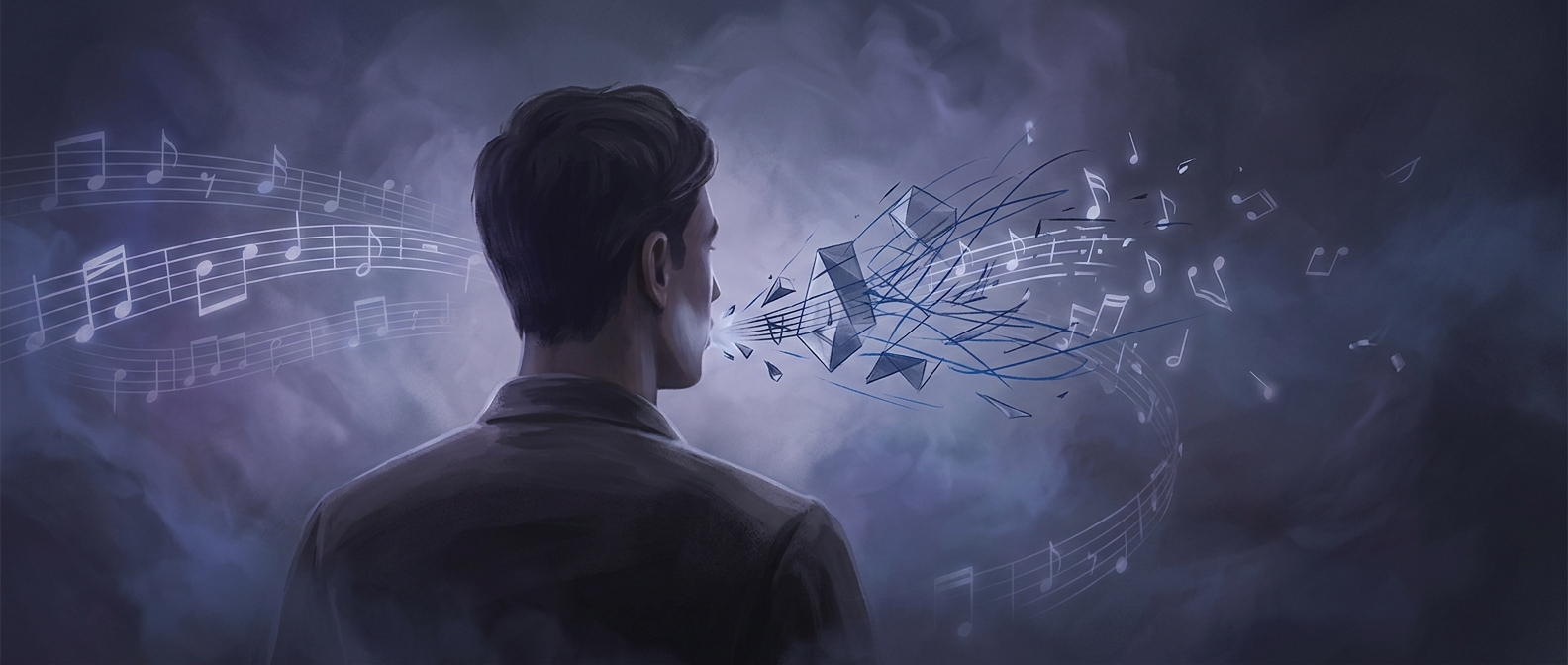
An earworm—the involuntary experience of a song repeating in the mind—often feels like hearing a fragment without sound. The brain is not simply storing the tune; it is repeatedly reconstructing it. People may quietly rehearse its words or melody, much as they would when preparing to sing along. That rehearsal can help keep the musical fragment active, especially when attention has little else to occupy it.
How chewing can interrupt the loop
Chewing adds a steady sequence of movements involving the jaw, tongue, and mouth. Those movements require planning and coordination, the same broad kinds of processes used when silently preparing speech or song. If the mind is using some of that capacity to rehearse a tune, chewing may leave less room for the rehearsal to run smoothly.
The effect is not that gum erases the song or blocks sound from the brain. It can instead disrupt the mental repetition that keeps the fragment going. A melody may become less vivid, break into pieces, or be easier to shift attention away from. A simple, repetitive mouth movement may be most useful when the earworm is being sustained by a similarly repetitive inner performance.
A small interruption, not a cure
The trick is temporary and won’t work for every song or every person. Some musical loops persist because a phrase is catchy, emotionally charged, or repeatedly brought back to mind; chewing does not remove those reasons. But it offers a concrete way to compete with the loop: give the mouth a rhythm of its own, and the tune may lose the uninterrupted rehearsal that was helping it stick.