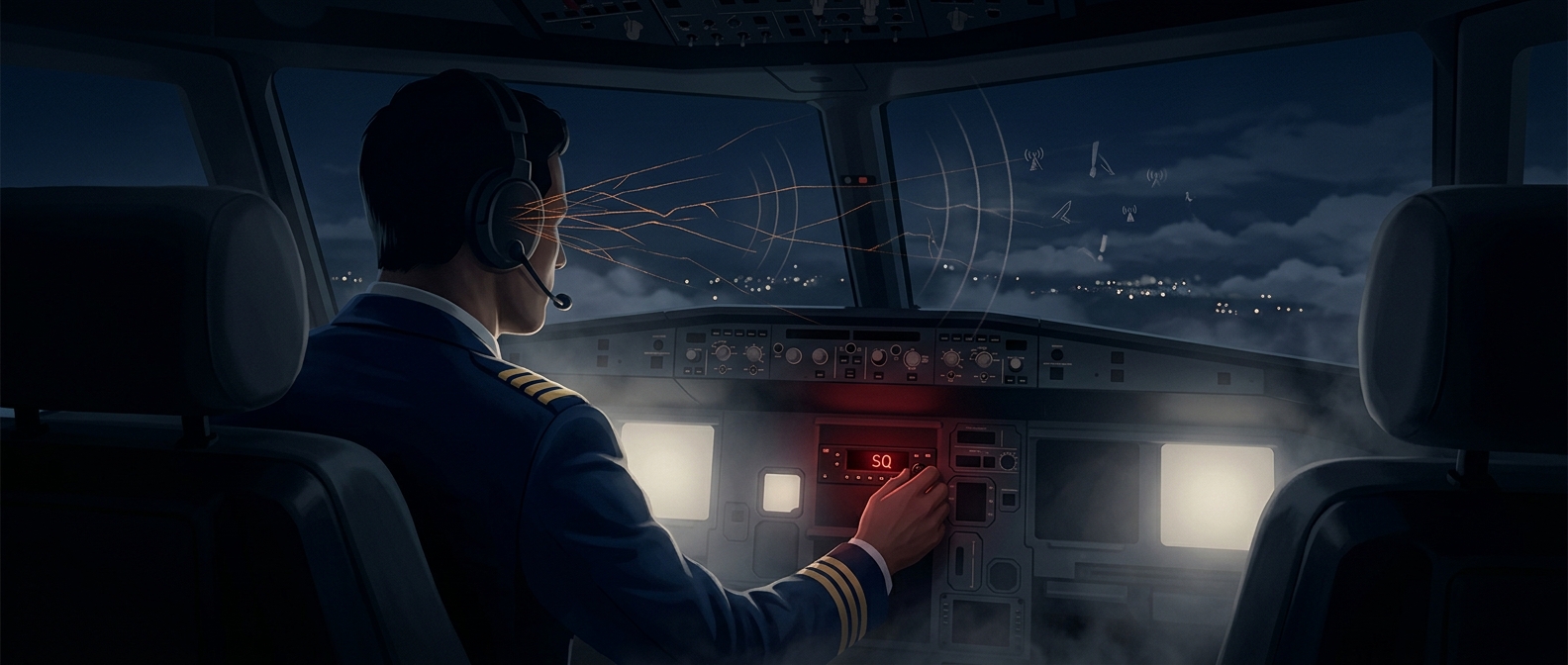
A quiet signal in a crowded radio channel
An aircraft’s transponder is a radio device that replies to ground radar with identifying information. When a pilot selects code 7500, the transponder’s reply tells air traffic control that the aircraft is being subjected to unlawful interference—the aviation term commonly associated with a hijacking.
The signal matters because controllers can receive it without the pilot saying anything on the radio. If speaking openly could increase danger in the cockpit, the crew can still alert people on the ground while keeping the conversation outwardly routine.
What happens after the code appears
The code is not a detailed message: it does not say who is threatening the crew, what is happening aboard, or what help is needed. Controllers treat it as a serious alert and can respond through their established procedures, including coordinating with other aviation authorities and monitoring the aircraft’s situation. The cockpit may also communicate by voice if it is safe to do so.
That limited signal is deliberate. A transponder code can carry a clear warning through the same system used to track aircraft, without requiring an explanation that might be overheard. It gives air traffic control a reason to act even when the crew cannot safely describe the emergency.
Why the number is easy to remember
The aviation system reserves distinct four-digit codes for particular situations. 7500 is the code for unlawful interference; other codes cover emergencies such as a general distress situation or radio failure. Keeping these signals separate helps controllers interpret a brief radar return quickly, even when the cockpit cannot provide more information.
A single selection on the transponder can therefore change how a routine-looking flight is understood on the ground—without changing what passengers hear over the cabin speakers.