Why a Steep Trail Finds Your Calves
On level ground, each step is a modest push-off. Point the trail sharply uphill and your body has to drive itself higher with every stride. The calf muscles help extend the ankle—the motion that presses the foot into the ground and moves you forward—so they work harder as the slope steepens.
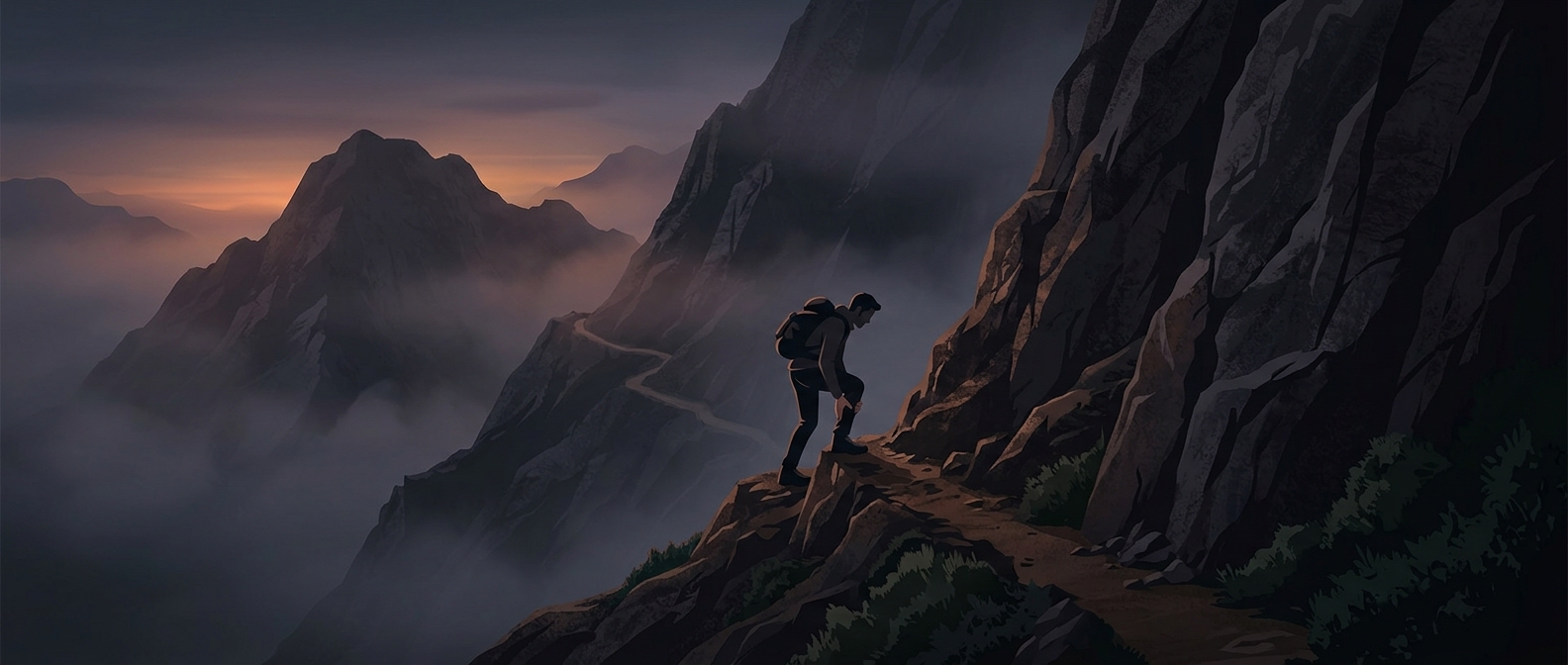
A dirt trail adds another demand. Loose soil, stones, and irregular steps make each foothold less predictable. Your lower legs keep making small adjustments to steady your foot, even when the main task is simply climbing. That repeated effort can make the calves feel tight or tired before the summit comes into view.
The Pace That Saves the View
A common instinct is to take long strides to cover ground faster. On a steep grade, that can mean reaching farther uphill and asking the legs to lift the body more with each step. Shorter steps at a steady pace usually make the climb easier to sustain. Brief pauses can help, too—especially before fatigue turns a careful foot placement into a stumble.
The slope also changes how a climb feels: a trail that looks short on a map may demand a lot of work if it gains height quickly. That is why the final stretch can seem disproportionately tough. At the top, the view is still there; the practical trick is to arrive with enough breath left to notice it.