Gas can collect where the ice closes in
Katla is a volcano beneath Iceland’s Mýrdalsjökull ice cap. Heat and volcanic activity beneath the glacier can produce sulfur dioxide, a colorless gas with a sharp, irritating effect on the eyes and airways. The gas can escape through openings and fractures in the ice and enter nearby caves.
An ice cave is not necessarily a well-ventilated tunnel. Its passageways can bend, narrow, or dip into low pockets where air circulates poorly. If volcanic gas enters one of these spaces, it may build up locally even when the entrance seems safe. You cannot reliably judge the danger by sight, and sulfur dioxide’s smell is not a dependable warning.
A mask is protection, not permission to linger
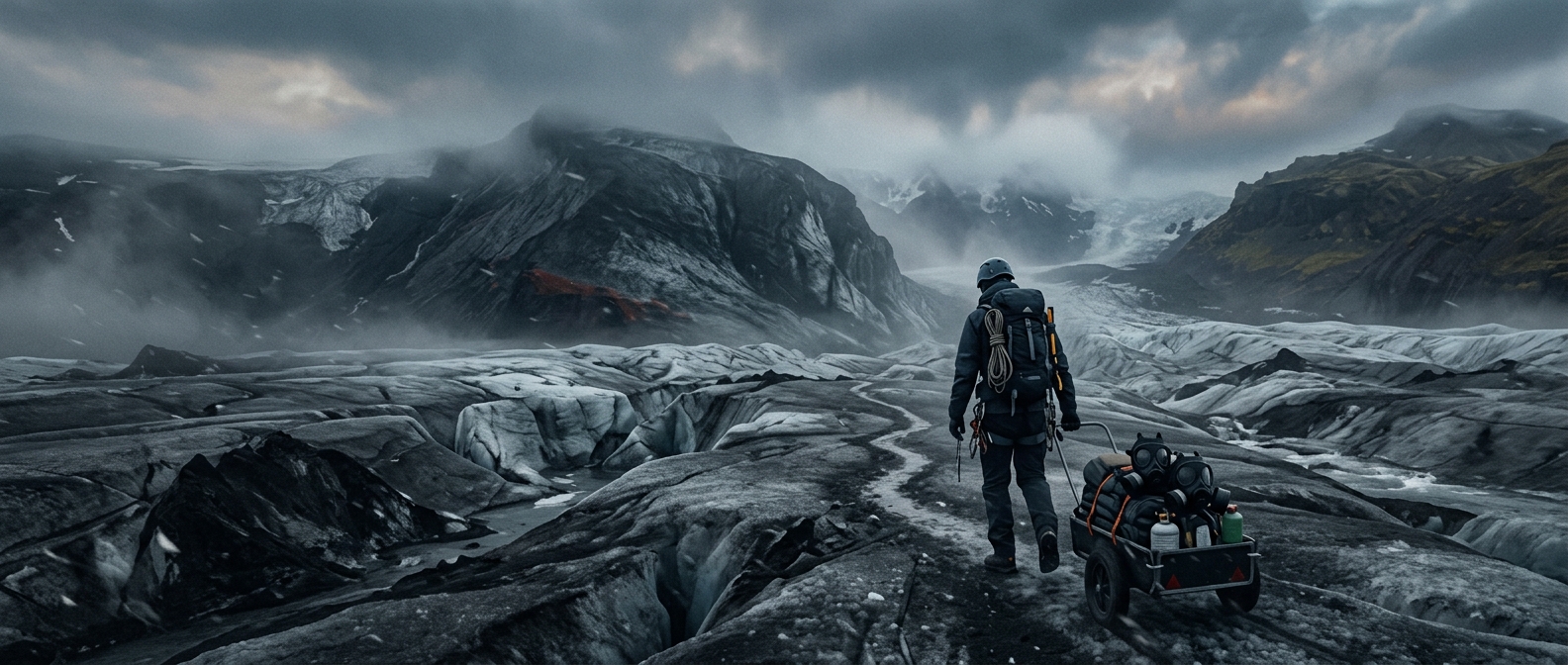
A properly selected gas mask can filter certain harmful gases from the air, but ordinary filters do not supply oxygen. That distinction matters in a cave: a mask is one layer of protection, not a substitute for monitoring conditions or leaving if they become unsafe. Specialized equipment and guided access help manage a hazard that can vary from one passage to another.
The striking risk is that the cave’s beauty and apparent stillness can conceal changing air. Under a glacier, a narrow opening may be the only route by which volcanic gas escapes—and the place where it becomes concentrated.