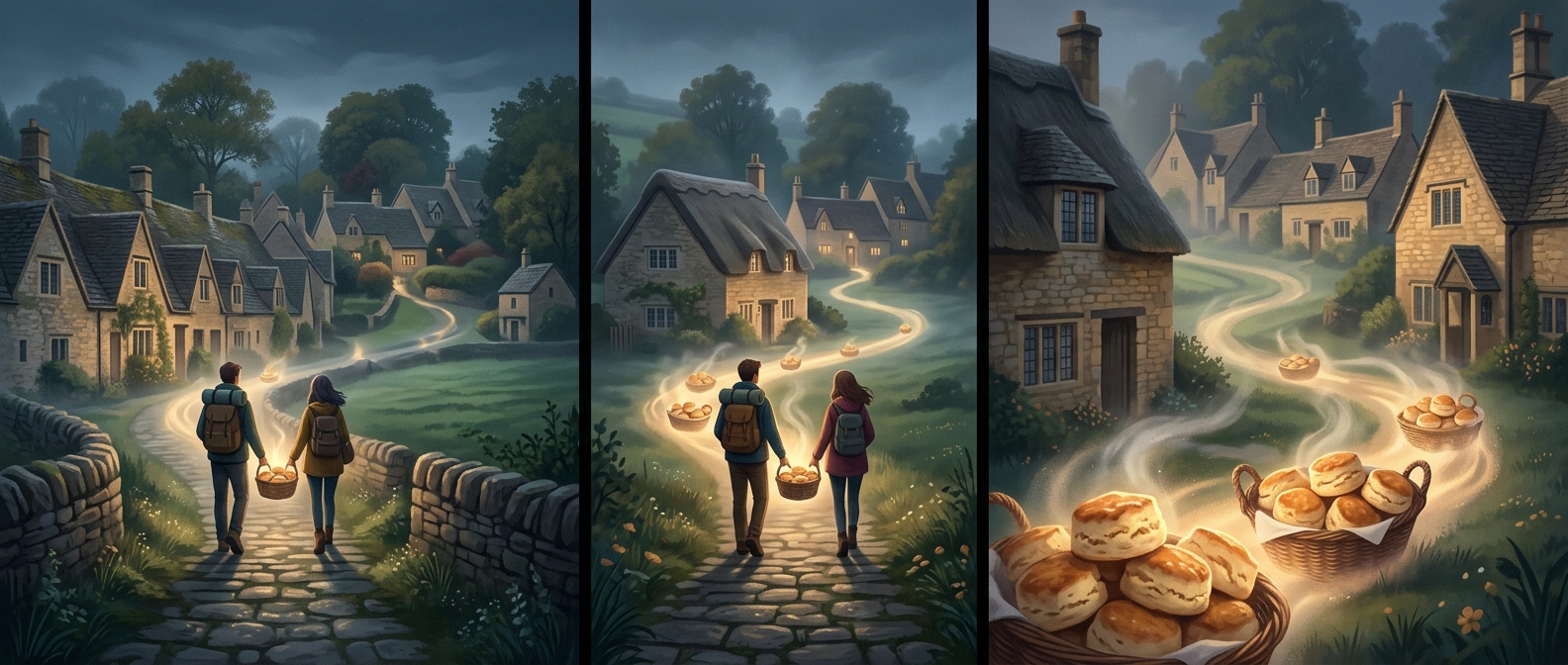
A walk that passes through the village, not around it
Cotswold footpaths often link one village to the next, crossing farmland before delivering walkers into a compact cluster of stone cottages, a church, and a village green. That makes stopping for tea part of the route’s natural rhythm: the café or tea room is not a distant trailhead concession, but a destination encountered on foot.
The landscape helps explain the pairing. Local limestone gives many buildings their warm, honey-colored appearance, while the villages’ narrow streets and historic centers invite a slower pause after open-country walking. A cream tea—tea served with scones, clotted cream, and jam—fits neatly into that pause, turning a short break into a small local ritual.
Hospitality is part of the itinerary
For walkers, the practical choice is whether to stop now or save room for the next village. Tea rooms make rural routes more welcoming, but they also give a gentle hike a succession of tempting finish lines. The joke about refusing a scone works because accepting one feels less like a detour than joining in.
So the Cotswolds’ characteristic hiking challenge is partly social: the path may be easy underfoot, but every village offers a reason to linger—and a fresh decision about whether the walk is really over.