How a soft cable can mark a hard desk
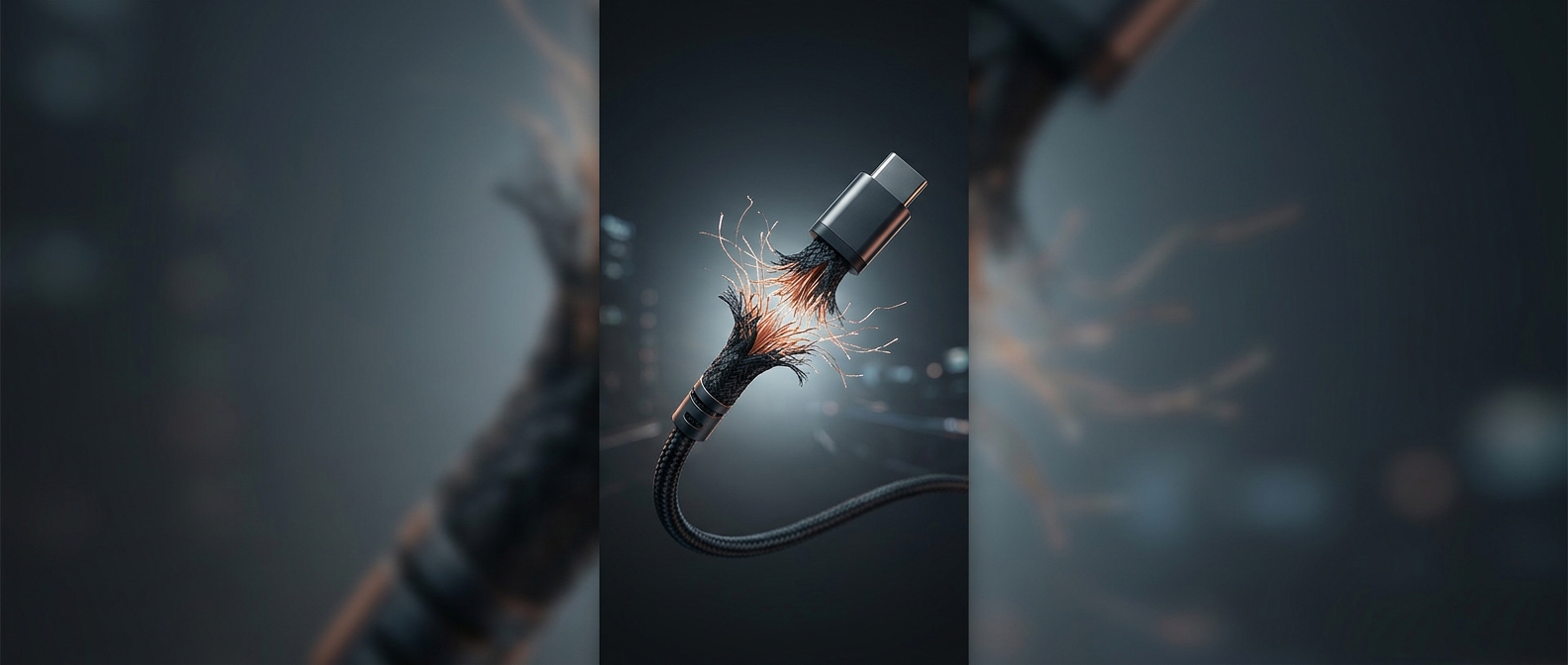
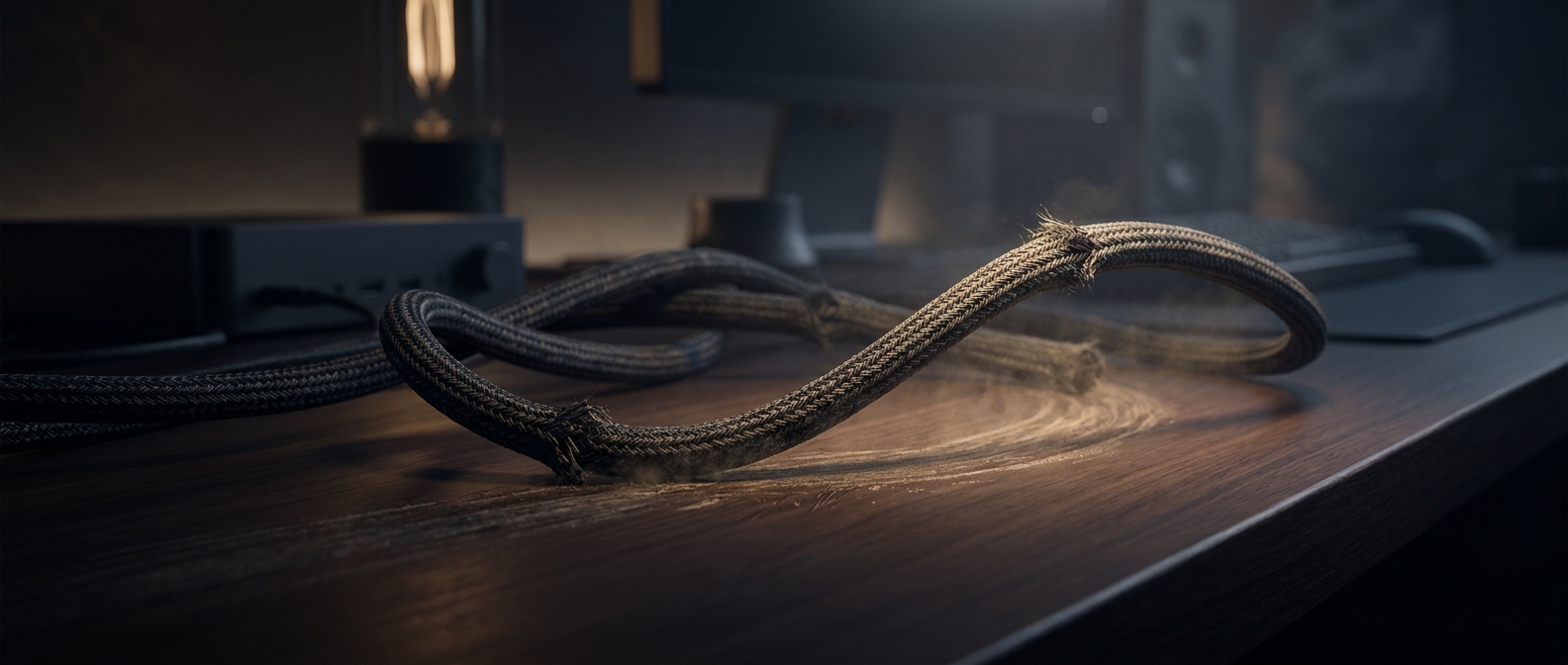
A braided charging cord feels smooth in your hand, but its woven sleeve is made of many fine fibers crossing over one another. If the cable repeatedly slides across a desk edge, those fibers can catch dust and grit—or simply rub against the finish—while the cord’s weight and movement press them against the surface. The result is slow, repeated abrasion: tiny scuffs that can eventually become visible scratches.
Why the desk edge takes the wear
A cable often hangs over the same edge, so that narrow strip receives most of the rubbing. Each time someone pulls a phone closer, shifts a laptop, or moves the cord aside, the contact point travels back and forth. A desk’s clear protective finish may show marks before the wood beneath it does; once that coating is worn through, the exposed surface can be damaged more readily.
The effect depends on the materials and the setup. A rough or gritty sleeve, a vulnerable finish, and frequent movement all make wear more likely. A cable lying still on the desktop is much less apt to cause trouble than one that continually slides under tension.
Break the rubbing cycle
The simplest fix is to keep the moving section off the edge: route the cord behind the desk, secure it with a clip, or add a smooth protective sleeve where it bends over the surface. That small change stops the cable from repeatedly acting on the same strip of finish—and can prevent an ordinary charging habit from leaving a permanent track.