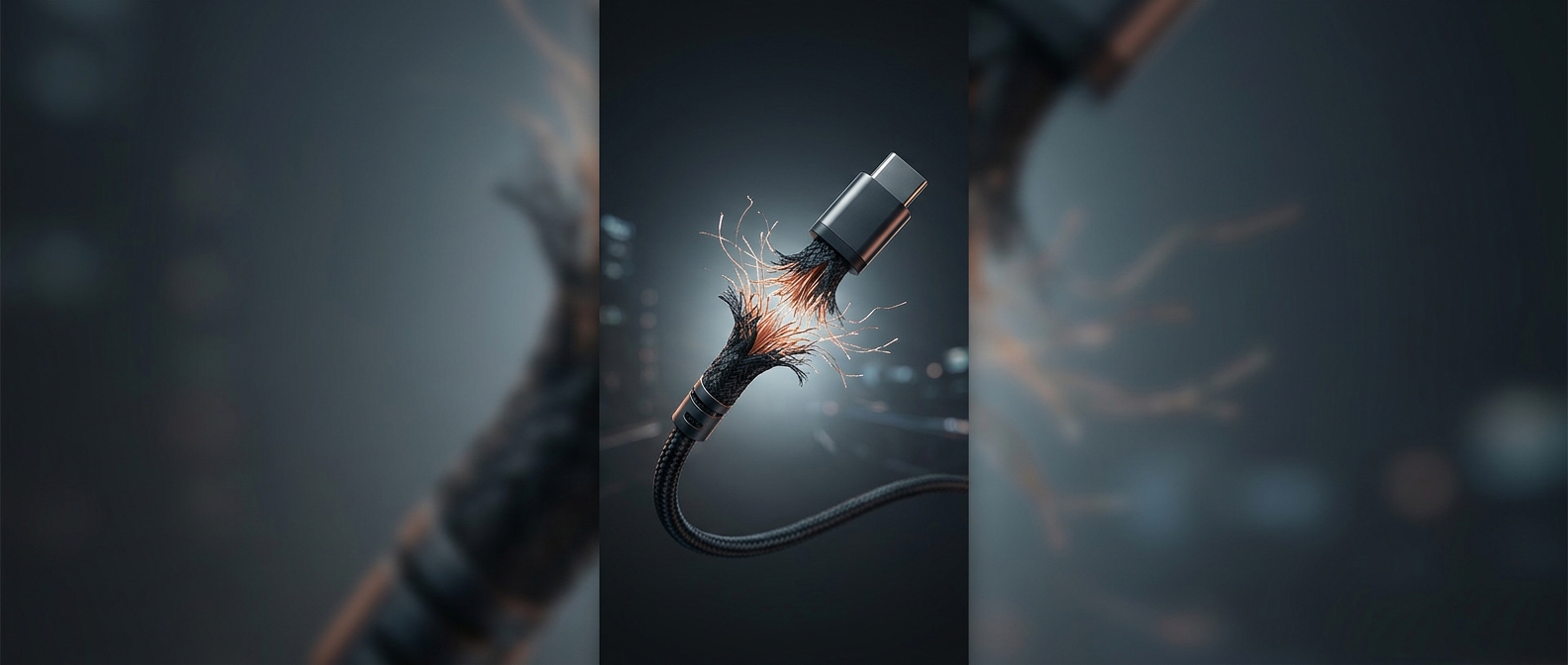
Why the Cable Fails at the Plug
A cable is flexible, but the plug is comparatively rigid. Where the two meet, the cord has little room to spread out a bend, so its shape changes sharply over a short distance. The copper strands inside must flex along with the outer sleeve.
Each bend stretches some strands and compresses others. Over time, that repeated motion can fatigue the metal—much like repeatedly bending a paper clip—while the sleeve can crack or split. Once strands begin to break, the remaining ones carry the electrical load and may be stressed more heavily, making further damage easier.
The Job of Strain Relief
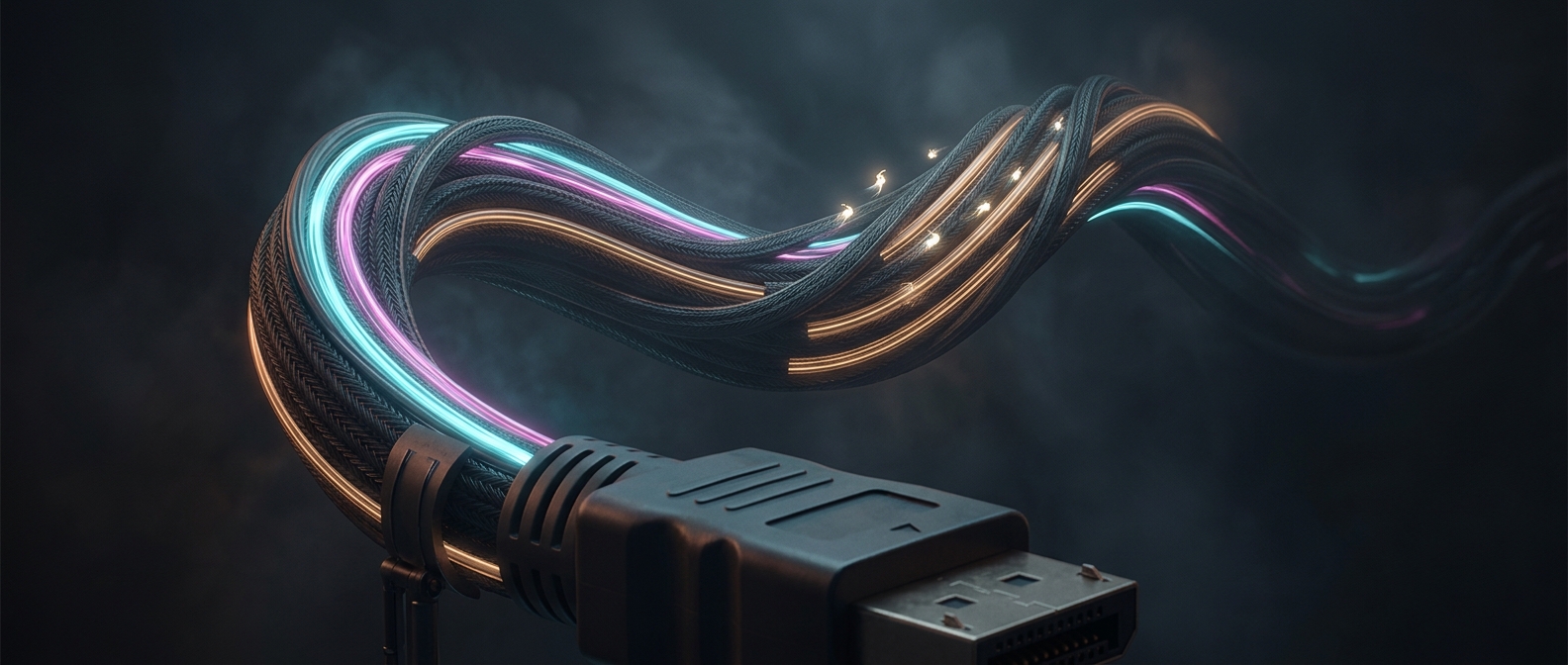
Many cables have a ribbed or tapered section where the cord enters the plug. This strain relief is meant to make the transition more gradual, spreading a bend over a longer length instead of letting it hinge at one narrow point. It cannot prevent wear indefinitely, especially if the cord is often pulled sideways or bent sharply.
That is why pulling a plug out by its cable is hard on this spot: the force travels through the very section already absorbing repeated bends. Gripping the plug instead reduces that extra tug, giving the cable’s most vulnerable transition less work to do.