Why a Zipline Cable Has to Drop
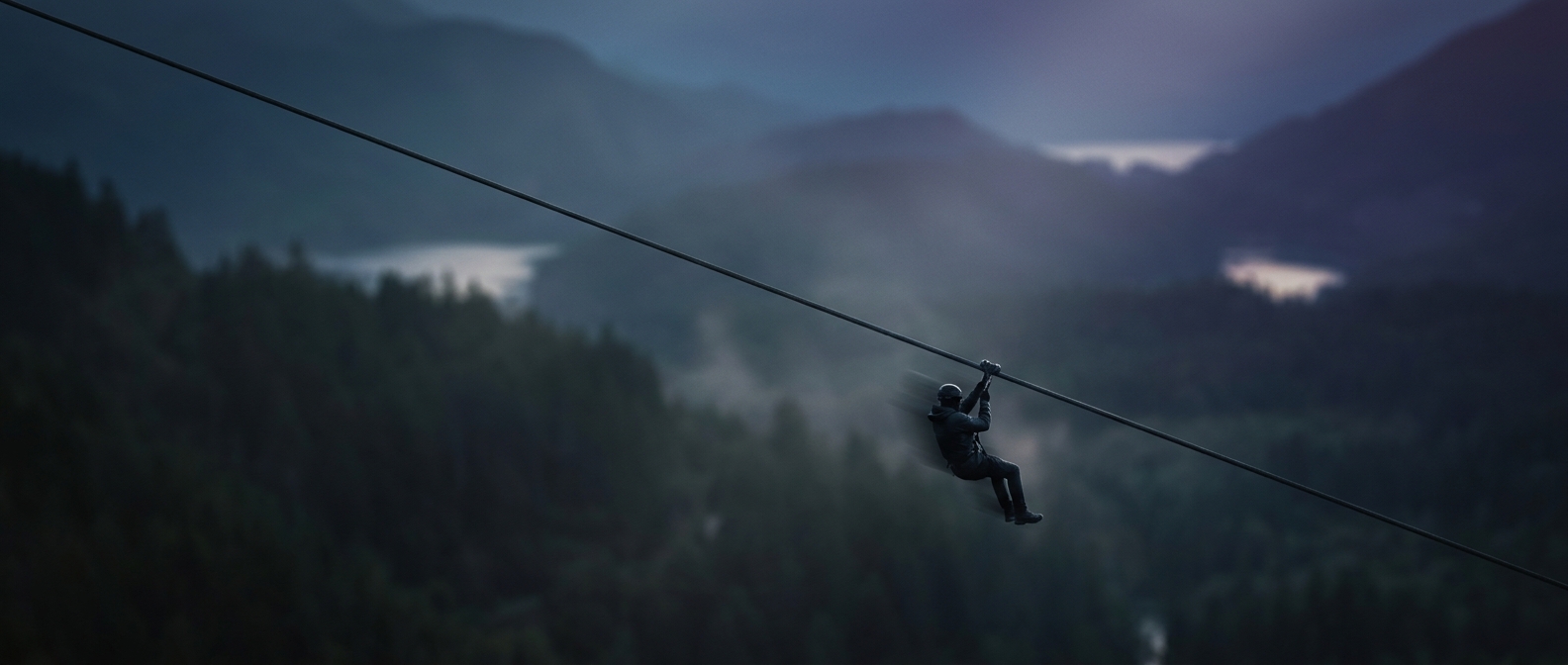
A zipline works because gravity pulls the rider not only toward the ground but also, on a sloping cable, along the cable toward the far end. That forward pull is the part that turns a hanging ride into a journey. On a nearly level line, gravity contributes little motion along the route; the rider must overcome resistance from the trolley’s wheels, the cable, and air, so momentum can fade before the landing platform.
The Slope Sets Up a Tradeoff
A steeper line gives gravity a stronger pull down the route, but that also means the rider can arrive with more speed. The designers therefore have to consider the whole run, not just how dramatic the cable looks: its length and height difference, the trolley’s rolling resistance, the rider’s load, and how the arrival will be controlled all affect the ride.
A cable is also not a perfectly rigid rail. It bends under the combined weight of the rider and trolley, changing the path they travel compared with the unloaded line. That makes the cable’s shape and tension part of the design problem, alongside the visible downhill angle.
The Arrival Is Part of the Design
The far platform must accommodate the speed the line creates. Zipline systems use braking arrangements to slow riders before they reach the end; the exact setup varies, but it must work with the line’s geometry rather than compensate for a slope chosen in isolation. The cable’s drop is both the engine and a constraint: too little assistance can leave the trolley short, while too much speed demands more control at the landing.