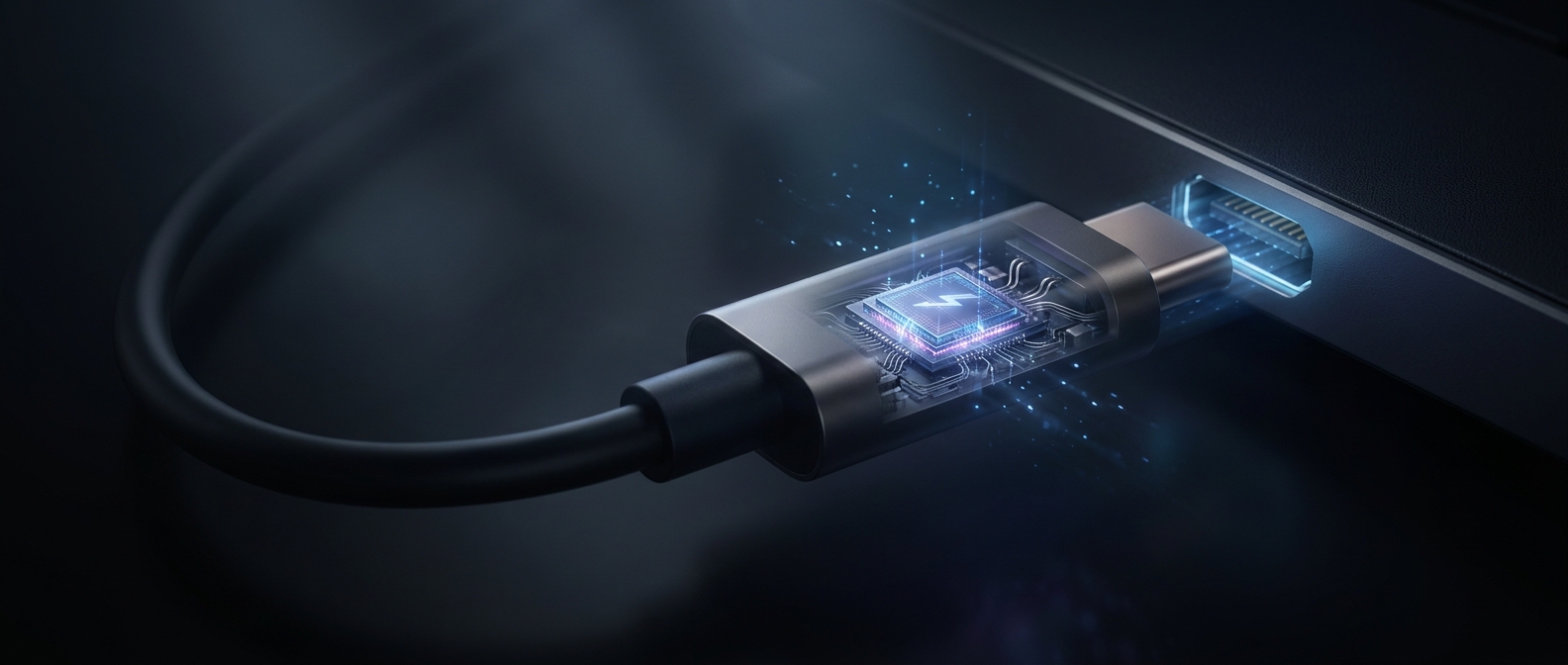
Gold Helps Electrical Contacts, Not the Light Path
Gold is prized in many connectors because it conducts electricity and resists corrosion. Those benefits matter when a signal has to pass through touching metal contacts. In a fiber-optic cable, the information instead travels as light through a thin glass or plastic core. The connector’s job is to bring that core into precise alignment with the next fiber—not to conduct the signal across a metal surface.
A coating on the connector’s outer metal parts therefore cannot make light travel more efficiently through the fiber. Even if gold is present on electrical contacts in a hybrid cable, it can help those electrical connections without improving the optical signal.
The Fiber Ends Make the Difference
At a fiber connection, light must cross a tiny gap from one carefully positioned fiber end to another. Misalignment, a rough end face, or dust can scatter or block some of that light, weakening the signal. Connector design instead focuses on accurate alignment and smooth, clean fiber ends.
That is why a gold-colored connector is no guarantee of better optical performance. For the light path, the condition and precision of the fiber interface matter far more than the metal’s electrical properties.