A villain’s theme becomes a warning signal
A recurring musical phrase can work like a character’s calling card. The first time it appears, viewers hear it alongside the villain, or during a moment that makes the villain’s threat clear. That pairing gives the notes a meaning beyond their sound: they begin to predict trouble.
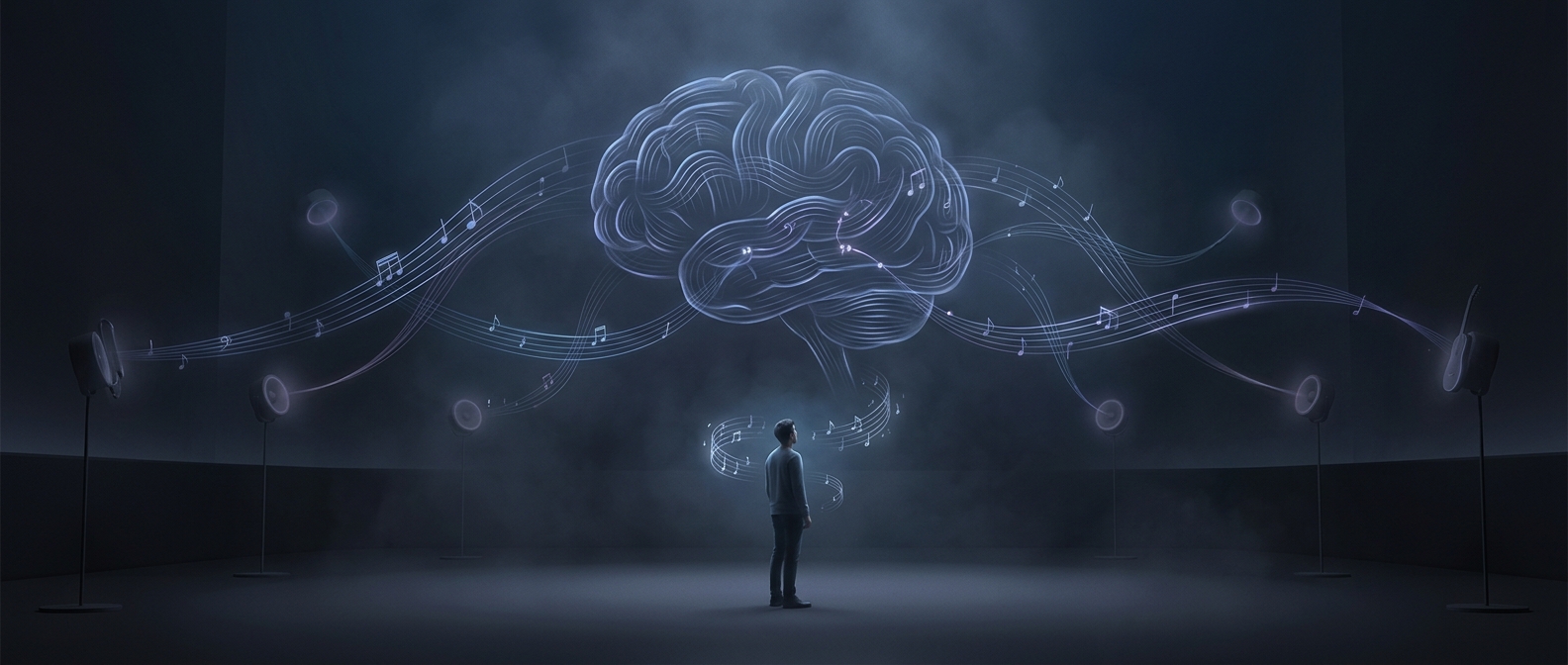
This is learned association. The brain continually uses context to anticipate what may happen next. Once a musical cue has repeatedly accompanied danger, even a softer or incomplete version can bring that expectation back. The audience may feel uneasy before the character appears or the plot confirms a threat.
How composers make the cue recognizable
A theme does not need to be loud to register. Its identity might come from a distinctive rhythm, a short sequence of pitches, an unusual instrument, or a particular combination of these. Repeating that pattern gives viewers a chance to recognize it, while changing its volume, speed, or orchestration lets the score fit a new scene.
A quiet return can be especially unsettling because it preserves the clue but withholds the usual display of danger. The music tells viewers that the villain may be near, while the image may show an apparently ordinary moment. That gap invites anticipation: viewers start scanning the scene for what could go wrong.
The music shapes what viewers expect
The cue can also connect separate appearances into a single emotional pattern. A brief musical fragment may remind the audience of earlier harm, so the villain’s influence seems to linger even when the character is offscreen. In that way, the score can create suspense without adding a new threat to the frame.
The effect depends on repetition and context, not on a melody being inherently frightening. A few notes become ominous because the story has taught viewers what tends to follow them. After that lesson, the warning can arrive before the villain does.