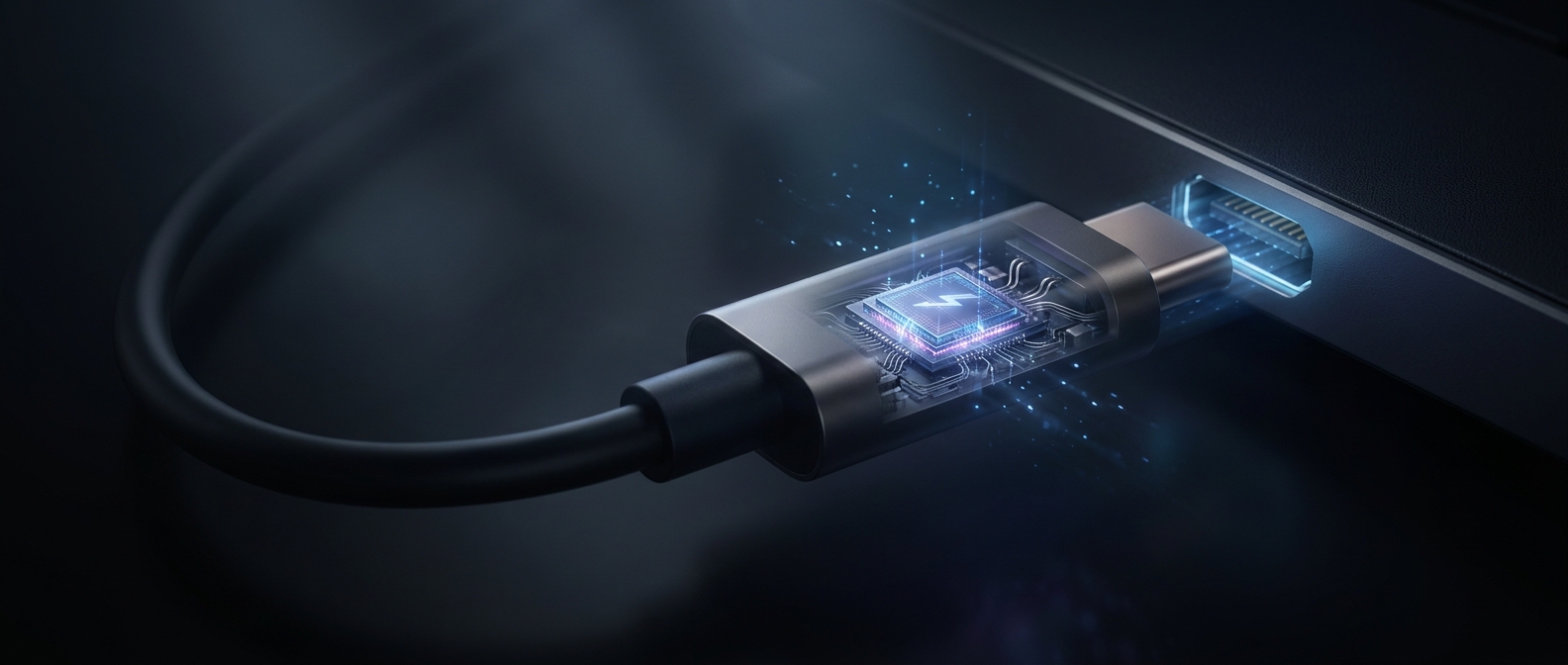
Why Some Thunderbolt Cables Need Electronics Inside
A fast cable is not just a bundle of wires. As data signals travel, resistance and electrical interference can weaken or distort them. At very high data rates, even small changes can make the signal harder for a device to interpret reliably.
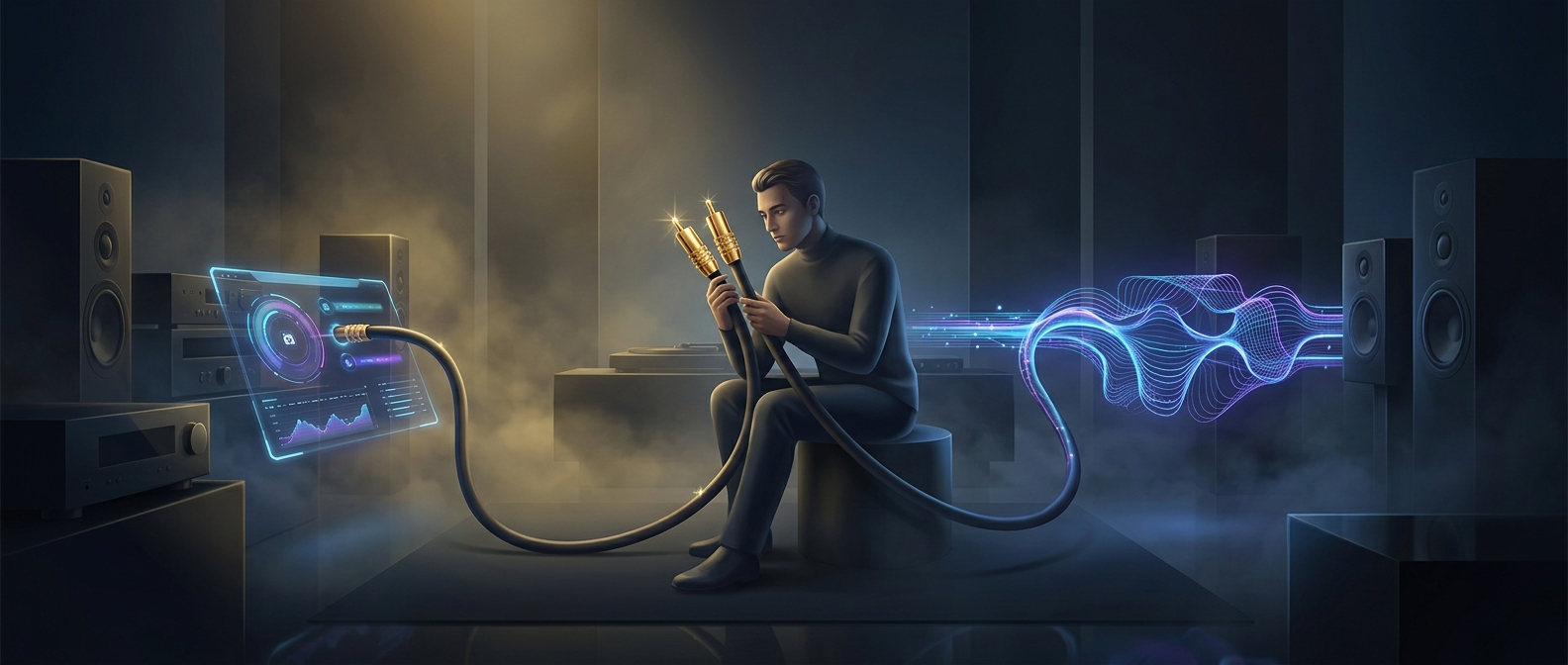
Some Thunderbolt cables address this with active electronics in the connector. A chip can regenerate or retime the signal—essentially restoring its timing and shape before it continues along the cable. That helps preserve a usable connection where a simpler, passive cable may struggle, especially as cable length increases.
The Tradeoff Behind the Price
The chip is only part of the added cost. Active cables require extra design and testing, and the electronics must fit inside a small connector while meeting the cable’s power, heat, and reliability requirements. The cable also has to work with devices that expect Thunderbolt’s high-speed link, not merely pass electrical signals from one end to the other.
Not every Thunderbolt cable contains a chip; shorter cables can often use a passive design. The practical tradeoff is that a longer or more demanding cable may need more than better wire: it may need electronics to keep the signal readable. That tiny circuit can be the difference between a cable that sustains a high-speed connection and one that cannot.