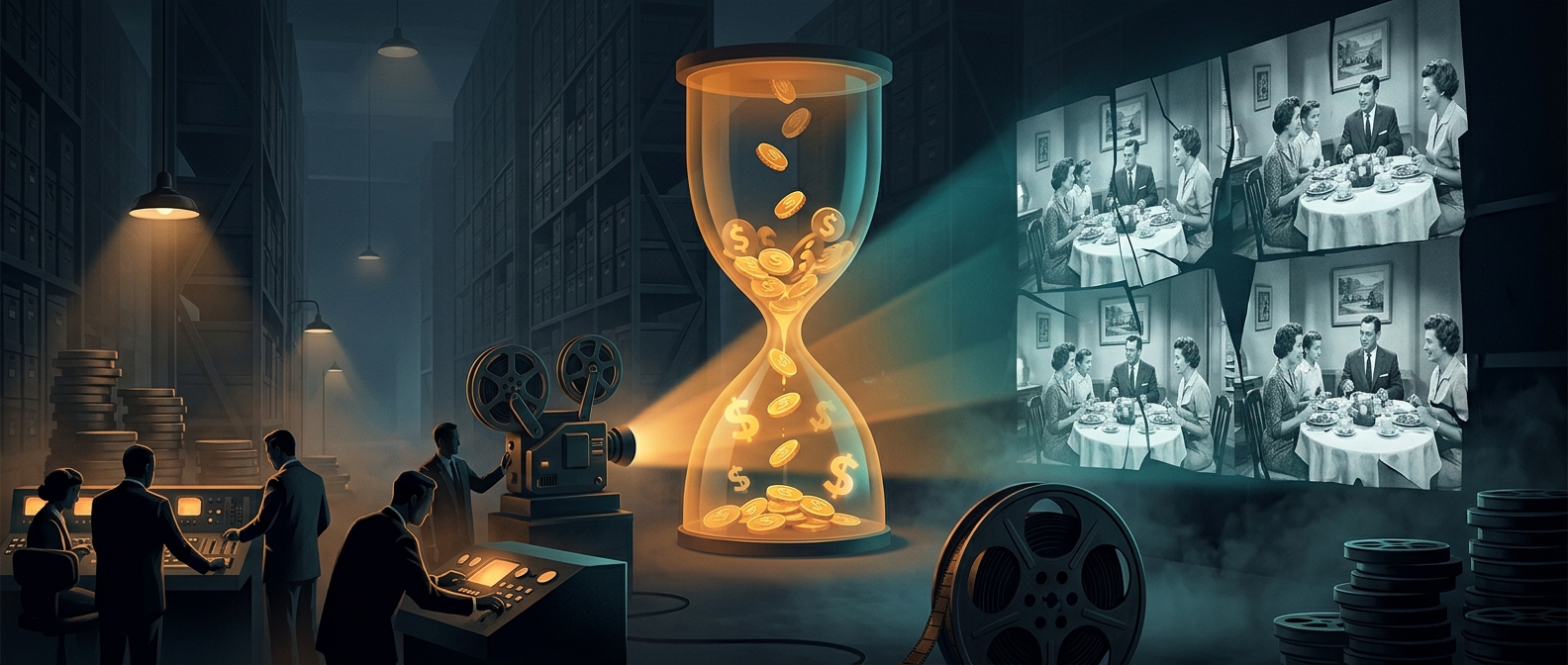
Why summer became television’s replay season
A new television episode is expensive because it requires a fresh production: scripts, performers, crews, sets, and postproduction. A rerun, by contrast, draws on work a network has already paid to make. It may still involve licensing and distribution costs, but it avoids most of the expense of creating an episode from scratch.
That difference mattered when fewer people were watching in summer. Networks had less reason to spend heavily on new programming during a period when audiences—and the advertising revenue tied to them—were often lower. Repeating popular episodes kept a familiar show on the schedule at lower cost.
A schedule built around production cycles
Reruns also solved a practical timing problem. Series were made in batches, while broadcast schedules ran throughout the year. Replaying earlier episodes helped fill the weeks between batches and gave production teams time to prepare more new ones. For viewers, the same episode might return months later; for the network, it was usable programming already in hand.
The arrangement made summer a kind of budget buffer: networks could maintain a full schedule without paying for a full slate of fresh shows. That is why a quiet evening in front of an old episode was not simply a programming gap—it was part of television’s cost-saving calendar.