A Fire Engine Became the Band’s Calling Card
Ward Kimball’s jazz group was unusual even by Los Angeles standards: the Firehouse Five Plus Two paired Dixieland music with the spectacle of a restored 1914 fire engine. The band’s name played on that image—five musicians plus two more—and the truck made its appearances hard to mistake for an ordinary nightclub act.
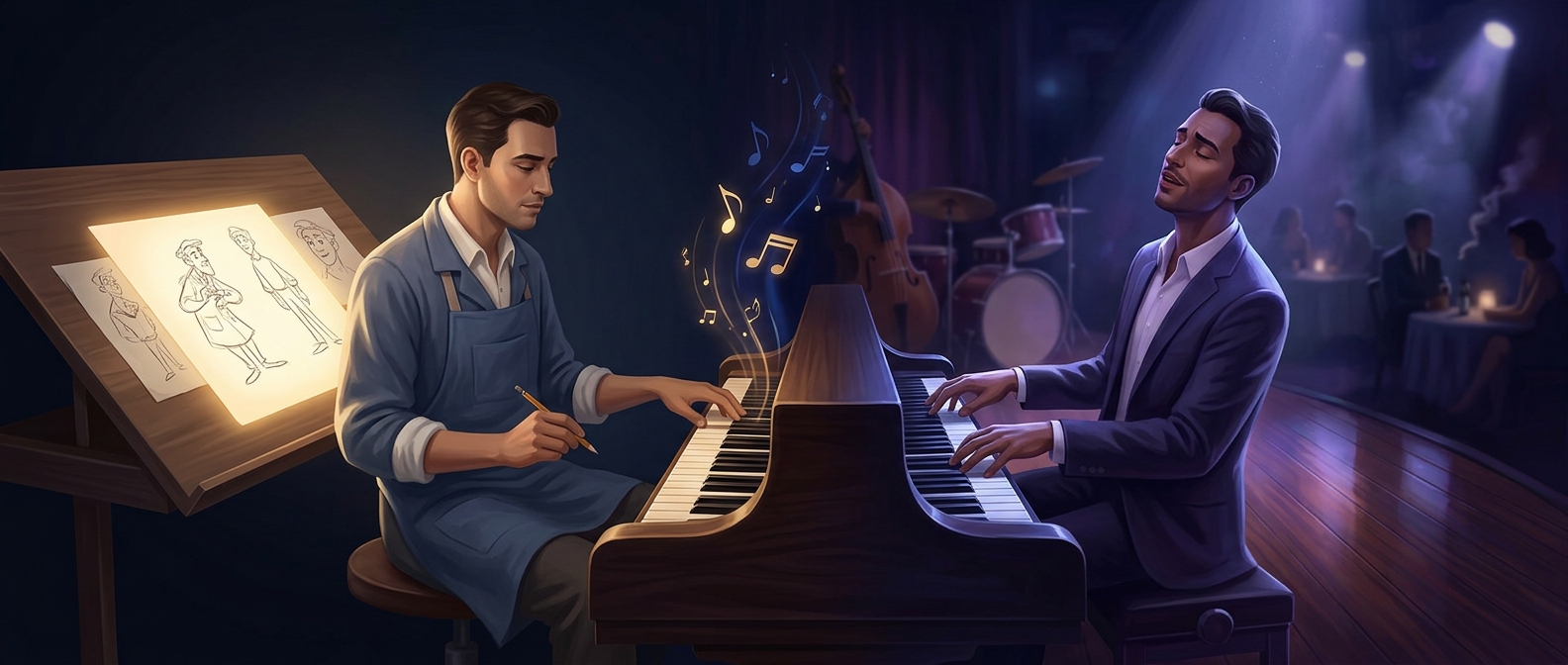
The musicians were Disney animators, not a separate troupe hired for a company publicity stunt. Their day jobs involved drawing and shaping animated stories; after hours, they played lively New Orleans-style jazz, a small-group sound built around instruments such as trumpet, clarinet, and trombone improvising together. Their shared workplace gave the side project an unexpected identity, but the performances were their own.
From Side Project to Publicity Asset
Walt Disney initially disliked the diversion. A band meant time and attention away from animation, and it was not an obvious extension of the studio’s work. His view softened when the group’s novelty became useful: Disney animators playing Dixieland from a fire engine made a memorable public attraction and reflected well on the studio’s creative image.
That shift mattered because the band could serve two purposes without changing what it was. Kimball and his colleagues got to play, while the studio gained a distinctive bit of publicity. The restored truck supplied the visual hook; the musicians’ real connection to Disney supplied the story behind it.
The result was a rare crossover in which a studio’s artists became performers on their own terms. Audiences could see the animators not only as people who made cartoons, but as colleagues with a lively musical life after work—and they arrived in a fire engine.