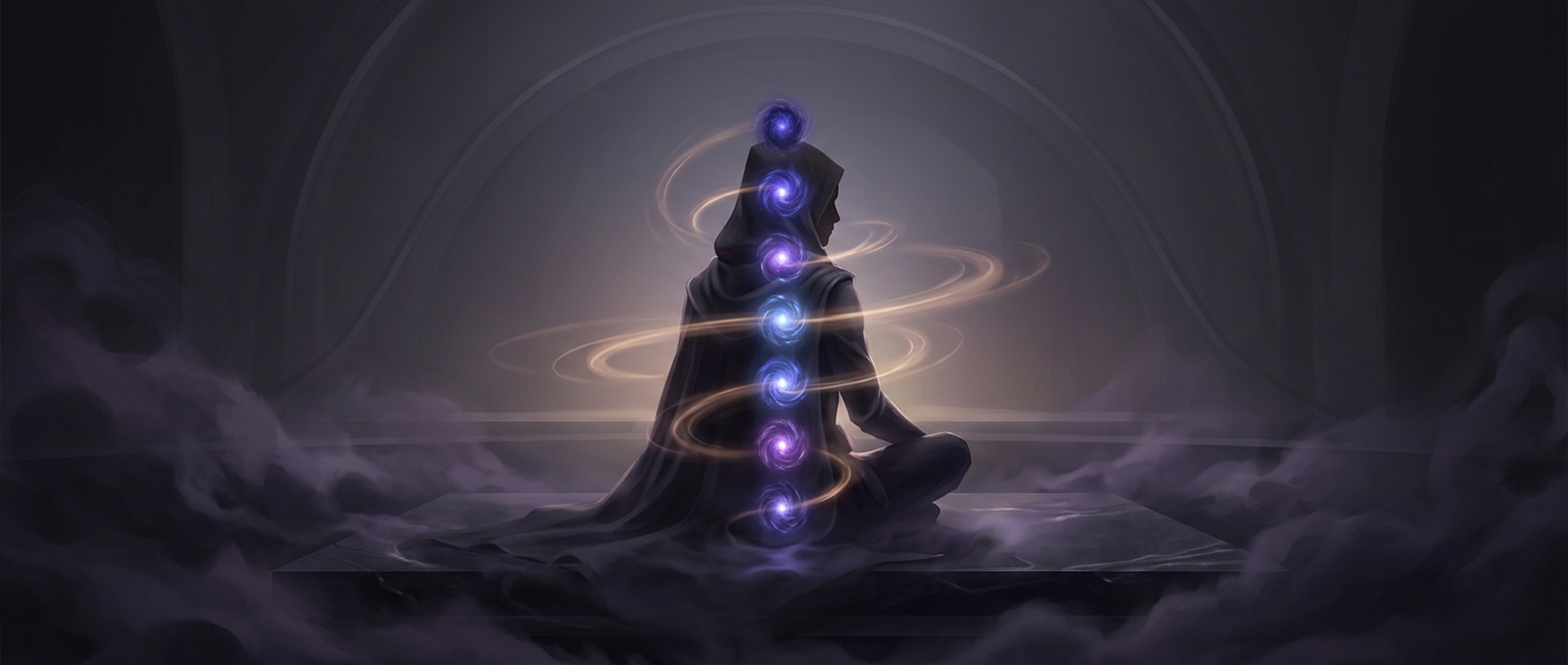
The “willpower center” is a spiritual map, not an organ
In chakra-based spiritual traditions, the area around the abdomen is often associated with agency: the sense that you can choose, act, and follow through. It is commonly called the solar plexus chakra, or manipura. The idea that this center can become “blocked” gives low motivation a symbolic explanation: something is thought to be interfering with a person’s capacity to act.
That language is best understood within the belief system, not as a description of a measurable store of energy inside the body. Different teachers may interpret the center and its supposed imbalance differently.
Why the idea can shape a practice
Thinking of motivation as a blocked center can redirect attention from self-blame toward reflection. Someone might ask whether fear, uncertainty, or a loss of confidence is making action feel difficult, then use a spiritual practice—such as focused breathing, meditation, or visualization—to explore that feeling. The practice may provide a meaningful ritual or prompt for self-examination; it does not establish that an energy center caused the problem.
The framework’s distinctive claim is that willpower is not just a matter of trying harder: it is tied to a person’s sense of inner authority. In that view, restoring motivation begins with reconnecting to the feeling that one can make a choice and take the next step.