Why symmetrical patterns become objects of meditation
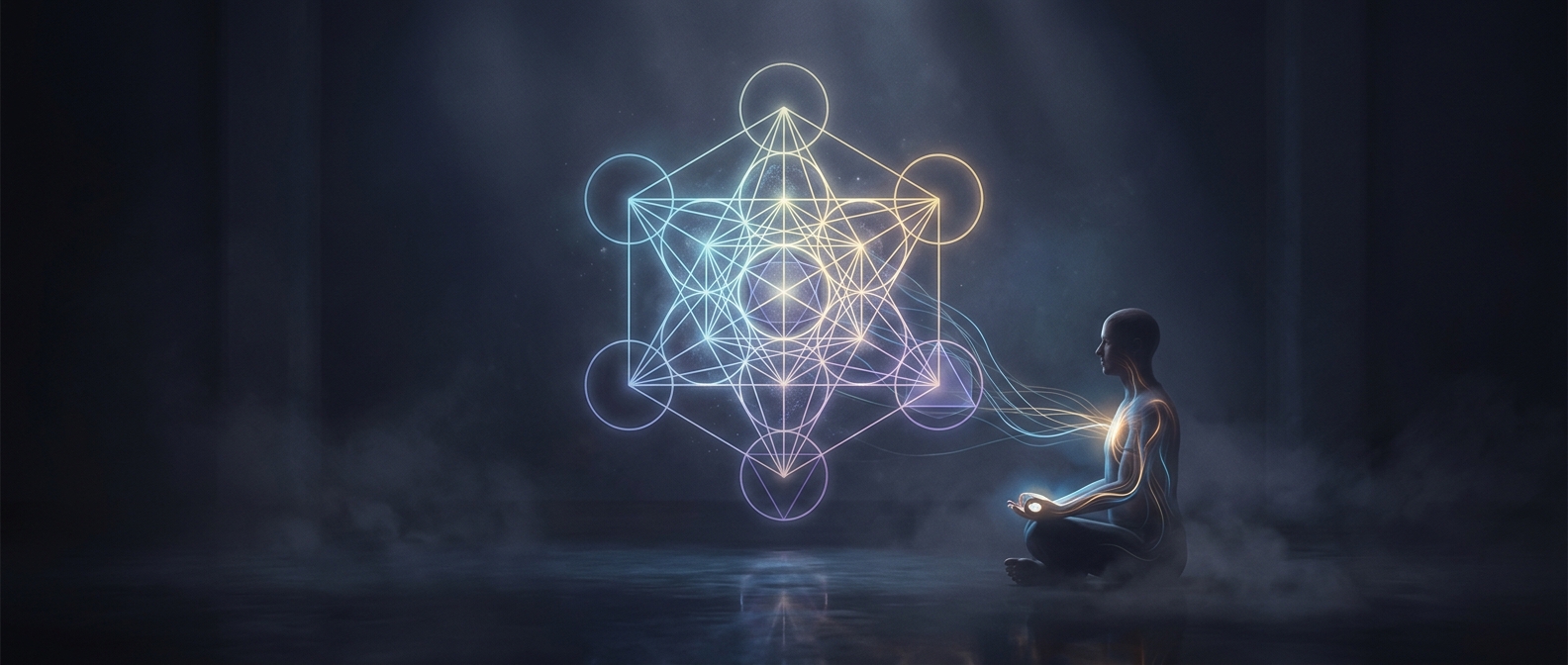
A carefully balanced design can give the eyes a steady place to rest. In traditions that use sacred geometry, the pattern is more than decoration: its repeated shapes and central point can represent an ordered universe or a path toward inward attention. A practitioner may look at the design, trace its arrangement with the eyes, or visualize it while meditating.
The pattern’s symmetry supplies a simple structure for attention. Instead of following a stream of thoughts, the meditator returns to the same center and surrounding forms whenever the mind wanders. That return is part of the practice, not a test of concentration.
What “energy centers” mean in this practice
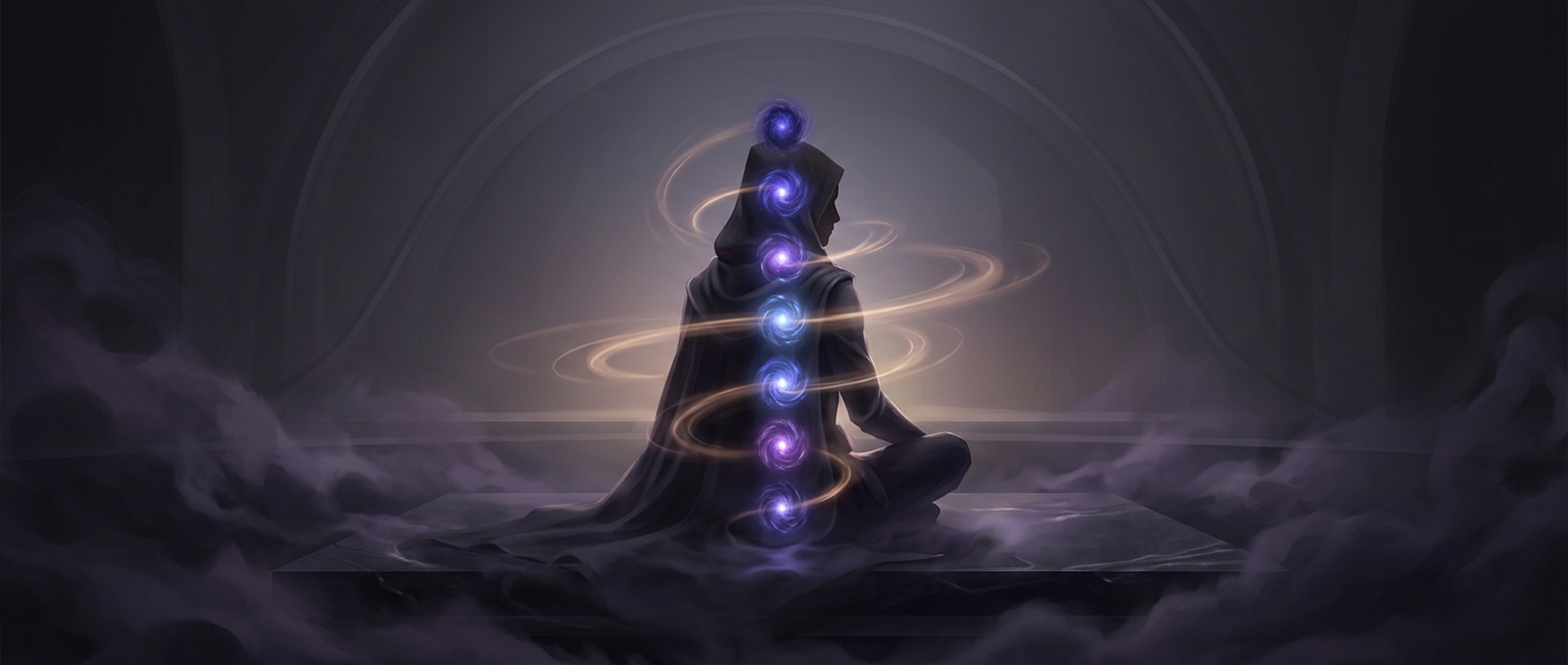
The idea of harmonizing internal energy centers belongs to spiritual systems that describe the body as having subtle centers or channels. In traditions that use the chakra framework, for example, centers are associated with different aspects of a person’s inner life. A symmetrical image may be used as a focus for bringing those aspects into alignment or cultivating a sense of balance.
That language describes the practice’s spiritual meaning, rather than a measurable medical mechanism. Its central promise is experiential: by repeatedly gathering attention around an ordered image, a practitioner seeks to feel more centered. The striking detail is that the pattern does not need to move; the work comes from the meditator’s returning gaze.