How an opposition gives a grand trine a direction
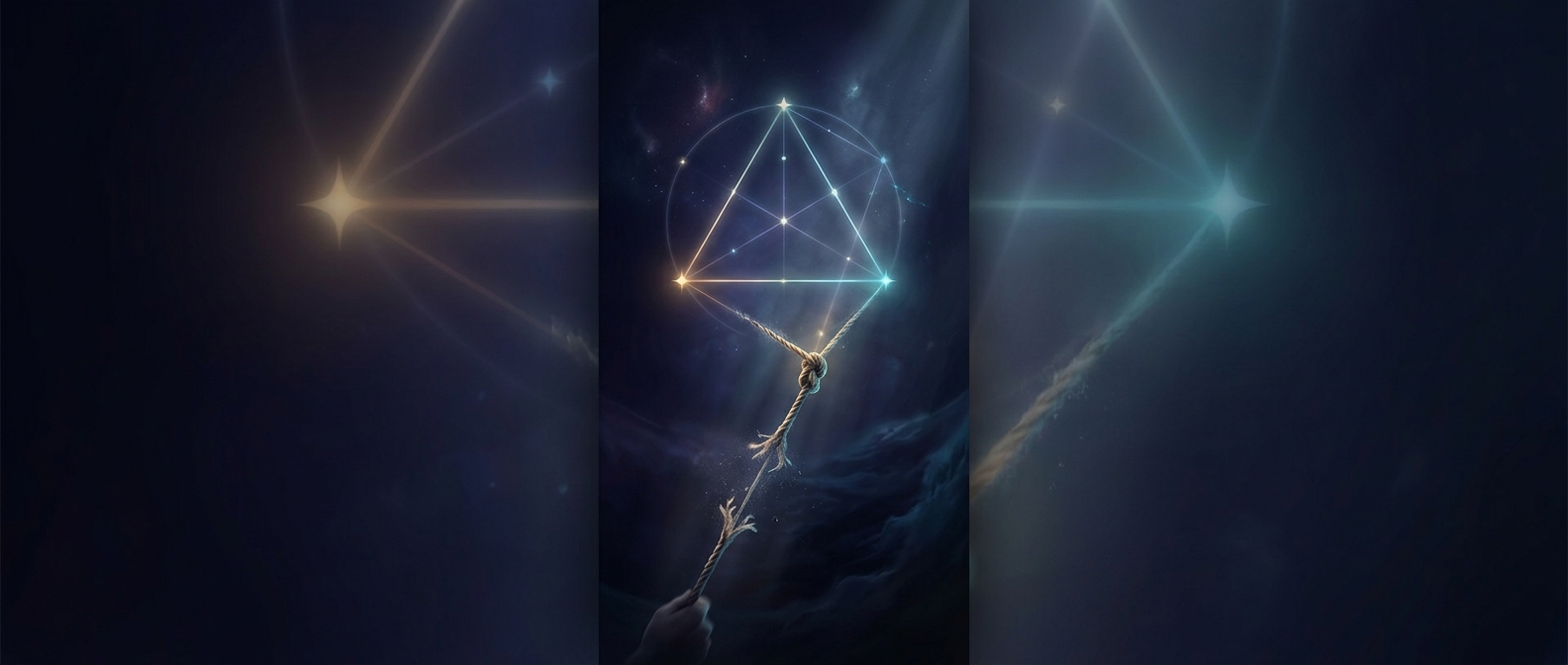
In a birth chart, a grand trine is a triangle formed by three planets roughly 120 degrees apart. Astrologers traditionally associate it with ease: the planets are thought to cooperate, so their shared qualities may feel natural to use. The downside, in that interpretation, is that what comes easily can remain comfortable and untested.
A Kite adds a fourth planet. It sits opposite one corner of the grand trine, forming a line across the chart called an opposition. It also makes supportive 60-degree angles, called sextiles, to the other two corners. The resulting pattern resembles a kite: a triangle with a pointed extension.
Tension becomes a route into action
Astrologers read the opposition as a source of friction between the two planets it connects. Rather than treating that friction as an isolated conflict, they see it as the feature that gives the trine’s easy flow somewhere to go. The two sextiles link the opposing planet to the rest of the triangle, so the challenge can draw on capacities the chart already symbolizes.
That is why a Kite is often described as more activating than a grand trine alone. Its interpretation is not simply “good luck” or effortless talent; it is that a pressure point may prompt someone to apply otherwise underused strengths. In practical terms, the configuration is read as a pattern in which comfort supplies resources, while tension supplies a reason to use them. The kite’s narrow end marks the chart’s most conspicuous point of focus—not a guaranteed outcome, but the place astrologers look when asking what might set the pattern in motion.