Gravity Sets the Direction; Pegs Make the Route Unpredictable
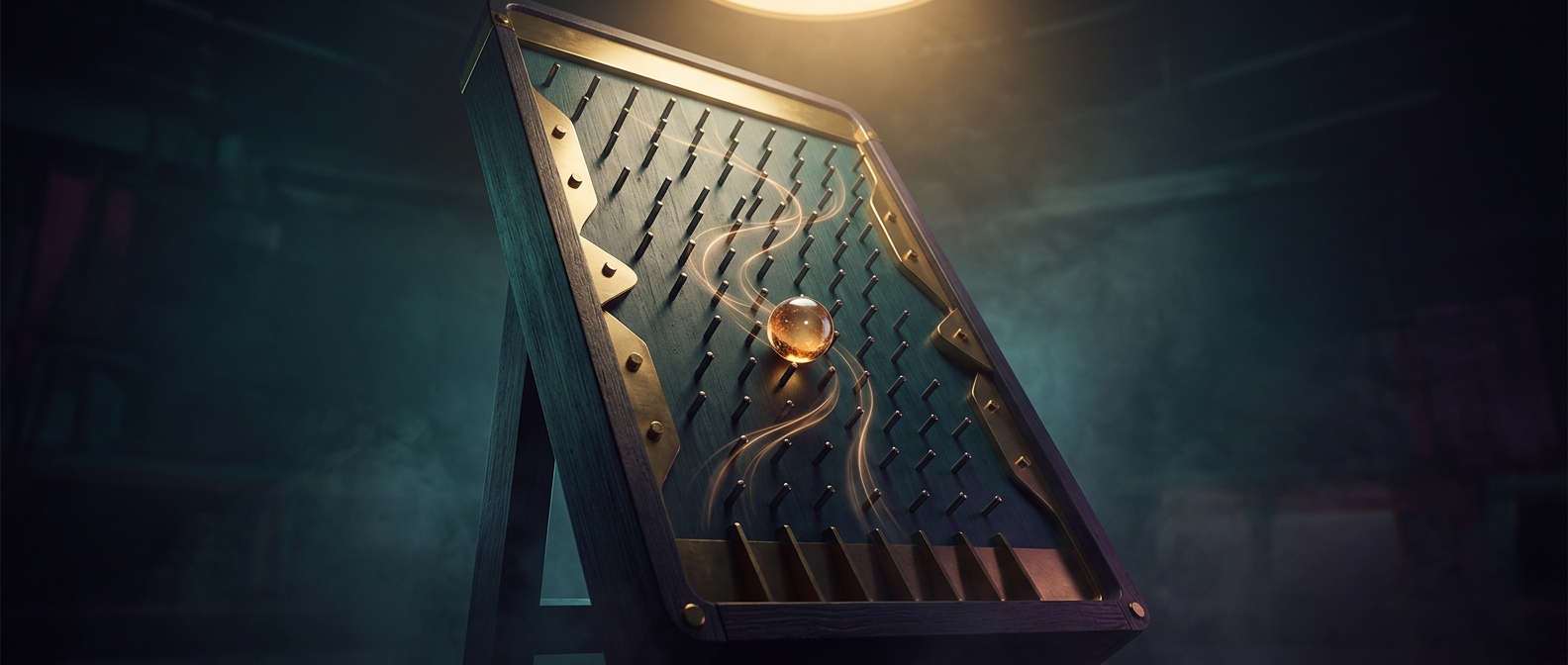
A Plinko chip does not choose a path, and gravity itself is not random: it pulls the chip downward. The uncertainty comes from what happens at each peg. A small sideways deflection can send the chip toward a different peg on the next row, where another collision changes its course again. After many such bounces, the starting point offers little help in predicting the final slot.
The Board Shapes the Odds
The motion follows physical rules, but tiny differences in where a chip lands, how it spins, or how it contacts a peg can produce noticeably different routes. That makes the result unpredictable to a player, even though each bounce has a physical cause. In this sense, Plinko is random in practice, not because gravity changes its mind.
The peg arrangement and the openings at the bottom still matter: they define which routes are possible and how readily chips can reach each prize area. A player can release a chip, but cannot reliably steer it past the pegs. The suspense comes from watching a fixed board turn one small deflection into a chain of consequences.