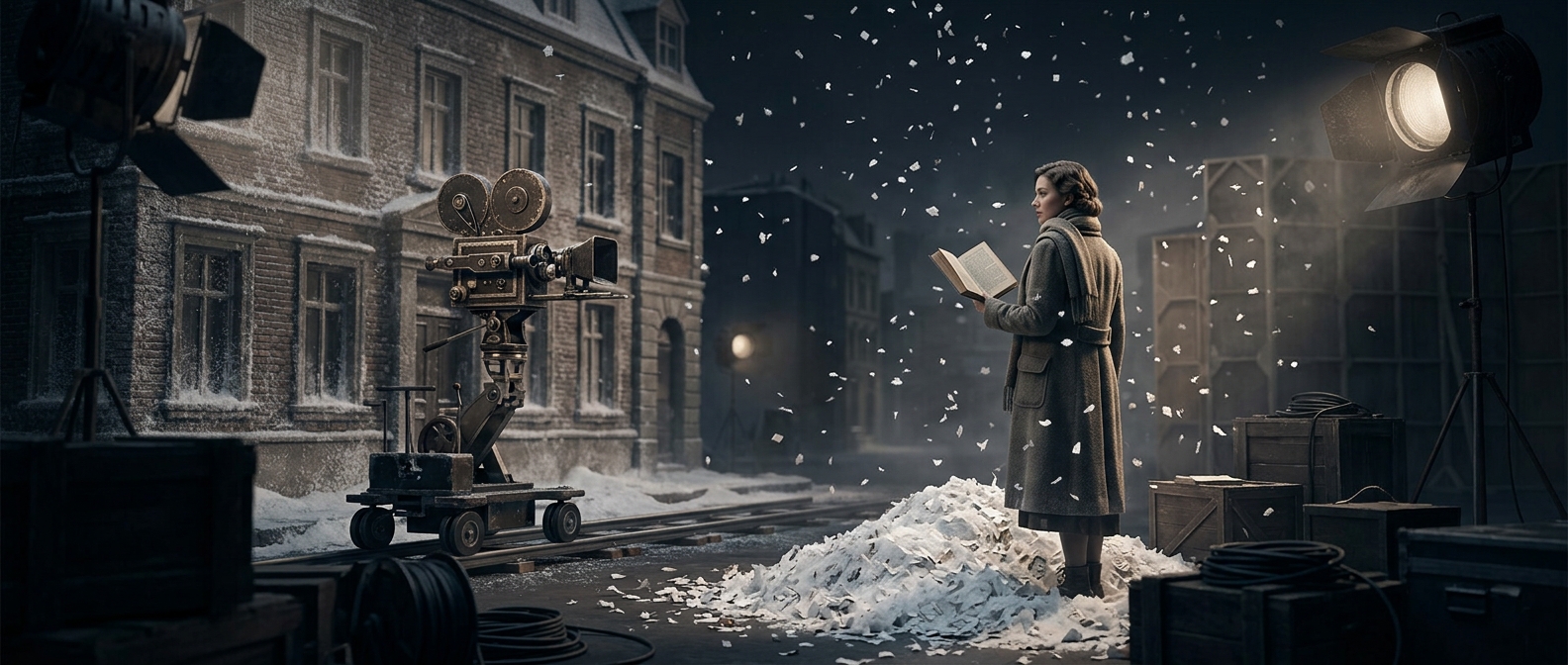
Why paper can pass for snow on camera
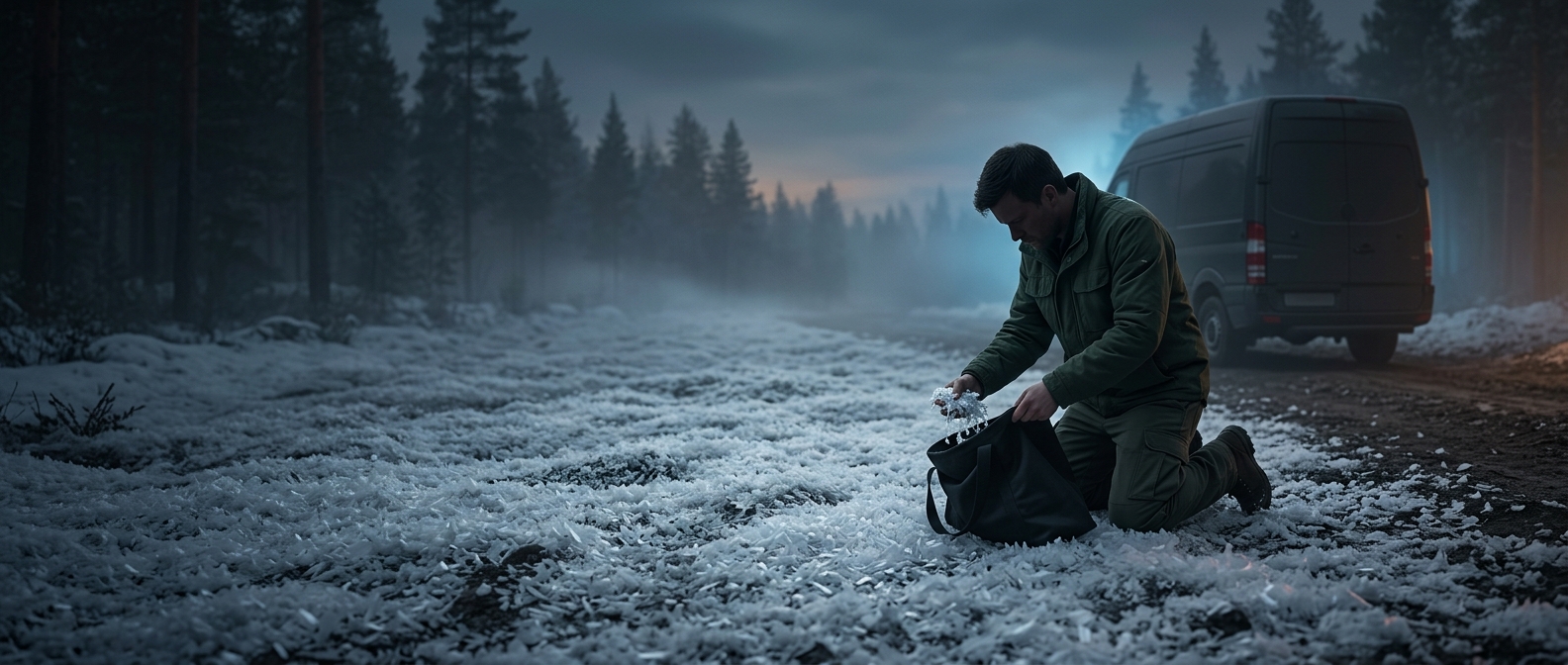
A film snowstorm is built for the lens, not for a snowball fight. Shredded paper gives a crew a lightweight, controllable material to scatter over streets, roofs, or a set. Under the right framing and lighting, individual scraps read as falling flakes or a fresh white layer; the camera does not reveal how they feel to walk on.
That control matters during filming. A scene may need to be shot repeatedly from several angles, with the ground looking consistent each time. Crews can put the material where the shot needs it and replenish it between takes, rather than waiting for real snowfall or relying on weather to cooperate.
The tradeoff underfoot
Paper’s limits become obvious to the actors and crew. Once dampened or trampled, scraps can bunch together and lose their crisp, snowy appearance. They may also shift underfoot instead of behaving like packed snow, so the surface that looks wintry in a frame can feel unstable or unpleasant in person.
The effect is a reminder that movie weather is often a practical visual construction: the material has to create the right impression from the audience’s viewpoint, even when it does not reproduce the real thing for everyone on set.