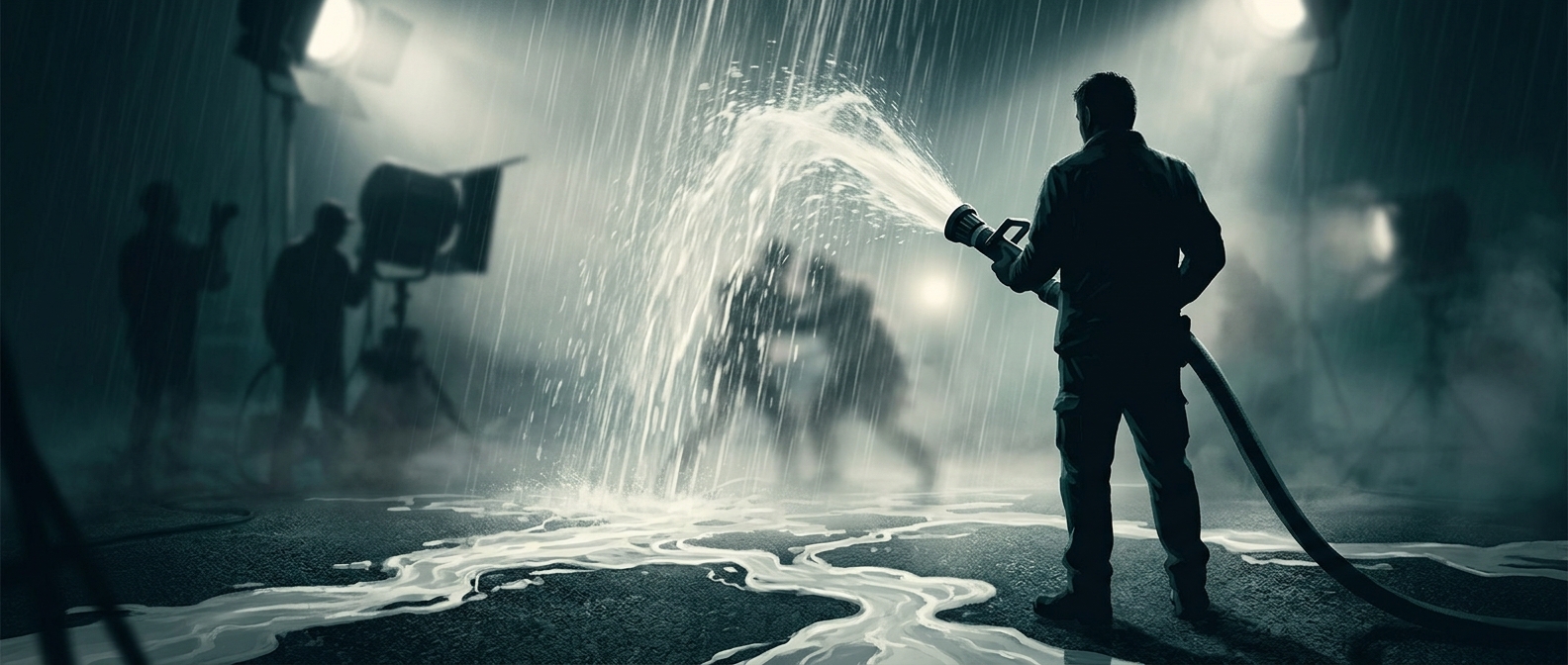
Making Artificial Rain Read on Camera
A raindrop is mostly transparent, so a camera may not register it as a distinct falling object. In a shot, rain often shows up only when light glints off drops against a darker background. If the lighting or background is wrong, even a heavy spray can look like a faint haze—or disappear altogether.
A small amount of milk mixed into water changes how the drops handle light. Tiny particles in the mixture scatter light in many directions instead of letting most of it pass straight through. The drops therefore look cloudy and catch more of the light aimed through or behind them, making falling streaks easier to see.
A Visibility Tradeoff
The mixture is a practical camera effect, not an attempt to make the weather look realistic up close. Too much milk can make the rain look like pale blobs or solid white lines rather than water, so the appearance depends on balancing the mixture with the shot’s lighting and exposure. A close view may reveal the trick more readily than a wide shot, where the droplets are small and the added opacity helps them register.
That tradeoff matters on set: the rain has to look convincing from the camera’s position, not merely feel wet to the actors. The same ingredient that helps the lens see the drops can also linger in the equipment and on the set, which is why a visually useful effect may become less pleasant as the workday goes on.