Why the Minigun Needed a Movie Makeover
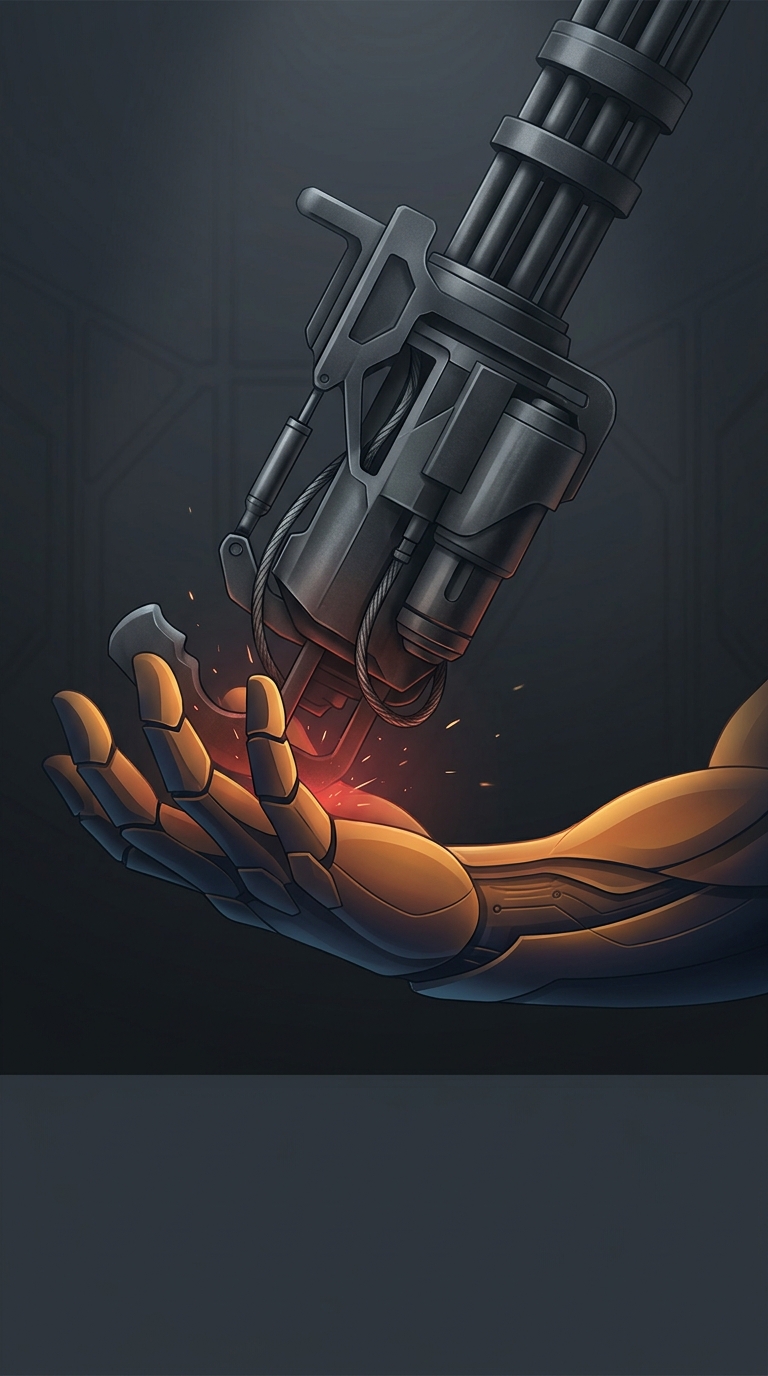
A minigun is built around a job that does not involve being carried like a rifle. The real weapon is generally mounted to an aircraft or vehicle, where the mount supports its weight and helps absorb the forces of firing. The mount also supplies the power that spins the gun’s cluster of barrels. In a helicopter, the machinery and ammunition can be part of a larger installation; in a film scene, the weapon has to look convincing while an actor moves with it.
That difference made the Cyberdyne shootout a problem of screen engineering. A full-size, vehicle-style gun is awkward to lift and maneuver, especially while performing a scene. The prop therefore had to be adapted for handheld use, preserving the imposing silhouette viewers would recognize while making it possible for Schwarzenegger to carry it on camera. The caption’s striking detail is that the result was still too heavy for anyone else on set to pick up.
Making a Mounted Weapon Read on Screen
A screen prop does not need to reproduce every working component of a military weapon. It needs to deliver the right visual impression from the camera’s point of view and function safely within the demands of filming. That leaves prop makers with a balancing act: retain the gun’s bulk and distinctive rotating-barrel design, but adapt the object so the actor can handle it for a shot.
The scene’s effect depends on that mismatch between design and use. The minigun looks like equipment meant for a helicopter, yet the film places it in a character’s hands. Its apparent unwieldiness makes the image more memorable—and turns a practical production constraint into part of the character’s on-screen force.