When a staged fight stops being staged
A screen punch is usually built from several illusions: camera angle, timing, the actors’ distance, sound effects, and a punch that misses or makes only controlled contact. The audience sees a clean hit; the performers are meant to avoid taking the blow at full force.
Asking for a harder impact can upset that balance. A real punch carries force through the body rather than merely suggesting it to the camera. Even when the intent is performance, a sudden blow can injure tissue and organs beneath the skin. The visible mark, if there is one, may not show how serious the damage is.
Why realism has a physical limit
Fight scenes are repeatable work: a movement may need to be performed again for another camera angle or take. That makes predictable choreography more useful than an uncontrolled hit. A performer’s willingness to endure pain cannot make a blow safe, and the other actor may not be able to regulate the force precisely once contact is real.
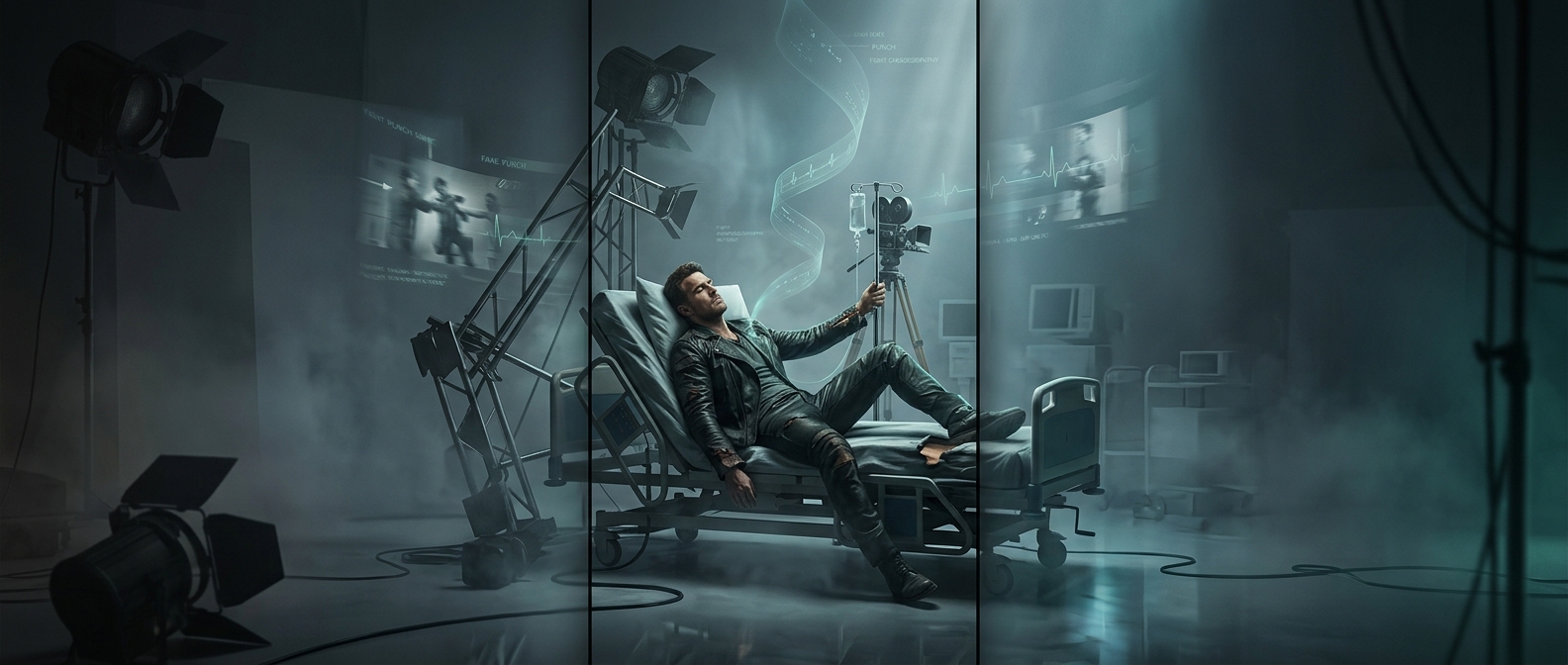
Intensive care is used for close monitoring and treatment when a person has a serious condition—not just for ordinary soreness after a demanding scene. The episode is a stark reminder that the convincing part of a movie fight should come from coordination and filmmaking, not from asking a performer to absorb a genuine punch.