Why a parking lot can work as a practice space
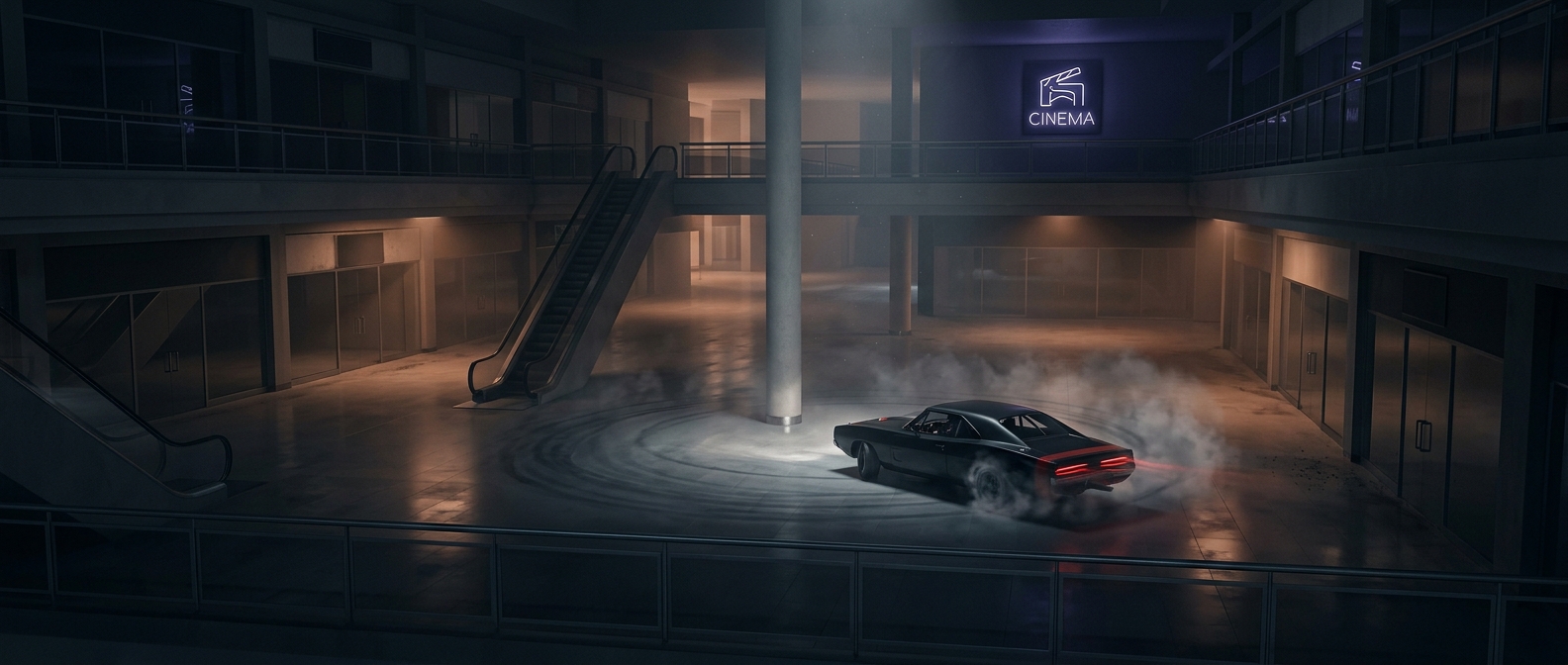
A drift is a controlled slide: the driver turns the car so its rear tires lose some grip while the front wheels steer the vehicle through a curve. Practicing the maneuver takes room. The car may travel sideways as well as forward, and a mistake can send it well beyond the line a driver intended.
A broad, open lot makes it easier to rehearse that movement without the tight barriers and fixed corners of a track. Its flat pavement also gives the driver a relatively consistent surface, so attention can stay on steering, throttle, and the moment the tires begin to slide. Repeating the same arc helps a driver learn how small changes in those inputs affect the car.
Open pavement is not the same as a safe set
The useful feature is not simply that a lot is empty; it is that the space can be controlled. Curbs, light poles, debris, uneven pavement, and hidden obstacles can turn a wide turn into a collision risk. A vehicle also needs room to slow down and recover if the slide runs wide. That is why a place suitable for filming or practice must be checked and managed, rather than treated as an unrestricted playground.
An unused shopping center may look deserted but still be privately owned. Drivers need permission, and a production may need to close off the area and keep bystanders clear. Those precautions matter because drifting deliberately reduces tire grip—the very thing normally relied on to steer and stop.
Practice before the camera rolls
For a stunt, the lot can serve as a rehearsal space: drivers can work through the path and timing before a maneuver is filmed. That preparation helps make a slide repeatable, which is essential when a scene needs multiple takes. The empty pavement is valuable not because it removes risk, but because it gives professionals room to plan, practice, and contain it.