Why a Chair Can Distract a Lion
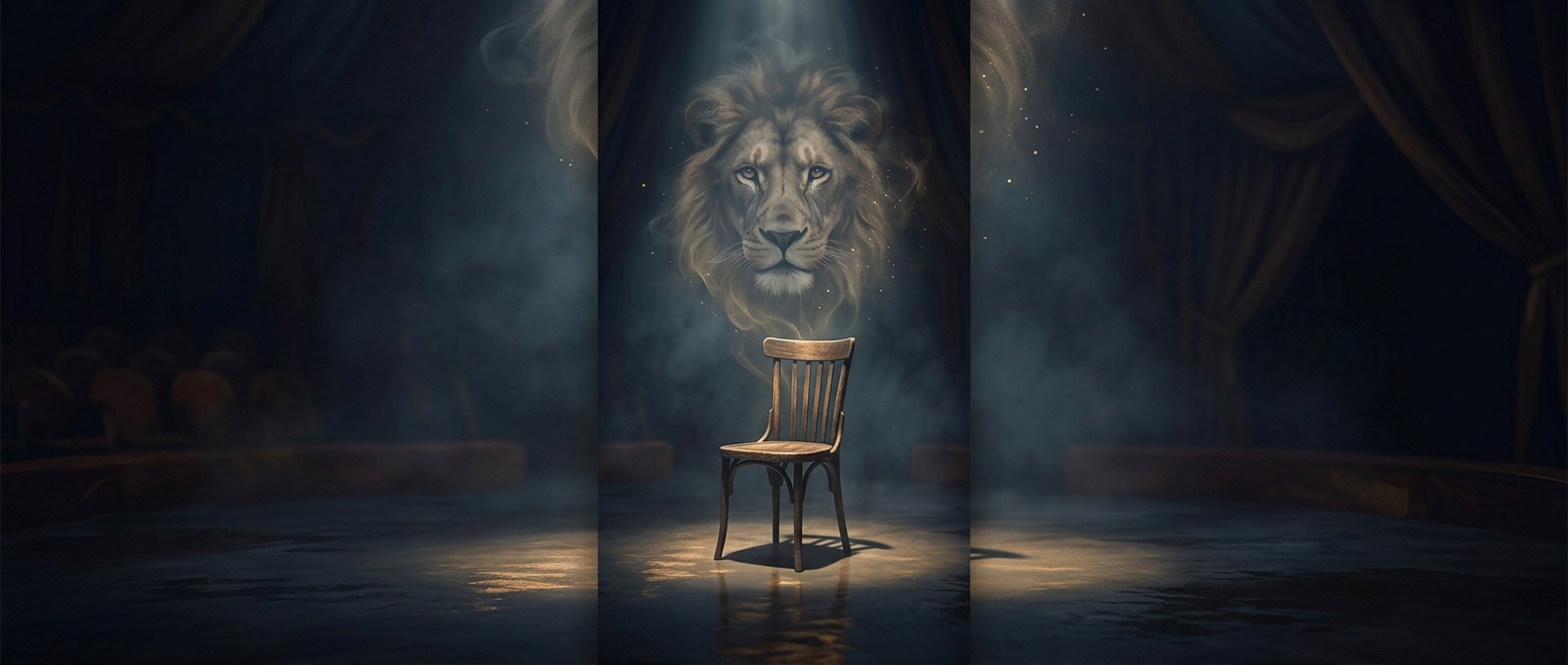
A lion tamer’s chair is not a shield in the ordinary sense. Its four legs jut out in different directions, giving the animal several nearby points to look at or investigate instead of one clear target: the person holding it. That spread of shapes can interrupt a direct approach and make the scene less predictable for the lion.
The effect depends on attention, not magic. A large cat may track movement, contrast, and objects entering its space. When the chair is held between the animal and the performer, its legs create a cluttered visual barrier; the lion may pause to orient toward one part of it rather than continue straight toward the person.
A Stage Prop, Not a Guarantee
The chair also gives the performer a way to occupy space and keep an object in view between them and the animal. But it does not restrain a lion, and the animal is not compelled to focus on the chair. The tactic is part of a larger performance built around trained animals, controlled positioning, and carefully managed distance—not a dependable method for confronting a lion outside that setting.
That distinction is what makes the chair memorable: an ordinary piece of furniture becomes a visual interruption, its many legs offering competing points of attention at the moment a single, direct focus would be most dangerous.