The camera changes the scale of a stride
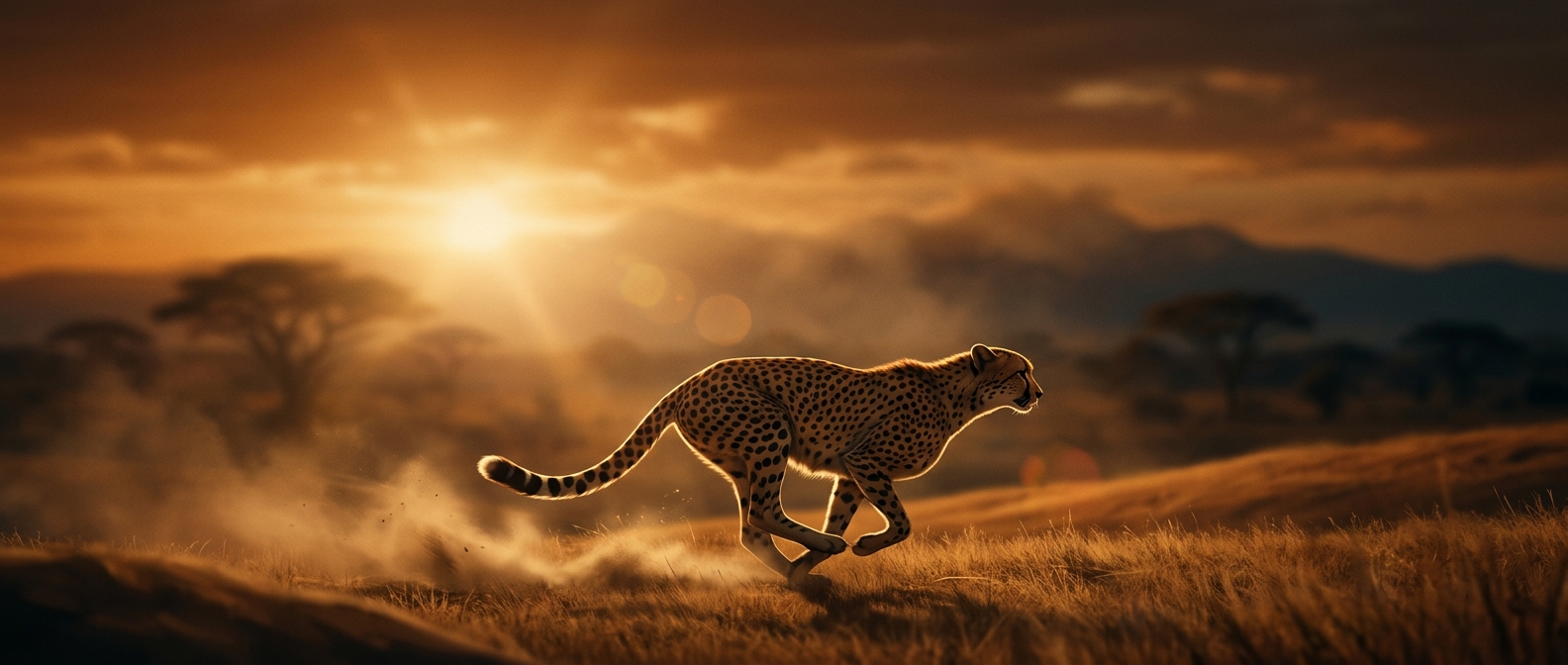
A cheetah’s chase unfolds too quickly for ordinary video to show every part of a movement clearly. A high-speed camera records many more frames per second than a standard camera. When those frames are played back at a normal viewing rate, the brief action takes longer on screen: a moment that lasted a fraction of a second can stretch into several seconds.
The camera has not slowed the animal down. It has captured more visual samples of the same motion, giving playback enough detail to reveal changes that would otherwise blur together.
From blur to readable movement
At full speed, a stride is a rapid sequence: paws touch down and lift off, the body compresses and extends, and the animal surges forward. The eye sees the overall burst, but has little time to separate its phases. Slow playback gives each frame room to register, so a fleeting transition becomes a visible arc.
That extra time also changes the mood. A movement that reads as raw speed in real time can look controlled and almost graceful when stretched out. The cheetah appears to choose each position deliberately, even though the footage is simply revealing the timing of a motion that was already happening.
What the footage can—and cannot—show
Slow motion makes details easier to observe, but it alters the viewer’s sense of duration. It is useful for seeing how a stride unfolds; it is not a picture of how the chase feels to the animal or how long the action took in real life. The striking effect comes from that mismatch: a sprint too fast to inspect becomes a sequence the viewer can study, frame by frame.