Why a parade needed a different kind of spectacle
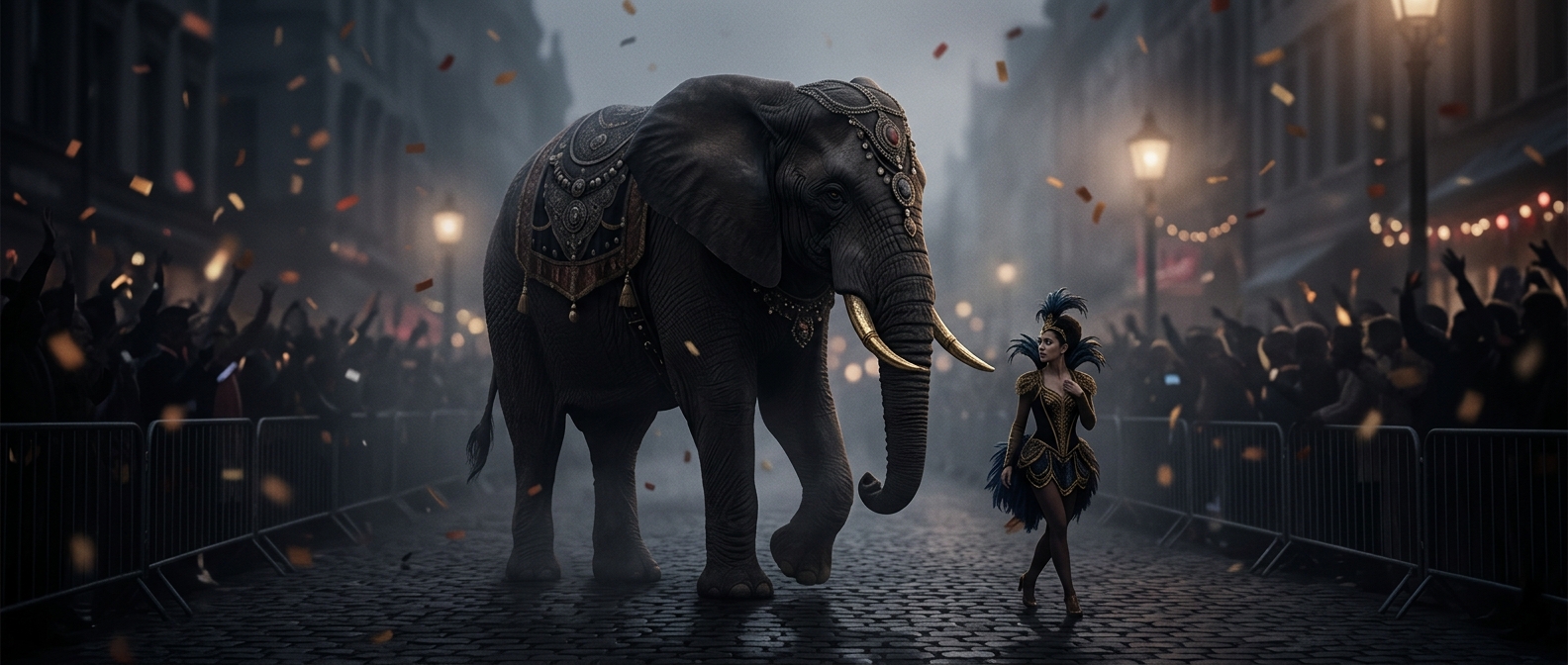
Live animals brought a real risk to a crowded street celebration: they could react unpredictably to noise, movement, and people pressing close. Lions and bears might be impressive, but organizers could not choreograph their behavior the way they could a float or a marching band. If an animal became agitated, the danger was not confined to the performers; spectators stood along the route, often near the action.
Balloons made the spectacle controllable
Giant balloons offered a striking visual replacement without putting a wild animal in the middle of the crowd. Their shapes could be designed to read from a distance, and their movement could be guided by people on the ground. That did not make them effortless: a large balloon still needs handlers and can be affected by wind. But its behavior could be managed as part of the parade rather than left to an animal’s instincts.
The change also altered what a parade could feature. Instead of borrowing real creatures, organizers could turn familiar characters and imaginative designs into oversized moving figures. The memorable spectacle remained; the source of its unpredictability changed from a living animal to an object the parade crew could steer.